

CXCR4 Antibody

Référence MBS151360-0,1mg
Conditionnement : 0.1mg
Marque : MyBiosource
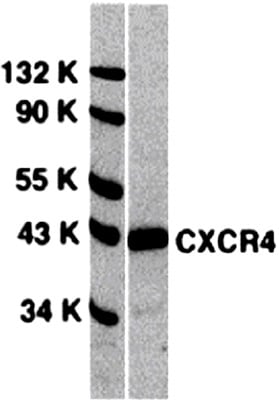
Figure 1 Western Blot Validation of CXCR4 in HeLa Cells
Loading: 15 μg of lysates per lane. Antibodies: 1009 (1 μg/mL), 1 h incubation at RT in 5% NFDM/TBST. Secondary: Goat anti-rabbit IgG HRP
Loading: 15 μg of lysates per lane. Antibodies: 1009 (1 μg/mL), 1 h incubation at RT in 5% NFDM/TBST. Secondary: Goat anti-rabbit IgG HRP
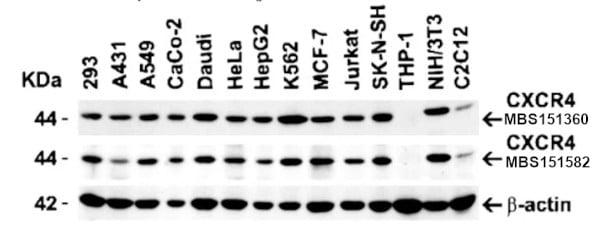
Figure 2 Independent Antibody Validation (IAV) via Protein Expression Profile Cell Lines
Loading: 15 μg of lysates per lane. Antibodies: 1009 (1 μg/mL), 1012 (1 μg/mL), and beta-actin (1 μg/mL), 1 h incubation at RT in 5% NFDM/TBST. Secondary: Goat anti-rabbit IgG HRP
Loading: 15 μg of lysates per lane. Antibodies: 1009 (1 μg/mL), 1012 (1 μg/mL), and beta-actin (1 μg/mL), 1 h incubation at RT in 5% NFDM/TBST. Secondary: Goat anti-rabbit IgG HRP
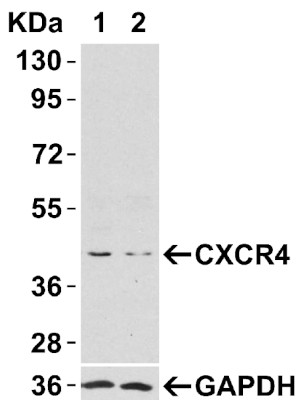
Figure 3 Validation with CXCR4 siRNA Knockdown
HeLa cells were transfected with control siRNAs (lane 1) or CXCR4 siRNAs (lane 2) Loading: 10 μg of HeLa whole cell lysates per lane. Antibodies: 1009 (2 μg/mL), 1 h incubation at RT in 5% NFDM/TBST. Secondary: Goat anti-rabbit IgG HRP conjugate at 1:10000 dilution.
HeLa cells were transfected with control siRNAs (lane 1) or CXCR4 siRNAs (lane 2) Loading: 10 μg of HeLa whole cell lysates per lane. Antibodies: 1009 (2 μg/mL), 1 h incubation at RT in 5% NFDM/TBST. Secondary: Goat anti-rabbit IgG HRP conjugate at 1:10000 dilution.
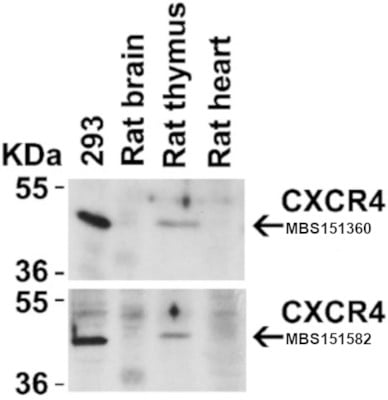
Figure 4 Animal Species Reactivity
Loading: Lysates/proteins at 20 μg per lane. Antibodies: 1009 (2 μg/mL) or 1012 (2 μg/mL). 1 h incubation at RT in 5% NFDM/TBST. Secondary: Goat anti-rabbit IgG HRP conjugate at 1:10000 dilution.
Loading: Lysates/proteins at 20 μg per lane. Antibodies: 1009 (2 μg/mL) or 1012 (2 μg/mL). 1 h incubation at RT in 5% NFDM/TBST. Secondary: Goat anti-rabbit IgG HRP conjugate at 1:10000 dilution.
CXCR4 Antibody – Rabbit Polyclonal
For Research Use Only. Not for use in diagnostic procedures. Catalog #: MBS151360MBS151360 is an antibody targeting CXCR4. Also known as CXCR4 Antibody. Reactive in Human, Mouse, Rat. Host: Rabbit. More details
Product Overview
Online Datasheet in PDFProduct Name
CXCR4, Polyclonal Antibody
Full Product Name
CXCR4 Antibody
Product Gene Name
anti-CXCR4 antibody
Product Synonym Names
CXCR4; FB22; HM89; LAP3; LCR1; NPYR; WHIM; CD184; LESTR; NPY3R; NPYRL; HSY3RR; NPYY3R; D2S201E; chemokine (C-X-C motif) receptor 4
Clonality
Polyclonal
Isotype
IgG
Host
Rabbit
Species Reactivity
Human, Mouse, Rat
Form/Format
Liquid ; CXCR4 Antibody is supplied in PBS containing 0.02% sodium azide
Purity/Purification
CXCR4 Antibody is affinity chromatography purified via peptide column.
Concentration
1 mg/mL (lot specific)
Specificity
CXCR4 Antibody is predicted to not cross-react with other CXCR familiy members.
Preparation and Storage
CXCR4 antibody can be stored at 4°C for three months and -20°C, stable for up to one year. As with all antibodies care should be taken to avoid repeated freeze thaw cycles. Antibodies should not be exposed to prolonged high temperatures.
Antibody/Peptide Pairs
CXCR4 peptide (MBS153008) is used for blocking the activity of CXCR4 antibody (MBS151360)
Molecular Weight
Predicted: 40 kDa
Observed: 44 kDa (Post-modification: 2 N-linked glycosylation)
Observed: 44 kDa (Post-modification: 2 N-linked glycosylation)
OMIM
gene 193670
Homology
Predicted species reactivity based on immunogen sequence: Bovine: (86%), Pig: (71%)
Immunogen
Anti-CXCR4 antibody MBS151360 was raised against a peptide corresponding to 14 amino acids near the amino terminus of human CXCR4 isoform b.
The immunogen is located within the first 50 amino acids of CXCR4.
The immunogen is located within the first 50 amino acids of CXCR4.
Applications Tested/Suitable for anti-CXCR4 antibody
ELISA (EIA), Western Blot (WB), Immunocytochemistry (ICC), Immunoprecipitation (IP), Immunofluorescence (IF), Immunohistochemistry (IHC-p), Flow Cytometry (FC)
Application Notes for anti-CXCR4 antibody
Optimal dilutions/concentrations should be determined by the end user. The information provided is a guidline for product use. This product is for research use only.
Western Blot (WB) of anti-CXCR4 antibody
Figure 2 Independent Antibody Validation (IAV) via Protein Expression Profile Cell Lines
Loading: 15 μg of lysates per lane. Antibodies: 1009 (1 μg/mL), 1012 (1 μg/mL), and beta-actin (1 μg/mL), 1 h incubation at RT in 5% NFDM/TBST. Secondary: Goat anti-rabbit IgG HRP
Loading: 15 μg of lysates per lane. Antibodies: 1009 (1 μg/mL), 1012 (1 μg/mL), and beta-actin (1 μg/mL), 1 h incubation at RT in 5% NFDM/TBST. Secondary: Goat anti-rabbit IgG HRP
Western Blot (WB) of anti-CXCR4 antibody
Figure 3 Validation with CXCR4 siRNA Knockdown
HeLa cells were transfected with control siRNAs (lane 1) or CXCR4 siRNAs (lane 2) Loading: 10 μg of HeLa whole cell lysates per lane. Antibodies: 1009 (2 μg/mL), 1 h incubation at RT in 5% NFDM/TBST. Secondary: Goat anti-rabbit IgG HRP conjugate at 1:10000 dilution.
HeLa cells were transfected with control siRNAs (lane 1) or CXCR4 siRNAs (lane 2) Loading: 10 μg of HeLa whole cell lysates per lane. Antibodies: 1009 (2 μg/mL), 1 h incubation at RT in 5% NFDM/TBST. Secondary: Goat anti-rabbit IgG HRP conjugate at 1:10000 dilution.
Other Notes
Small volumes of anti-CXCR4 antibody vial(s) may occasionally become entrapped in the seal of the product vial during shipment and storage. If necessary, briefly centrifuge the vial on a tabletop centrifuge to dislodge any liquid in the container`s cap. Certain products may require to ship with dry ice and additional dry ice fee may apply.
Additional Details
NCBI/Uniprot data below describe general gene information for CXCR4. It may not necessarily be applicable to this product.
NCBI Official Full Name
C-X-C chemokine receptor type 4 isoform b
NCBI Official Synonym Full Names
chemokine (C-X-C motif) receptor 4
NCBI Official Symbol
CXCR4
NCBI Official Synonym Symbols
FB22; HM89; LAP3; LCR1; NPYR; WHIM; CD184; LAP-3; LESTR; NPY3R; NPYRL; HSY3RR; NPYY3R; D2S201E
UniProt Protein Name
C-X-C chemokine receptor type 4
UniProt Synonym Protein Names
FB22; Fusin; HM89; LCR1; Leukocyte-derived seven transmembrane domain receptor; LESTR; Lipopolysaccharide-associated protein 3; LAP-3; LPS-associated protein 3; NPYRL; Stromal cell-derived factor 1 receptor; SDF-1 receptor; CD_antigen: CD184
Protein Family
C-X-C chemokine receptor
UniProt Gene Name
CXCR4
UniProt Synonym Gene Names
CXC-R4; CXCR-4; LESTR; LAP-3; LPS-associated protein 3; SDF-1 receptor
UniProt Entry Name
CXCR4_HUMAN
NCBI Protein Information
C-X-C chemokine receptor type 4; fusin; CD184 antigen; SDF-1 receptor; LPS-associated protein 3; neuropeptide Y receptor Y3; seven transmembrane helix receptor; stromal cell-derived factor 1 receptor; lipopolysaccharide-associated protein 3; seven-transmembrane-segment receptor, spleen; leukocyte-derived seven transmembrane domain receptor
NCBI Summary for CXCR4
This gene encodes a CXC chemokine receptor specific for stromal cell-derived factor-1. The protein has 7 transmembrane regions and is located on the cell surface. It acts with the CD4 protein to support HIV entry into cells and is also highly expressed in breast cancer cells. Mutations in this gene have been associated with WHIM (warts, hypogammaglobulinemia, infections, and myelokathexis) syndrome. Alternate transcriptional splice variants, encoding different isoforms, have been characterized. [provided by RefSeq, Jul 2008]
Show more UniProt Comments for CXCR4
CXCR4: Receptor for the C-X-C chemokine CXCL12/SDF-1 that transduces a signal by increasing intracellular calcium ion levels and enhancing MAPK1/MAPK3 activation. Acts as a receptor for extracellular ubiquitin; leading to enhanced intracellular calcium ions and reduced cellular cAMP levels. Involved in hematopoiesis and in cardiac ventricular septum formation. Also plays an essential role in vascularization of the gastrointestinal tract, probably by regulating vascular branching and/or remodeling processes in endothelial cells. Involved in cerebellar development. In the CNS, could mediate hippocampal-neuron survival. Acts as a coreceptor (CD4 being the primary receptor) for HIV-1 X4 isolates and as a primary receptor for some HIV-2 isolates. Promotes Env-mediated fusion of the virus. Monomer. Can form dimers. Interacts with CD164. Interacts with HIV-1 surface protein gp120 and Tat. Interacts with ARRB2; the interaction is dependent on the C-terminal phosphorylation of CXCR4 and allows activation of MAPK1 and MAPK3. Interacts with ARRC; the interaction is dependent on the C-terminal phosphorylation of CXCR4 and modulates calcium mobilization. Interacts (via the cytoplasmic C-terminal) with ITCH (via the WW domains I and II); the interaction, enhanced by CXCL12, ubiquitinates CXCR4 and leads to its degradation. Interacts with extracellular ubiquitin. Interacts with human cytomegalovirus/HHV- 5 protein UL78. Expressed in numerous tissues, such as peripheral blood leukocytes, spleen, thymus, spinal cord, heart, placenta, lung, liver, skeletal muscle, kidney, pancreas, cerebellum, cerebral cortex and medulla (in microglia as well as in astrocytes), brain microvascular, coronary artery and umbilical cord endothelial cells. Isoform 1 is predominant in all tissues tested. Belongs to the G-protein coupled receptor 1 family. 2 isoforms of the human protein are produced by alternative splicing.
Protein type: GPCR, family 1; Membrane protein, multi-pass; Receptor, GPCR; Membrane protein, integral
Chromosomal Location of Human Ortholog: 2q21
Cellular Component: cell surface; lysosome; cytoplasmic membrane-bound vesicle; early endosome; leading edge; integral to membrane; intercellular junction; growth cone; cytoplasm; late endosome; plasma membrane; cytoplasmic vesicle; external side of plasma membrane
Molecular Function: G-protein coupled receptor activity; viral receptor activity; ubiquitin binding; protein binding; cytokine binding; ubiquitin protein ligase binding; coreceptor activity; myosin light chain binding; actin binding; C-X-C chemokine receptor activity
Biological Process: entry of virus into host cell; regulation of chemotaxis; neutrophil activation; viral reproduction; apoptosis; activation of MAPK activity; response to virus; neuron migration; calcium-mediated signaling; motor axon guidance; regulation of cell migration; germ cell development; patterning of blood vessels; T cell proliferation; G-protein coupled receptor protein signaling pathway; elevation of cytosolic calcium ion concentration; ameboidal cell migration; germ cell migration; myelin maintenance; response to hypoxia; dendritic cell chemotaxis; entry into host cell; positive regulation of oligodendrocyte differentiation; brain development; inflammatory response
Disease: Whim Syndrome
Show more Protein type: GPCR, family 1; Membrane protein, multi-pass; Receptor, GPCR; Membrane protein, integral
Chromosomal Location of Human Ortholog: 2q21
Cellular Component: cell surface; lysosome; cytoplasmic membrane-bound vesicle; early endosome; leading edge; integral to membrane; intercellular junction; growth cone; cytoplasm; late endosome; plasma membrane; cytoplasmic vesicle; external side of plasma membrane
Molecular Function: G-protein coupled receptor activity; viral receptor activity; ubiquitin binding; protein binding; cytokine binding; ubiquitin protein ligase binding; coreceptor activity; myosin light chain binding; actin binding; C-X-C chemokine receptor activity
Biological Process: entry of virus into host cell; regulation of chemotaxis; neutrophil activation; viral reproduction; apoptosis; activation of MAPK activity; response to virus; neuron migration; calcium-mediated signaling; motor axon guidance; regulation of cell migration; germ cell development; patterning of blood vessels; T cell proliferation; G-protein coupled receptor protein signaling pathway; elevation of cytosolic calcium ion concentration; ameboidal cell migration; germ cell migration; myelin maintenance; response to hypoxia; dendritic cell chemotaxis; entry into host cell; positive regulation of oligodendrocyte differentiation; brain development; inflammatory response
Disease: Whim Syndrome
Research Articles on CXCR4
Precautions
All of MyBioSource's Products are for scientific laboratory research purposes and are not for diagnostic, therapeutics, prophylactic or in vivo use. Through your purchase, you expressly represent and warrant to MyBioSource that you will properly test and use any Products purchased from MyBioSource in accordance with industry standards. MyBioSource and its authorized distributors reserve the right to refuse to process any order where we reasonably believe that the intended use will fall outside of our acceptable guidelines.
Disclaimer
While every efforts were made to ensure the accuracy of the information provided in this datasheet, MyBioSource will not be liable for any omissions or errors contained herein. MyBioSource reserves the right to make changes to this datasheet at any time without prior notice.
It is the responsibility of the customer to report product performance issues to MyBioSource within 30 days of receipt of the product. Please visit our Terms & Conditions page for more information.
It is the responsibility of the customer to report product performance issues to MyBioSource within 30 days of receipt of the product. Please visit our Terms & Conditions page for more information.
Product Note
Select online data sheet information is drawn from bioinformatics databases, occasionally resulting in ambiguous or non-relevant product information. It is the responsibility of the customer to review, verify, and evaluate the information to make sure it matches their requirements before purchasing the kit. Our ELISA Kit assays are dynamic research tools and sometimes they may be updated and improved. If the format of this assay is important to you then please request the current manual or contact our technical support team with a presales inquiry before placing an order. We will confirm the current details of the assay. We cannot guarantee the sample manual posted online is the most current manual, it is intended to serve as an example only. Please refer to the instructions For Use provided with the assay kit for precise details.
Product PubMed Publications
Pathways associated with anti-CXCR4 antibody
| Products by Pathway | Pathway Diagram |
|---|---|
| Axon Guidance Pathway antibodies | Axon Guidance Pathway Diagram |
| Axon Guidance Pathway antibodies | Axon Guidance Pathway Diagram |
| Binding And Entry Of HIV Virion Pathway antibodies | Binding And Entry Of HIV Virion Pathway Diagram |
| CXCR4-mediated Signaling Events Pathway antibodies | CXCR4-mediated Signaling Events Pathway Diagram |
| Cardiac Progenitor Differentiation Pathway antibodies | Cardiac Progenitor Differentiation Pathway Diagram |
| Chemokine Receptors Bind Chemokines Pathway antibodies | Chemokine Receptors Bind Chemokines Pathway Diagram |
| Chemokine Signaling Pathway antibodies | Chemokine Signaling Pathway Diagram |
| Chemokine Signaling Pathway antibodies | Chemokine Signaling Pathway Diagram |
| Class A/1 (Rhodopsin-like Receptors) Pathway antibodies | Class A/1 (Rhodopsin-like Receptors) Pathway Diagram |
| Cytokine-cytokine Receptor Interaction Pathway antibodies | Cytokine-cytokine Receptor Interaction Pathway Diagram |