

TLR4 Antibody (Center)

Référence MBS9206134-0,4mL
Conditionnement : 0.4mL
Marque : MyBiosource
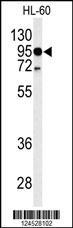
Western blot analysis of TLR4 Antibody (Center) in HL-60 cell line lysates (35ug/lane). TLR4 (arrow) was detected using the purified Pab.
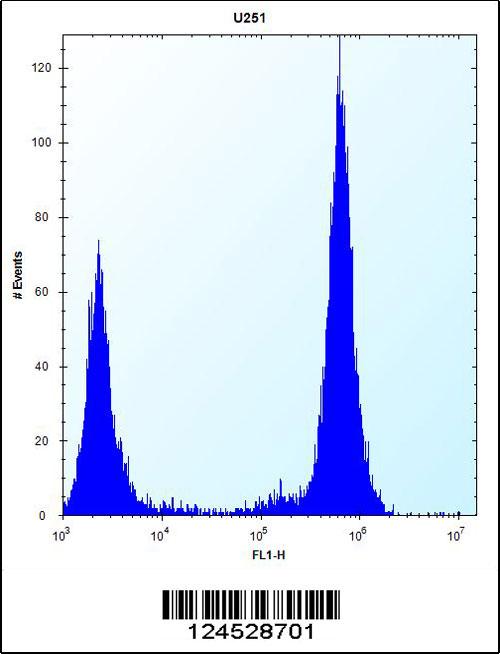
TLR4 Antibody (Center) flow cytometric analysis of U251 cells (right histogram) compared to a negative control cell (left histogram).FITC-conjugated goat-anti-rabbit secondary antibodies were used for the analysis.
TLR4 Antibody – Rabbit Polyclonal
For Research Use Only. Not for use in diagnostic procedures. Catalog #: MBS9206134TLR4 is a member of the Toll-like receptor (TLR) family which plays a fundamental role in pathogen recognition and activation of innate immunity. TLRs are highly conserved from Drosophila to humans and share structural and functional similarities. They… More details
Product Overview
Online Datasheet in PDFProduct Name
TLR4, Polyclonal Antibody
Full Product Name
TLR4 Antibody (Center)
Product Gene Name
anti-TLR4 antibody
Product Synonym Names
Toll-like receptor 4; hToll; CD284; TLR4
Clonality
Polyclonal
Isotype
Rabbit Ig
Host
Rabbit
Species Reactivity
Human
Predicted Reactivity: Bovine, Hamster, Horse, Pig
Predicted Reactivity: Bovine, Hamster, Horse, Pig
Form/Format
Purified polyclonal antibody supplied in PBS with 0.09% (W/V) sodium azide. This antibody is purified through a protein A column, followed by peptide affinity purification.
Purity/Purification
Peptide Affinity Purified Rabbit Polyclonal Antibody (Pab)
Concentration
Vial Concentration: 0.5 (lot specific)
Specificity
This TLR4 antibody is generated from rabbits immunized with a KLH conjugated synthetic peptide between 669-698 amino acids from the Central region of human TLR4.
Preparation and Storage
Maintain refrigerated at 2-8°C for up to 2 weeks. For long term storage store at -20°C in small aliquots to prevent freeze-thaw cycles.
Antibody/Peptide Pairs
TLR4 peptide (MBS9228343) is used for blocking the activity of TLR4 antibody (MBS9206134)
Immunogen Sequence Positions
669-698
OMIM
603030
Antigen Type
Synthetic Peptide
Antigen Source
HUMAN
Funtion
Cooperates with LY96 and CD14 to mediatethe innate immune response to bacteriallipopolysaccharide (LPS) (PubMed:27022195). Actsvia MYD88, TIRAP and TRAF6, leading toNF-kappa-B activation, cytokine secretionand the inflammatory response (PubMed:9237759,PubMed:10835634,PubMed:27022195). Alsoinvolved in LPS-independent inflammatoryresponses triggered by free fatty acids,such as palmitate, and Ni(2+). Responsestriggered by Ni(2+) require non- conservedhistidines and are, therefore,species-specific (PubMed:20711192). BothM.tuberculosis HSP70 (dnaK) and HSP65(groEL-2) act via this protein to stimulateNF-kappa-B expression (PubMed:15809303). Incomplex with TLR6, promotes sterileinflammation in monocytes/macrophages inresponse to oxidized low-density lipoprotein(oxLDL) or amyloid-beta 42. In this context,the initial signal is provided by oxLDL- oramyloid-beta 42-binding to CD36. Thisevent induces the formation of aheterodimer of TLR4 and TLR6, which israpidly internalized and triggersinflammatory response, leading to theNF-kappa-B-dependent production ofCXCL1, CXCL2 and CCL9 cytokines, viaMYD88 signaling pathway, and CCL5cytokine, via TICAM1 signaling pathway, aswell as IL1B secretion. Bindselectronegative LDL (LDL(-)) and mediatesthe cytokine release induced by LDL(-)(PubMed:23880187).Stimulation of monocytes in vitro withM.tuberculosis PstS1 induces p38 MAPK andERK1/2 activation primarily via TLR2, butalso partially via this receptor (PubMed:16622205).
Cellular Location
Cell membrane; Single-pass type Imembrane protein. Early endosome. Cellprojection, ruffle{ECO:0000250|UniProtKB:Q9QUK6}.Note=Upon complex formation with CD36and TLR6, internalized throughdynamin-dependent endocytosis(PubMed:20037584). Colocalizes withRFTN1 at cell membrane and then togetherwith RFTN1 moves to endosomes, uponlipopolysaccharide stimulation.
Tissue Location
Highly expressed in placenta, spleen andperipheral blood leukocytes(PubMed:9435236, PubMed:9237759).Detected in monocytes, macrophages,dendritic cells and several types of T-cells(PubMed:9237759, PubMed:27022195).
Product Categories/Family for anti-TLR4 antibody
Cardiovascular; Immunology; Microbiology; Signal Transduction
Applications Tested/Suitable for anti-TLR4 antibody
Western Blot (WB), ELISA (EIA), Flow Cytometry (FC)
Application Notes for anti-TLR4 antibody
WB~~1:1000
Product References and Citations for anti-TLR4 antibody
Sam-Agudu, N.A., et al. Am. J. Trop. Med. Hyg. 82(4):548-555(2010)
# Palomino-Morales, R.J., et al. Arthritis Res. Ther. 12 (2), R51 (2010)
# Rigoli, L., et al. Anticancer Res. 30(2):513-517(2010)
# da Silva Correia, J., et al. J. Biol. Chem. 277(3):1845-1854(2002)
# Shimazu, R., et al. J. Exp. Med. 189(11):1777-1782(1999)
# Palomino-Morales, R.J., et al. Arthritis Res. Ther. 12 (2), R51 (2010)
# Rigoli, L., et al. Anticancer Res. 30(2):513-517(2010)
# da Silva Correia, J., et al. J. Biol. Chem. 277(3):1845-1854(2002)
# Shimazu, R., et al. J. Exp. Med. 189(11):1777-1782(1999)
Other Notes
Small volumes of anti-TLR4 antibody vial(s) may occasionally become entrapped in the seal of the product vial during shipment and storage. If necessary, briefly centrifuge the vial on a tabletop centrifuge to dislodge any liquid in the container`s cap. Certain products may require to ship with dry ice and additional dry ice fee may apply.
Searchable Terms for TLR4 purchase
MBS9206134 is an antibody targeting TLR4. Also known as TLR4 Antibody (Center). Reactive in Human
Predicted Reactivity: Bovine, Hamster, Horse, Pig. Host: Rabbit.
Predicted Reactivity: Bovine, Hamster, Horse, Pig. Host: Rabbit.
Additional Details
NCBI/Uniprot data below describe general gene information for TLR4. It may not necessarily be applicable to this product.
NCBI GI #
NCBI GeneID
NCBI Accession #
NCBI Related Accession #
NCBI Official Full Name
toll-like receptor 4 isoform C
NCBI Official Synonym Full Names
toll-like receptor 4
NCBI Official Symbol
TLR4
NCBI Official Synonym Symbols
TOLL; CD284; TLR-4; ARMD10
UniProt Protein Name
Toll-like receptor 4
UniProt Synonym Protein Names
hToll; CD_antigen: CD284
Protein Family
Toll-like receptor
UniProt Gene Name
TLR4
UniProt Entry Name
TLR4_HUMAN
NCBI Protein Information
toll-like receptor 4
NCBI Summary for TLR4
The protein encoded by this gene is a member of the Toll-like receptor (TLR) family which plays a fundamental role in pathogen recognition and activation of innate immunity. TLRs are highly conserved from Drosophila to humans and share structural and functional similarities. They recognize pathogen-associated molecular patterns that are expressed on infectious agents, and mediate the production of cytokines necessary for the development of effective immunity. The various TLRs exhibit different patterns of expression. This receptor has been implicated in signal transduction events induced by lipopolysaccharide (LPS) found in most gram-negative bacteria. Mutations in this gene have been associated with differences in LPS responsiveness. Multiple transcript variants encoding different isoforms have been found for this gene. [provided by RefSeq, Jan 2012]
Show more UniProt Comments for TLR4
TLR4: Cooperates with LY96 and CD14 to mediate the innate immune response to bacterial lipopolysaccharide (LPS). Acts via MYD88, TIRAP and TRAF6, leading to NF-kappa-B activation, cytokine secretion and the inflammatory response. Also involved in LPS- independent inflammatory responses triggered by Ni(2+). These responses require non-conserved histidines and are, therefore, species-specific. Belongs to the lipopolysaccharide (LPS) receptor, a multi-protein complex containing at least CD14, LY96 and TLR4. Binding to bacterial LPS leads to homodimerization. Interacts with LY96 via the extracellular domain. Interacts with MYD88 and TIRAP via their respective TIR domains. Interacts with NOX4. Interacts with CNPY3. Interacts with HSP90B1. The interaction with both CNPY3 and HSP90B1 is required for proper folding in the endoplasmic reticulum. Highly expressed in placenta, spleen and peripheral blood leukocytes. Detected in monocytes, macrophages, dendritic cells and several types of T-cells. Belongs to the Toll-like receptor family. 3 isoforms of the human protein are produced by alternative splicing.
Protein type: Receptor, misc.; Membrane protein, integral
Chromosomal Location of Human Ortholog: 9q33.1
Cellular Component: integral to plasma membrane; perinuclear region of cytoplasm; cytoplasm; plasma membrane; lipopolysaccharide receptor complex; endosome membrane; external side of plasma membrane
Molecular Function: protein binding; transmembrane receptor activity; lipopolysaccharide binding; lipopolysaccharide receptor activity; receptor activity
Biological Process: I-kappaB kinase/NF-kappaB cascade; positive regulation of nitric oxide biosynthetic process; activation of MAPK activity; response to lipopolysaccharide; positive regulation of NF-kappaB import into nucleus; toll-like receptor 3 signaling pathway; positive regulation of interleukin-10 production; activation of NF-kappaB transcription factor; negative regulation of interleukin-6 production; positive regulation of B cell proliferation; positive regulation of interferon-beta production; toll-like receptor 4 signaling pathway; positive regulation of interferon-alpha production; T-helper 1 type immune response; production of nitric oxide during acute inflammatory response; positive regulation of interleukin-8 biosynthetic process; positive regulation of interleukin-6 production; positive regulation of tumor necrosis factor production; positive regulation of chemokine production; toll-like receptor 2 signaling pathway; macrophage activation; negative regulation of interleukin-23 production; detection of lipopolysaccharide; defense response to bacterium; positive regulation of transcription from RNA polymerase II promoter; I-kappaB phosphorylation; positive regulation of nitric-oxide synthase biosynthetic process; negative regulation of osteoclast differentiation; regulation of cytokine secretion; positive regulation of interleukin-12 production; positive regulation of JNK cascade; defense response to Gram-negative bacterium; positive regulation of interleukin-8 production; positive regulation of MHC class II biosynthetic process; negative regulation of interferon-gamma production; lipopolysaccharide-mediated signaling pathway; interferon-gamma production; B cell proliferation during immune response; positive regulation of tumor necrosis factor biosynthetic process; detection of fungus; MyD88-independent toll-like receptor signaling pathway; negative regulation of tumor necrosis factor production; MyD88-dependent toll-like receptor signaling pathway; positive regulation of interferon-gamma production; positive regulation of interleukin-12 biosynthetic process; negative regulation of interleukin-17 production; positive regulation of interferon-beta biosynthetic process; toll-like receptor signaling pathway; innate immune response; immune response; positive regulation of interleukin-1 production; positive regulation of inflammatory response
Disease: Macular Degeneration, Age-related, 10
Show more Protein type: Receptor, misc.; Membrane protein, integral
Chromosomal Location of Human Ortholog: 9q33.1
Cellular Component: integral to plasma membrane; perinuclear region of cytoplasm; cytoplasm; plasma membrane; lipopolysaccharide receptor complex; endosome membrane; external side of plasma membrane
Molecular Function: protein binding; transmembrane receptor activity; lipopolysaccharide binding; lipopolysaccharide receptor activity; receptor activity
Biological Process: I-kappaB kinase/NF-kappaB cascade; positive regulation of nitric oxide biosynthetic process; activation of MAPK activity; response to lipopolysaccharide; positive regulation of NF-kappaB import into nucleus; toll-like receptor 3 signaling pathway; positive regulation of interleukin-10 production; activation of NF-kappaB transcription factor; negative regulation of interleukin-6 production; positive regulation of B cell proliferation; positive regulation of interferon-beta production; toll-like receptor 4 signaling pathway; positive regulation of interferon-alpha production; T-helper 1 type immune response; production of nitric oxide during acute inflammatory response; positive regulation of interleukin-8 biosynthetic process; positive regulation of interleukin-6 production; positive regulation of tumor necrosis factor production; positive regulation of chemokine production; toll-like receptor 2 signaling pathway; macrophage activation; negative regulation of interleukin-23 production; detection of lipopolysaccharide; defense response to bacterium; positive regulation of transcription from RNA polymerase II promoter; I-kappaB phosphorylation; positive regulation of nitric-oxide synthase biosynthetic process; negative regulation of osteoclast differentiation; regulation of cytokine secretion; positive regulation of interleukin-12 production; positive regulation of JNK cascade; defense response to Gram-negative bacterium; positive regulation of interleukin-8 production; positive regulation of MHC class II biosynthetic process; negative regulation of interferon-gamma production; lipopolysaccharide-mediated signaling pathway; interferon-gamma production; B cell proliferation during immune response; positive regulation of tumor necrosis factor biosynthetic process; detection of fungus; MyD88-independent toll-like receptor signaling pathway; negative regulation of tumor necrosis factor production; MyD88-dependent toll-like receptor signaling pathway; positive regulation of interferon-gamma production; positive regulation of interleukin-12 biosynthetic process; negative regulation of interleukin-17 production; positive regulation of interferon-beta biosynthetic process; toll-like receptor signaling pathway; innate immune response; immune response; positive regulation of interleukin-1 production; positive regulation of inflammatory response
Disease: Macular Degeneration, Age-related, 10
Research Articles on TLR4
Precautions
All of MyBioSource's Products are for scientific laboratory research purposes and are not for diagnostic, therapeutics, prophylactic or in vivo use. Through your purchase, you expressly represent and warrant to MyBioSource that you will properly test and use any Products purchased from MyBioSource in accordance with industry standards. MyBioSource and its authorized distributors reserve the right to refuse to process any order where we reasonably believe that the intended use will fall outside of our acceptable guidelines.
Disclaimer
While every efforts were made to ensure the accuracy of the information provided in this datasheet, MyBioSource will not be liable for any omissions or errors contained herein. MyBioSource reserves the right to make changes to this datasheet at any time without prior notice.
It is the responsibility of the customer to report product performance issues to MyBioSource within 30 days of receipt of the product. Please visit our Terms & Conditions page for more information.
It is the responsibility of the customer to report product performance issues to MyBioSource within 30 days of receipt of the product. Please visit our Terms & Conditions page for more information.
Product Note
Select online data sheet information is drawn from bioinformatics databases, occasionally resulting in ambiguous or non-relevant product information. It is the responsibility of the customer to review, verify, and evaluate the information to make sure it matches their requirements before purchasing the kit. Our ELISA Kit assays are dynamic research tools and sometimes they may be updated and improved. If the format of this assay is important to you then please request the current manual or contact our technical support team with a presales inquiry before placing an order. We will confirm the current details of the assay. We cannot guarantee the sample manual posted online is the most current manual, it is intended to serve as an example only. Please refer to the instructions For Use provided with the assay kit for precise details.
Product PubMed Publications
Pathways associated with anti-TLR4 antibody
| Products by Pathway | Pathway Diagram |
|---|---|
| Synthesis And Degradation Of Ketone Bodies Pathway antibodies | Synthesis And Degradation Of Ketone Bodies Pathway Diagram |
| Synthesis And Degradation Of Ketone Bodies Pathway antibodies | Synthesis And Degradation Of Ketone Bodies Pathway Diagram |
| Synthesis And Degradation Of Ketone Bodies Pathway antibodies | Synthesis And Degradation Of Ketone Bodies Pathway Diagram |
| Synthesis And Degradation Of Ketone Bodies Pathway antibodies | Synthesis And Degradation Of Ketone Bodies Pathway Diagram |
| Synthesis And Degradation Of Ketone Bodies Pathway antibodies | Synthesis And Degradation Of Ketone Bodies Pathway Diagram |
| Synthesis And Degradation Of Ketone Bodies Pathway antibodies | Synthesis And Degradation Of Ketone Bodies Pathway Diagram |
| Synthesis And Degradation Of Ketone Bodies Pathway antibodies | Synthesis And Degradation Of Ketone Bodies Pathway Diagram |
| Synthesis And Degradation Of Ketone Bodies Pathway antibodies | Synthesis And Degradation Of Ketone Bodies Pathway Diagram |
| Synthesis And Degradation Of Ketone Bodies Pathway antibodies | Synthesis And Degradation Of Ketone Bodies Pathway Diagram |
| Synthesis And Degradation Of Ketone Bodies Pathway antibodies | Synthesis And Degradation Of Ketone Bodies Pathway Diagram |
Diseases associated with anti-TLR4 antibody
| Disease Name | Pubmed Publications |
|---|---|
| Inflammation Antibodies | >4273 publications with TLR4 and Inflammation |
| Necrosis Antibodies | >2715 publications with TLR4 and Necrosis |
| Disease Models, Animal Antibodies | >1009 publications with TLR4 and Disease Models, Animal |
| Sepsis Antibodies | >835 publications with TLR4 and Sepsis |
| Liver Diseases Antibodies | >494 publications with TLR4 and Liver Diseases |
| Atherosclerosis Antibodies | >438 publications with TLR4 and Atherosclerosis |
| Lung Injury Antibodies | >327 publications with TLR4 and Lung Injury |
| Heart Diseases Antibodies | >299 publications with TLR4 and Heart Diseases |
| Fibrosis Antibodies | >257 publications with TLR4 and Fibrosis |
| Carcinoma Antibodies | >237 publications with TLR4 and Carcinoma |
Organs/Tissues associated with anti-TLR4 antibody
| Organ/Tissue Name | Pubmed Publications |
|---|---|
| Blood Antibodies | >4182 publications with TLR4 and Blood |
| Lung Antibodies | >1039 publications with TLR4 and Lung |
| Liver Antibodies | >971 publications with TLR4 and Liver |
| Bone Antibodies | >922 publications with TLR4 and Bone |
| Bone Marrow Antibodies | >768 publications with TLR4 and Bone Marrow |
| Vascular Antibodies | >704 publications with TLR4 and Vascular |
| Brain Antibodies | >673 publications with TLR4 and Brain |
| Intestine Antibodies | >614 publications with TLR4 and Intestine |
| Kidney Antibodies | >475 publications with TLR4 and Kidney |
| Spleen Antibodies | >465 publications with TLR4 and Spleen |