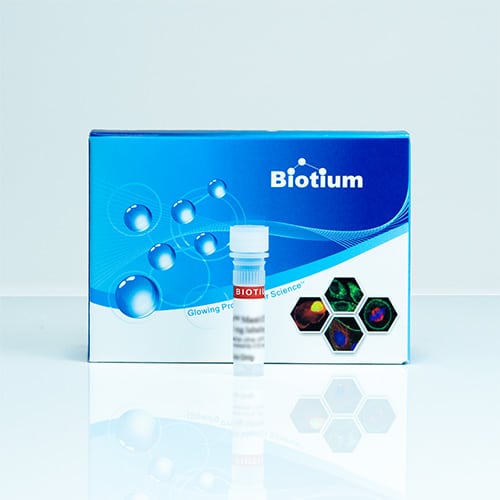
ViaTag™ 540/565 Haloalkane Ligand, 1000X in DMSO

Référence 10304
Conditionnement : 30ul
Marque : Biotium
ViaTag™ Haloalkane Ligands
Bright fluorescent ligands for the HaloTag® self-labeling protein tag. Available in 11 colors from blue to near-infrared, with options for labeling intracellular or cell surface targets.
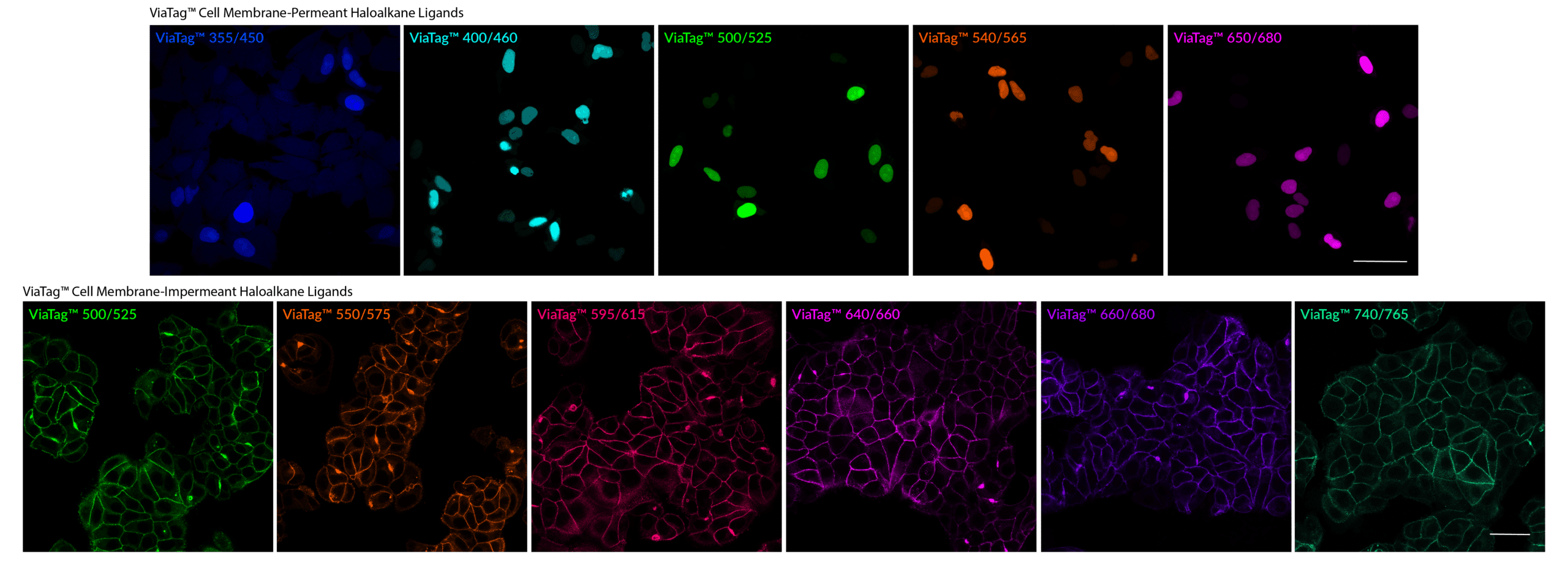 ViaTag™ Haloalkane Ligand staining. Top row: HeLa cells were transiently transfected with NLS3-HaloTag® expression vector targeting HaloTag® to the cell nucleus. Transfected cells were fixed with PFA, then stained with ViaTag™ cell membrane-permeant ligands. Bottom row: PFA-fixed MCF7 cells stained with mouse anti-CD9 recombinant antibody (clone 2310.9) and anti-mouse SdAb-HaloTag® fusion, then stained with ViaTag™ cell membrane-impermeant ligands. Scale bars: 50 um.
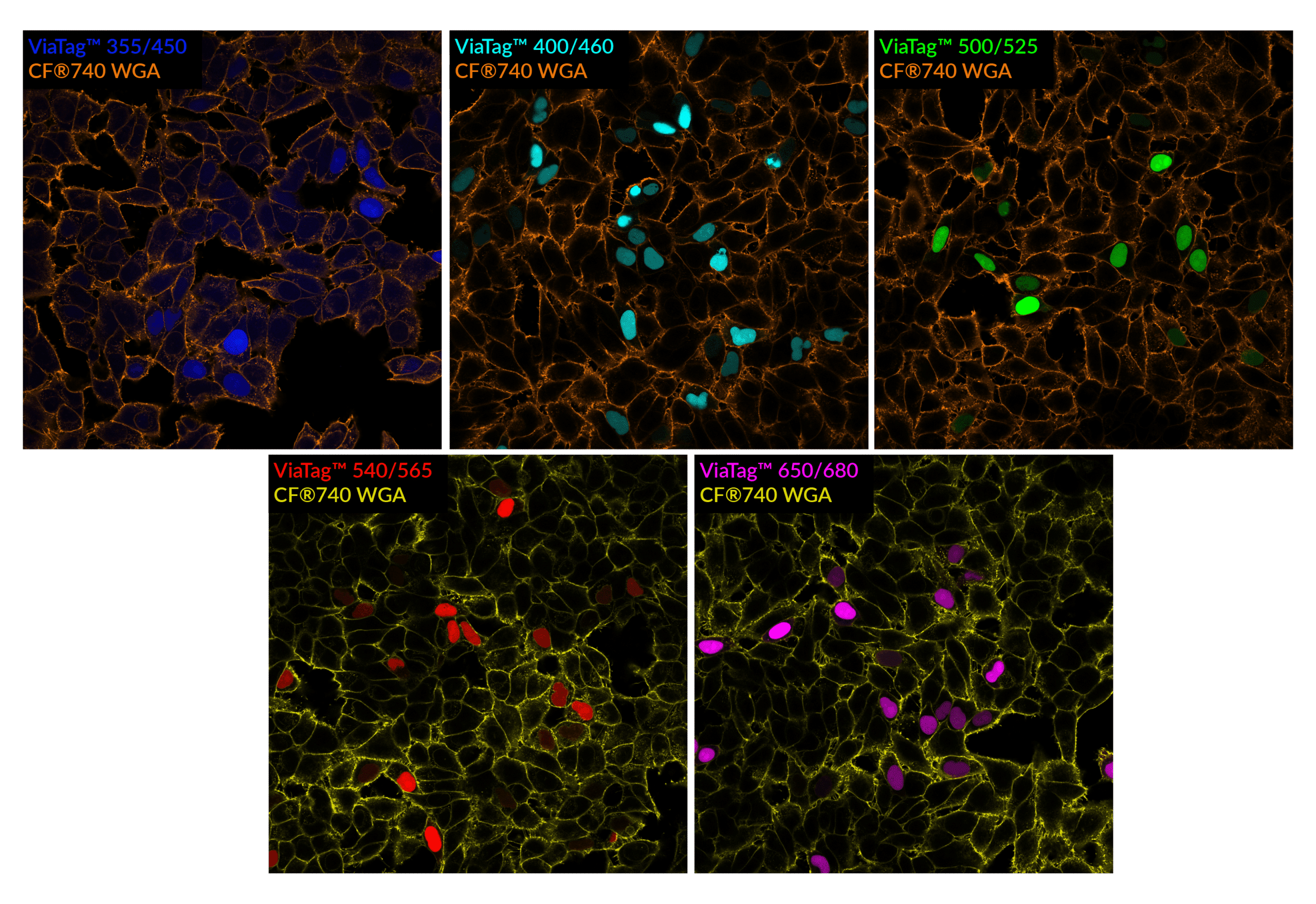 HeLa cells transiently transfected with NLS3-HaloTag® expression vector were fixed with PFA, then stained with the indicated ViaTag™ ligand in PBS for 30 minutes at 37°C. Cells were rinsed with PBS and co-stained with CF®740 WGA.
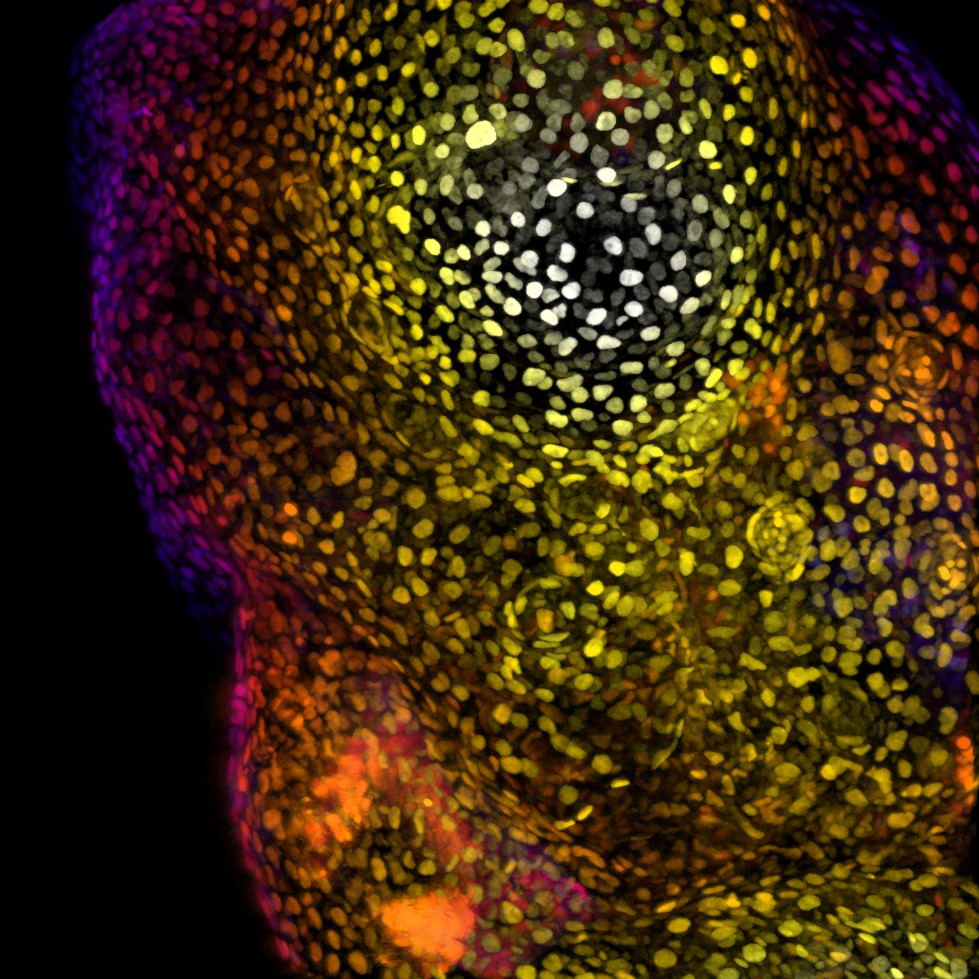 Zebrafish embryos (12 h post-fertilisation) carrying the H2B–HaloTag transgene (Wan et al., Cell 2019; doi:10.1016/j.cell.2019.08.039) were stained overnight at 100 µM and imaged 4 days later on a Leica SP8 confocal microscope. Image courtesy of Matthew Benton, Developmental Biology Unit, EMBL Heidelberg.
Product Description
ViaTag™ Haloalkane Ligands are fluorescent ligands that offer stable, covalent labeling of the HaloTag® self-labeling protein tag in live cells. They are offered in 11 different fluorescent colors from UV to near-IR, with both cell permeant and impermeant options available.
Features
- Rapid covalent labeling of HaloTag® self-labeling tags
- Stable and ready-to-use DMSO stock solutions
- Minimal wash steps required
- Cell permeant and impermeant ligands, label live or fixed cells
- Wide selection of fluorescent colors from UV to near-IR
- Cost-effective alternative to other haloalkane ligands
The HaloTag® is a 34 kDa protein tag derived from bacterial haloalkane dehalogenase, which can be genetically fused to proteins of interest for expression in cells or organisms. The HaloTag® catalyzes the formation of a covalent bond with a fluorescent ligand containing a reactive haloalkane group, producing a stably labeled target protein detectable by fluorescence microscopy, flow cytometry, or other fluorescence-based methods.
Biotium’s ViaTag™ Haloalkane Ligands take advantage of this covalent labeling system to provide bright, reliable fluorescence with minimal background. Available in both cell-permeant and cell-impermeant options, ViaTag™ ligands allow labeling of intracellular or cell surface HaloTag® fusion proteins in live or fixed cells. Because the labeling is covalent, it is resistant to fixation, permeabilization, and protein extraction. In addition, the tag enzyme retains activity after paraformaldehyde fixation, and can be labeled with ligand after fixation and permeabilization of the expressing cells.
ViaTag™ Haloalkane Ligands are offered in a broad selection of fluorescent colors and supplied as stable, ready-to-use DMSO stock solutions. Labeling is rapid and efficient, producing bright signal without the extensive wash steps required by other HaloTag® ligands.
Choose from 11 bright colors, with flexible options for intracellular or cell surface targets
ViaTag™ Haloalkane Ligand staining. Top row: HeLa cells were transiently transfected with NLS3-HaloTag® expression vector targeting HaloTag® to the cell nucleus. Transfected cells were fixed with PFA, then stained with ViaTag™ cell membrane-permeant ligands. Bottom row: PFA-fixed MCF7 cells stained with mouse anti-CD9 recombinant antibody (clone 2310.9) and anti-mouse SdAb-HaloTag® fusion, then stained with ViaTag™ cell membrane-impermeant ligands. Scale bars: 50 um.
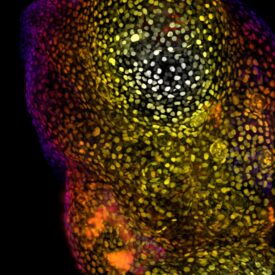
Zebrafish embryos (12 h post-fertilisation) carrying the H2B–HaloTag transgene (Wan et al., Cell 2019; doi:10.1016/j.cell.2019.08.039) were stained overnight at 100 µM and imaged 4 days later on a Leica SP8 confocal microscope. Image courtesy of Matthew Benton, Developmental Biology Unit, EMBL Heidelberg.
Biotium also offers a wide selection of cellular stains for labeling membranes, nuclei, and other organelles for live or fixed cells. This includes our NucSpot® Live Cell Nuclear Stains and CellBrite® Steady Membrane Staining Kits for long-term imaging of nuclei and membranes in live cells, respectively. Learn more about our unique cellular stains or view our cellular stains guides to view stains available for specific workflows or organisms.
ViaTag™ Haloalkane Ligands
| Dye | Catalog No. | Ex/Em (nm) | Size | Cell membrane permeability | Laser line | Channel for detection |
|---|---|---|---|---|---|---|
| ViaTag™ 355/450 Haloalkane Ligand, 1000X in DMSO | 10301 | 349/440 | 30 uL | Permeant | 355 nm (UV) | DAPI |
| ViaTag™ 400/460 Haloalkane Ligand, 1000X in DMSO | 10302 | 391/452 | 30 uL | Permeant | 405 nm | DAPI, Alexa Fluor® 405, Pacific Blue® |
| ViaTag™ 500/525 Haloalkane Ligand, 1000X in DMSO | 10303 | 504/527 | 30 uL | Permeant | 488 nm | FITC |
| ViaTag™ 540/565 Haloalkane Ligand, 1000X in DMSO | 10304 | 543/572 | 30 uL | Permeant | 555 nm, 561 nm | Rhodamine, dsRed, PE |
| ViaTag™ 650/680 Haloalkane Ligand, 1000X in DMSO | 10305 | 653/674 | 30 uL | Permeant | 640 nm | Alexa Fluor® 647, APC |
| ViaTag™ 490/525 Haloalkane Ligand, 1000X in DMSO | 10306 | 493/517 | 30 uL | Impermeant | 488 nm | FITC |
| ViaTag™ 550/575 Haloalkane Ligand, 1000X in DMSO | 10307 | 551/577 | 30 uL | Impermeant | 555 nm, 561 nm | Rhodamine, dsRed, PE |
| ViaTag™ 595/615 Haloalkane Ligand, 1000X in DMSO | 10308 | 593/615 | 30 uL | Impermeant | 561 nm, 594 nm | Texas Red® |
| ViaTag™ 640/660 Haloalkane Ligand, 1000X in DMSO | 10309 | 642/663 | 30 uL | Impermeant | 640 nm | Alexa Fluor® 647, APC |
| ViaTag™ 660/680 Haloalkane Ligand, 1000X in DMSO | 10310 | 662/682 | 30 uL | Impermeant | 640 nm | Alexa Fluor® 660 |
| ViaTag™ 740/765 Haloalkane Ligand, 1000X in DMSO | 10311 | 742/767 | 30 uL | Impermeant | 730 nm | Alexa Fluor® 750 |
HALOTAG is a registered trademark of the Promega Corporation; ALEXA FLUOR, TEXAS RED, and PACIFIC BLUE are registered trademarks of Thermo Fisher Scientific.
Technology

Tech Tips