

SLUG (SNAI2) Mouse Monoclonal Antibody [Clone ID: OTI1A6]

Référence TA800167
Conditionnement : 100ul
SLUG (SNAI2) Mouse Monoclonal Antibody [Clone ID: OTI1A6]

SKU
TA800167
SNAI2 (SLUG) mouse monoclonal antibody, clone OTI1A6 (formerly 1A6)


| Product Data | |
| Clone Name | OTI1A6 |
|---|---|
| Application | FC, IHC, WB |
| Recommended Dilution | WB 1:1000, IHC 1:150, FLOW 1:100 |
| Reactivity | Human, Mouse, Rat |
| Antibody Host | Mouse |
| Isotype | IgG1 |
| Clonality | Monoclonal |
| Immunogen | Full length human recombinant protein of human SNAI2 (NP_003059) produced in E.coli. |
| Buffer | PBS (pH 7.3) containing 1% BSA, 50% glycerol and 0.02% sodium azide |
| Concentration | 1 mg/ml |
| Purification | Purified from mouse ascites fluids or tissue culture supernatant by affinity chromatography (protein A/G) |
| Conjugation | Unconjugated |
| Storage | Store at -20°C as received. |
| Stability | Stable for 12 months from date of receipt. |
| Shipping | Blue Ice |
| Predicted Protein Size | 29.8 kDa |
| Gene Name | snail family transcriptional repressor 2 |
| Database Link | |
| Background | This gene encodes a member of the Snail family of C2H2-type zinc finger transcription factors. The encoded protein acts as a transcriptional repressor that binds to E-box motifs and is also likely to repress E-cadherin transcription in breast carcinoma. This protein is involved in epithelial-mesenchymal transitions and has antiapoptotic activity. Mutations in this gene may be associated with sporatic cases of neural tube defects. provided by RefSeq |
| Synonyms | SLUG; SLUGH1; SNAIL2; WS2D |
| Reference Data | |
| Protein Categories | Chemokines, Growth Factors, Intracellular Proteins, Transciption Factors |
| Protein Families | Druggable Genome, Transcription Factors |
| Protein Pathways | Adherens junction |
| Product Manuals |
| FAQs |
|
| SDS |
| Antibody Resources |
|
| SKU | Description | Size | ||
|---|---|---|---|---|
| CF800167 | Carrier-free (BSA/glycerol-free) SNAI2 mouse monoclonal antibody, clone OTI1A6 (formerly 1A6) | 100 ug | | |
| TA800167AM | SNAI2 mouse monoclonal antibody,clone 1A6, Biotinylated | 100 ul | | |
| TA800167BM | SNAI2 mouse monoclonal antibody,clone 1A6, HRP conjugated | 100 ul | | |
| TA800167S | SNAI2 (SLUG) mouse monoclonal antibody, clone OTI1A6 (formerly 1A6) | 30 ul | | |
Citations
N6-methyladenosine modification of B7-H3 mRNA promotes the development and progression of colorectal cancer
Chen, Su, Zhang et al
iScience (2024) 27 (2), 108956 DOI: 10.1016/j.isci.2024.108956
Chen, Su, Zhang et al
iScience (2024) 27 (2), 108956 DOI: 10.1016/j.isci.2024.108956
Cited by 5
AI Summary: In this study, OriGene’s mouse monoclonal anti-E-cadherin (Cat#TA800692) and anti-Slug (Cat#TA800167) antibodies were used to assess protein expression changes related to colorectal cancer progression, contributing to the investigation of the molecular mechanisms underlying B7-H3 regulation.
Snippet: … Based on previous studies, we explored the function;Rabbit polyclonal anti-SOX2 Novus Cat#NB110-79875;RRID: AB_1110593 Rabbit polyclonal anti-ALDH Abcepta Cat#AP1465C;RRID: AB_2223902 Mouse monoclonal anti-E-cadherin OriGene Cat#TA800692;RRID: AB_2625616 Mouse monoclonal anti-Slug OriGene Cat#TA800167;RRID: AB_2625278
BACH1 promotes the progression of esophageal squamous cell carcinoma by inducing the epithelial-mesenchymal transition and angiogenesis
Zhao, Gao, Xie et al
Cancer Med (2021) 10 (10), 3413-3426 DOI: 10.1002/cam4.3884
Zhao, Gao, Xie et al
Cancer Med (2021) 10 (10), 3413-3426 DOI: 10.1002/cam4.3884
Cited by 34
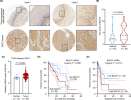
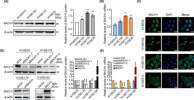
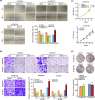
AI Summary: OriGene's Slug antibody (catalog #TA800167) was used in this study for immunohistochemical analysis to detect Slug protein expression, contributing to the investigation of BACH1’s role in promoting epithelial-mesenchymal transition and angiogenesis in esophageal squamous cell carcinoma.
Snippet: of the tissue micro- array were incubated with 1:200 diluted BACH1 antibody (#A5393, Abclonal), 1:50 diluted N- cad antibody (#610920, BD Biosciences), 1:50 diluted vimentin antibody (#A19607, Abclonal), 1:50 diluted Slug antibody (#TA800167, OriGene Technologies
Silencing of anti-chondrogenic microRNA-221 in human mesenchymal stem cells promotes cartilage repair in vivo
Lolli, Narcisi, Lambertini et al
Stem Cells (2016)
Lolli, Narcisi, Lambertini et al
Stem Cells (2016)
Cited by 66
AI Summary: OriGene’s mouse anti-human Slug antibody was used in this study to detect the expression of the Slug transcription factor during analysis of chondrogenic differentiation in human mesenchymal stem cells.
Snippet: 25 dilution;Quartett, Germany), or the chondroregulatory tran- scription factors Sox9 (rabbit anti-human, 1:100 dilu- tion;Santa Cruz Biotechnology, CA, USA), TRPS1 (rabbit anti-human, 1:100 dilution;Abcam) and Slug (mouse anti-human, 1:100 dilution;OriGene, ... Cite SaveSaving
Slug transcription factor and nuclear Lamin B1 are upregulated in osteoarthritic chondrocytes
Piva, Lambertini, Manferdini et al
Osteoarthr. Cartil. (2015)
Piva, Lambertini, Manferdini et al
Osteoarthr. Cartil. (2015)
Cited by 7
AI Summary: In this study, the OriGene mouse anti-human Slug antibody was used for immunohistochemical analysis to detect Slug protein expression in cartilage samples from normal and osteoarthritic patients.
Snippet: embedded in paraffin as previously described 9 . The slides were then incubated using the following antibodies: β-galactosidase (goat anti-human 1:200,) from Santa Cruz Biotechnology (Santa Cruz, CA, USA);and Slug (mouse anti-human, 1:300) from Origene ( ... Cite SaveSaving
Chondrogenic Potential of Slug-depleted hMSCs
Lisignoli, Manferdini, Lambertini et al
Tissue Eng Part A (2014)
Lisignoli, Manferdini, Lambertini et al
Tissue Eng Part A (2014)
AI Summary: In this study, the OriGene Slug antibody was used to detect and analyze the expression of the Slug transcription factor in human mesenchymal stem cells, contributing to the investigation of its role in chondrogenic differentiation.
Snippet: The slides were incubated for 60 min at room temperature with monoclonal anti-human CD73 (Abcam, Cambridge, UK), CD90 (Becton Dickinson), Slug (Origene, Rockville, MD, USA), Collagen type 1, 2, 10, and Aggrecan (Millipore ... Cite SaveSaving
Showing 1-5 of 5 papers.
Powered by BizGenius
*Delivery time may vary from web posted schedule. Occasional delays may occur due to unforeseen complexities in the preparation of your product. International customers may expect an additional 1-2 weeks in shipping.
Related Products
Vous serez peut-être également intéressé par les produits suivants :
Référence
Description
Cond.
Prix HT