

C-Kit Blocking Peptide

Katalog-Nummer MBS9620170-1mg
Size : 1mg
Marke : MyBiosource

C-Kit Blocking Peptide – The purity is >90%,tested by HPLC and MS. Purity
For Research Use Only. Not for use in diagnostic procedures. Catalog #: MBS9620170Blocking peptides are peptides that bind specifically to the target antibody and block antibody binding. These peptide usually contains the epitope recognized by the antibody. Antibodies bound to the blocking peptide no longer bind to the epitope on the… More details
Product Overview
Online Datasheet in PDFProduct Name
C-Kit, Blocking Peptide
Full Product Name
C-Kit Blocking Peptide
Product Gene Name
KIT blocking peptide
Product Synonym Names
C Kit; c-Kit; c-Kit Ligand; CD117; Kit; Kit Ligand; KIT oncogene; KIT proto oncogene receptor tyrosine kinase; KIT_HUMAN; Mast cell growth factor receptor; Mast/stem cell growth factor receptor Kit; MGF; p145 c-kit; PBT; Piebald trait protein; Proto oncogene c Kit; Proto oncogene tyrosine protein kinase Kit; Proto-oncogene c-Kit; SCF Receptor; SCFR; soluble KIT variant 1; Steel Factor Receptor; Stem cell factor receptor; tyrosine protein kinase Kit; Tyrosine-protein kinase Kit; v kit Hardy Zuckerman 4 feline sarcoma viral oncogene homolog; v kit Hardy Zuckerman 4 feline sarcoma viral oncogene like protein; v-kit Hardy-Zuckerman 4 feline sarcoma viral oncogene homolog
Form/Format
Synthetic peptide was lyophilized with 100% acetonitrile and is supplied as a powder. Reconstitute with 0.1 ml DI water for a final concentration of 10 mg/ml.
Purity/Purification
The purity is >90%,tested by HPLC and MS.
Preparation and Storage
Maintain refrigerated at 2-8 degree C for up to 6 months. For long term storage store at -20 degree C.
Molecular Weight
109,865 Da
Chromosome Location
Chromosome: 4; NC_000004.11 (55524095..55606881). Location: 4q11-q12
OMIM
164920
Supply Chain Verification
Manufactured in a lab with traceable raw materials manufactured on site. Coordinated product portfolio of antibodies, pairs, conjugates, recombinant proteins, and immunoassay materials available, please inquire.
Notes
For phospho antibody, we provide phospho peptide (0.5mg) and non-phospho peptide (0.5mg)
ISO Certification
Manufactured in an ISO 9001:2015 Certified Laboratory.
Applications Tested/Suitable for KIT blocking peptide
Blocking/Control
Related Product Information for KIT blocking peptide
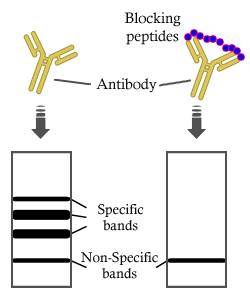
Blocking peptides are peptides that bind specifically to the target antibody and block antibody binding. These peptide usually contains the epitope recognized by the antibody. Antibodies bound to the blocking peptide no longer bind to the epitope on the target protein. This mechanism is useful when non-specific binding is an issue, for example, in Western blotting (immunoblot) and immunohistochemistry (IHC). By comparing the staining from the blocked antibody versus the antibody alone, one can see which staining is specific; Specific binding will be absent from the western blot or immunostaining performed with the neutralized antibody.
Other Notes
Small volumes of KIT blocking peptide vial(s) may occasionally become entrapped in the seal of the product vial during shipment and storage. If necessary, briefly centrifuge the vial on a tabletop centrifuge to dislodge any liquid in the container`s cap. Certain products may require to ship with dry ice and additional dry ice fee may apply.
Searchable Terms for KIT purchase
MBS9620170 is a blocking peptide targeting KIT. Also known as C-Kit Blocking Peptide.
Additional Details
NCBI/Uniprot data below describe general gene information for KIT. It may not necessarily be applicable to this product.
NCBI Official Full Name
mast/stem cell growth factor receptor Kit isoform 1
NCBI Official Synonym Full Names
v-kit Hardy-Zuckerman 4 feline sarcoma viral oncogene homolog
NCBI Official Symbol
KIT
NCBI Official Synonym Symbols
PBT; SCFR; C-Kit; CD117
UniProt Protein Name
Mast/stem cell growth factor receptor Kit
UniProt Synonym Protein Names
Piebald trait protein; PBT; Proto-oncogene c-Kit; Tyrosine-protein kinase Kit; p145 c-kit; v-kit Hardy-Zuckerman 4 feline sarcoma viral oncogene homolog
Protein Family
Mast/stem cell growth factor receptor
UniProt Gene Name
KIT
UniProt Synonym Gene Names
SCFR; SCFR; PBT
UniProt Entry Name
KIT_HUMAN
NCBI Protein Information
mast/stem cell growth factor receptor Kit; p145 c-kit; proto-oncogene c-Kit; piebald trait protein; soluble KIT variant 1; tyrosine-protein kinase Kit; proto-oncogene tyrosine-protein kinase Kit; v-kit Hardy-Zuckerman 4 feline sarcoma viral oncogene-like
NCBI Summary for KIT
This gene encodes the human homolog of the proto-oncogene c-kit. C-kit was first identified as the cellular homolog of the feline sarcoma viral oncogene v-kit. This protein is a type 3 transmembrane receptor for MGF (mast cell growth factor, also known as stem cell factor). Mutations in this gene are associated with gastrointestinal stromal tumors, mast cell disease, acute myelogenous lukemia, and piebaldism. Multiple transcript variants encoding different isoforms have been found for this gene. [provided by RefSeq, Jul 2008]
Show more UniProt Comments for KIT
Kit: a receptor tyrosine kinase and a member of the subfamily that includes PDGF, CSF-1 and FLT-3/flk-2 receptors. Receptor for stem cell factor. Plays a critical role in hematopoietic stem cell, mast cell, melanocyte and germ cell development. Ligand binding induces autophosphorylation, dimerization and activation, leading to the recruitment and phosphorylation of downstream SH2-containing signaling components including PLC-gamma, PI3 kinase p85, SHP2 and CrkL, linking c-Kit to various cell signaling pathways. Molecular lesions that impair the kinase activity of c-Kit are associated with a variety of developmental disorders, while mutations that constitutively activate c-Kit can lead to hyperplasia and tumorigenesis. Activating mutations cause >90% of gastrointestinal stromal tumors (GIST); successfully treated with inhibitors Gleevec (imatinib, Glivec) and Sutent (Sutinib, SU11248). Activating mutations also induce mastocytosis. Autocrine/paracrine stimulation may drive some lung and other tumors. Loss of expression associated with melanoma progression. Familial loss of function mutations cause piebaldism, with defects in hair and skin pigmentation due to lack of melanocytes.
Protein type: Membrane protein, integral; Kinase, protein; Protein kinase, TK; Oncoprotein; EC 2.7.10.1; Protein kinase, tyrosine (receptor); TK group; PDGFR family
Chromosomal Location of Human Ortholog: 4q12
Cellular Component: extracellular space; internal side of plasma membrane; mast cell granule; acrosome; plasma membrane; integral to membrane; intercellular junction; external side of plasma membrane
Molecular Function: protein binding; protein homodimerization activity; protease binding; metal ion binding; protein-tyrosine kinase activity; cytokine binding; stem cell factor receptor activity; receptor signaling protein tyrosine kinase activity; transmembrane receptor protein tyrosine kinase activity; ATP binding
Biological Process: nerve growth factor receptor signaling pathway; activation of MAPK activity; somatic stem cell maintenance; germ cell programmed cell death; positive regulation of JAK-STAT cascade; lymphoid progenitor cell differentiation; positive regulation of long-term neuronal synaptic plasticity; positive regulation of tyrosine phosphorylation of Stat3 protein; regulation of cell shape; epithelial cell proliferation; germ cell migration; erythrocyte differentiation; somatic stem cell division; T cell differentiation; fibroblast growth factor receptor signaling pathway; embryonic hemopoiesis; mast cell chemotaxis; stem cell differentiation; detection of mechanical stimulus involved in sensory perception of sound; positive regulation of phosphoinositide 3-kinase cascade; positive regulation of tyrosine phosphorylation of Stat1 protein; immature B cell differentiation; positive regulation of transcription factor activity; regulation of pigmentation during development; glycosphingolipid metabolic process; mast cell cytokine production; peptidyl-tyrosine phosphorylation; protein amino acid autophosphorylation; signal transduction; myeloid progenitor cell differentiation; ovarian follicle development; positive regulation of MAPKKK cascade; positive regulation of cell proliferation; melanocyte differentiation; negative regulation of programmed cell death; visual learning; hemopoiesis; inflammatory response; positive regulation of Notch signaling pathway; epidermal growth factor receptor signaling pathway; lamellipodium biogenesis; phosphoinositide-mediated signaling; dendritic cell cytokine production; cytokine and chemokine mediated signaling pathway; male gonad development; stem cell maintenance; positive regulation of phosphoinositide 3-kinase activity; mast cell degranulation; regulation of cell proliferation; positive regulation of pseudopodium formation; gut development; positive regulation of tyrosine phosphorylation of Stat5 protein; pigmentation; actin cytoskeleton reorganization; innate immune response; spermatogenesis; spermatid development; positive regulation of cell migration
Disease: Gastrointestinal Stromal Tumor; Mast Cell Disease; Piebald Trait; Testicular Germ Cell Tumor
Show more Protein type: Membrane protein, integral; Kinase, protein; Protein kinase, TK; Oncoprotein; EC 2.7.10.1; Protein kinase, tyrosine (receptor); TK group; PDGFR family
Chromosomal Location of Human Ortholog: 4q12
Cellular Component: extracellular space; internal side of plasma membrane; mast cell granule; acrosome; plasma membrane; integral to membrane; intercellular junction; external side of plasma membrane
Molecular Function: protein binding; protein homodimerization activity; protease binding; metal ion binding; protein-tyrosine kinase activity; cytokine binding; stem cell factor receptor activity; receptor signaling protein tyrosine kinase activity; transmembrane receptor protein tyrosine kinase activity; ATP binding
Biological Process: nerve growth factor receptor signaling pathway; activation of MAPK activity; somatic stem cell maintenance; germ cell programmed cell death; positive regulation of JAK-STAT cascade; lymphoid progenitor cell differentiation; positive regulation of long-term neuronal synaptic plasticity; positive regulation of tyrosine phosphorylation of Stat3 protein; regulation of cell shape; epithelial cell proliferation; germ cell migration; erythrocyte differentiation; somatic stem cell division; T cell differentiation; fibroblast growth factor receptor signaling pathway; embryonic hemopoiesis; mast cell chemotaxis; stem cell differentiation; detection of mechanical stimulus involved in sensory perception of sound; positive regulation of phosphoinositide 3-kinase cascade; positive regulation of tyrosine phosphorylation of Stat1 protein; immature B cell differentiation; positive regulation of transcription factor activity; regulation of pigmentation during development; glycosphingolipid metabolic process; mast cell cytokine production; peptidyl-tyrosine phosphorylation; protein amino acid autophosphorylation; signal transduction; myeloid progenitor cell differentiation; ovarian follicle development; positive regulation of MAPKKK cascade; positive regulation of cell proliferation; melanocyte differentiation; negative regulation of programmed cell death; visual learning; hemopoiesis; inflammatory response; positive regulation of Notch signaling pathway; epidermal growth factor receptor signaling pathway; lamellipodium biogenesis; phosphoinositide-mediated signaling; dendritic cell cytokine production; cytokine and chemokine mediated signaling pathway; male gonad development; stem cell maintenance; positive regulation of phosphoinositide 3-kinase activity; mast cell degranulation; regulation of cell proliferation; positive regulation of pseudopodium formation; gut development; positive regulation of tyrosine phosphorylation of Stat5 protein; pigmentation; actin cytoskeleton reorganization; innate immune response; spermatogenesis; spermatid development; positive regulation of cell migration
Disease: Gastrointestinal Stromal Tumor; Mast Cell Disease; Piebald Trait; Testicular Germ Cell Tumor
Precautions
All of MyBioSource's Products are for scientific laboratory research purposes and are not for diagnostic, therapeutics, prophylactic or in vivo use. Through your purchase, you expressly represent and warrant to MyBioSource that you will properly test and use any Products purchased from MyBioSource in accordance with industry standards. MyBioSource and its authorized distributors reserve the right to refuse to process any order where we reasonably believe that the intended use will fall outside of our acceptable guidelines.
Disclaimer
While every efforts were made to ensure the accuracy of the information provided in this datasheet, MyBioSource will not be liable for any omissions or errors contained herein. MyBioSource reserves the right to make changes to this datasheet at any time without prior notice.
It is the responsibility of the customer to report product performance issues to MyBioSource within 30 days of receipt of the product. Please visit our Terms & Conditions page for more information.
It is the responsibility of the customer to report product performance issues to MyBioSource within 30 days of receipt of the product. Please visit our Terms & Conditions page for more information.
Product Note
Select online data sheet information is drawn from bioinformatics databases, occasionally resulting in ambiguous or non-relevant product information. It is the responsibility of the customer to review, verify, and evaluate the information to make sure it matches their requirements before purchasing the kit. Our ELISA Kit assays are dynamic research tools and sometimes they may be updated and improved. If the format of this assay is important to you then please request the current manual or contact our technical support team with a presales inquiry before placing an order. We will confirm the current details of the assay. We cannot guarantee the sample manual posted online is the most current manual, it is intended to serve as an example only. Please refer to the instructions For Use provided with the assay kit for precise details.
Product PubMed Publications
Products associated with KIT blocking peptide
| Reference Product | PubMed Publications |
|---|---|
| KITLG blocking peptide | >3444 publications with KIT and KITLG |
| SRC blocking peptide | >253 publications with KIT and SRC |
| JAK2 blocking peptide | >114 publications with KIT and JAK2 |
| LYN blocking peptide | >47 publications with KIT and LYN |
| EPOR blocking peptide | >46 publications with KIT and EPOR |
| CBL blocking peptide | >43 publications with KIT and CBL |
| STAT1 blocking peptide | >37 publications with KIT and STAT1 |
| GRB2 blocking peptide | >36 publications with KIT and GRB2 |
| PTPN11 blocking peptide | >29 publications with KIT and PTPN11 |
| TEC blocking peptide | >25 publications with KIT and TEC |
Pathways associated with KIT blocking peptide
| Products by Pathway | Pathway Diagram |
|---|---|
| Acute Myeloid Leukemia Pathway antibodies | Acute Myeloid Leukemia Pathway Diagram |
| Acute Myeloid Leukemia Pathway antibodies | Acute Myeloid Leukemia Pathway Diagram |
| Adaptive Immune System Pathway antibodies | Adaptive Immune System Pathway Diagram |
| C-MYB Transcription Factor Network Pathway antibodies | C-MYB Transcription Factor Network Pathway Diagram |
| Cardiac Progenitor Differentiation Pathway antibodies | Cardiac Progenitor Differentiation Pathway Diagram |
| Constitutive PI3K/AKT Signaling In Cancer Pathway antibodies | Constitutive PI3K/AKT Signaling In Cancer Pathway Diagram |
| Cytokine-cytokine Receptor Interaction Pathway antibodies | Cytokine-cytokine Receptor Interaction Pathway Diagram |
| Cytokine-cytokine Receptor Interaction Pathway antibodies | Cytokine-cytokine Receptor Interaction Pathway Diagram |
| DAP12 Interactions Pathway antibodies | DAP12 Interactions Pathway Diagram |
| DAP12 Signaling Pathway antibodies | DAP12 Signaling Pathway Diagram |
Diseases associated with KIT blocking peptide
| Disease Name | Pubmed Publications |
|---|---|
| Neoplasms Antibodies | >8247 publications with KIT and Neoplasms |
| Gastrointestinal Diseases Antibodies | >3083 publications with KIT and Gastrointestinal Diseases |
| Gastrointestinal Stromal Tumors Antibodies | >1995 publications with KIT and Gastrointestinal Stromal Tumors |
| Cardiovascular Diseases Antibodies | >1315 publications with KIT and Cardiovascular Diseases |
| Nervous System Diseases Antibodies | >1150 publications with KIT and Nervous System Diseases |
| Liver Diseases Antibodies | >1125 publications with KIT and Liver Diseases |
| Inflammation Antibodies | >1022 publications with KIT and Inflammation |
| Lung Diseases Antibodies | >999 publications with KIT and Lung Diseases |
| Necrosis Antibodies | >935 publications with KIT and Necrosis |
| Leukemia, Myeloid, Acute Antibodies | >768 publications with KIT and Leukemia, Myeloid, Acute |
Organs/Tissues associated with KIT blocking peptide
| Organ/Tissue Name | Pubmed Publications |
|---|---|
| Muscle Antibodies | >1929 publications with KIT and Muscle |
| Liver Antibodies | >1816 publications with KIT and Liver |
| Skin Antibodies | >1269 publications with KIT and Skin |
| Lung Antibodies | >1211 publications with KIT and Lung |
| Heart Antibodies | >1050 publications with KIT and Heart |
| Intestine Antibodies | >1023 publications with KIT and Intestine |
| Kidney Antibodies | >893 publications with KIT and Kidney |
| Brain Antibodies | >830 publications with KIT and Brain |
| Spleen Antibodies | >583 publications with KIT and Spleen |
| Nerve Antibodies | >575 publications with KIT and Nerve |