

Lycopersicon esculentum Lectin (LEL, Tomato Lectin, TL) (FITC)

Katalog-Nummer L7785-25C-1mg
Size : 1mg
Marke : US Biological
L7785-25C Lycopersicon esculentum Lectin (LEL, Tomato Lectin, TL) (FITC)
Grade
Molecular Biology GradeApplications
FLISAShipping Temp
Blue IceStorage Temp
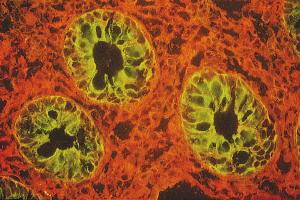
-20°CTomato lectin is a very stable glycoprotein containing about 50 percent arabinose and galactose. This lectin is composed of a single polypeptide of about 100,000D that may form aggregates in solution. Like other lectins that bind N-acetylglucosamine oligomers, tomato lectin prefers trimers and tetramers of this sugar. Tomato lectin, although sharing some specificities with potato, Datura lectin and wheat germ agglutinin, has been reported to be dissimilar in many respects. Tomato lectin binds well to such glycoproteins as glycophorin and Tamm-Horsfall glycoprotein. Tomato lectin (from Lycopersicon esculentum) is an effective marker of blood vessels and microglial cells in rodents. Conjugation of the lectin with a fluorophore facilitates fast, one-step detection and visualization using intravascular perfusion methods or direct application to tissue sections. The tomato lectin complements our existing range of lectin reagents and should be a valuable tool in examining rodent tumor angiogenesis, tracing neovascular development in xenograft models and brain research. Fluorescein labeled Lycopersicon Esculentum (Tomato) Lectin is produced by using the highest quality fluorescein isothiocyanate, our affinity-purified lectin, and special conjugation procedures. Fluorescein labeled Lycopersicon Esculentum (Tomato) Lectin has an appropriate number of fluorochromes bound which provide the maximum fluorescence and optimum staining characteristics for this particular lectin. This lectin is supplied essentially free of unconjugated fluorochromes and inactive lectin. Accompanying each fluorescent lectin is an analysis data sheet summarizing the results of our quality control tests and providing pertinent information on the product. All of these reagents are supplied as solutions perserved with sodium azide.
Applications:
Suitable for use in FLISA. Other applications not tested.
Recommended Dilution:
Optimal dilutions to be determined by the researcher.
Inhibiting/Eluting Sugar:
Chitin Hydrolysate
Excitation:
495nm
Emission:
515nm
F/P (molar):
2.1
Storage and Stability:
Store product at 4°C if to be used immediately within two weeks. For long-term storage, aliquot to avoid repeated freezing and thawing and store at -20°C. Aliquots are stable at -20°C for 6 months after receipt. Dilute required amount only prior to immediate use. Further dilutions can be made in assay buffer.
Caution: FITC conjugates are sensitive to light. For maximum recovery of product, centrifuge the original vial after thawing and prior to removing the cap.