

FGF-19 Protein, Human, Recombinant

Katalog-Nummer NB-64-58000-1mg
Size : 1mg
Marke : Neo Biotech
Remove All
FGF-19 Protein, Human, Recombinant
(Synonyms: fibroblast growth factor 19, FGF19) Copy Product InfoSynonyms: fibroblast growth factor 19, FGF19
Catalog No. TMPY-02907 Copy Product Info
FGF19, also known as FGF-19, is a member of the fibroblast growth factor (FGF) family. FGF family members possess broad mitogenic and cell survival activities, and are involved in a variety of biological processes, including embryonic development, cell growth, morphogenesis, tissue repair, tumor growth and invasion. FGF19 interacts with FGFR1, FGFR2, FGFR3 and FGFR4. Affinity between fibroblast growth factors (FGFs) and their receptors is increased by KL, KLB and heparan sulfate glycosaminoglycans that function as coreceptors. It interacts with KL and KLB directly. However, it interacts with FGFR4 in the presence of heparin, KL or KLB. FGF19 is involved in the suppression of bile acid biosynthesis through down-regulation of CYP7A1 expression, following positive regulation of the JNK and ERK1/2 cascades. It also stimulates glucose uptake in adipocytes.
For research use only—not for human use. No sales to individuals. Use as intended only.
Select Batch
Purity:SDS-PAGE: 97.4%; SEC-HPLC: 99.5%
Appearance:Lyophilized powder
Color:White
Contact us for more batch information
Product Information
Bioactivity
Chemical Properties
Storage & Solubility Information
| Bioactivity | Activity testing is in progress. It is theoretically active, but we cannot guarantee it. If you require protein activity, we recommend choosing the eukaryotic expression version first. |
| Description | FGF19, also known as FGF-19, is a member of the fibroblast growth factor (FGF) family. FGF family members possess broad mitogenic and cell survival activities, and are involved in a variety of biological processes, including embryonic development, cell growth, morphogenesis, tissue repair, tumor growth and invasion. FGF19 interacts with FGFR1, FGFR2, FGFR3 and FGFR4. Affinity between fibroblast growth factors (FGFs) and their receptors is increased by KL, KLB and heparan sulfate glycosaminoglycans that function as coreceptors. It interacts with KL and KLB directly. However, it interacts with FGFR4 in the presence of heparin, KL or KLB. FGF19 is involved in the suppression of bile acid biosynthesis through down-regulation of CYP7A1 expression, following positive regulation of the JNK and ERK1/2 cascades. It also stimulates glucose uptake in adipocytes. |
| Species | Human |
| Expression System | E. coli |
| Tag | Tag Free |
| Accession Number | O95750-1 |
| Construction | A DNA sequence encoding the mature form of human FGF19 (O95750-1) (Phe27-Lys216) was expressed with a N-terminal Met. Predicted N terminal: Met |
| Protein Purity | ≥ 95 % as determined by SDS-PAGE. ≥ 95 % as determined by SEC-HPLC. 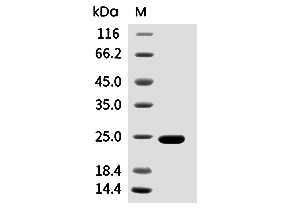 , ,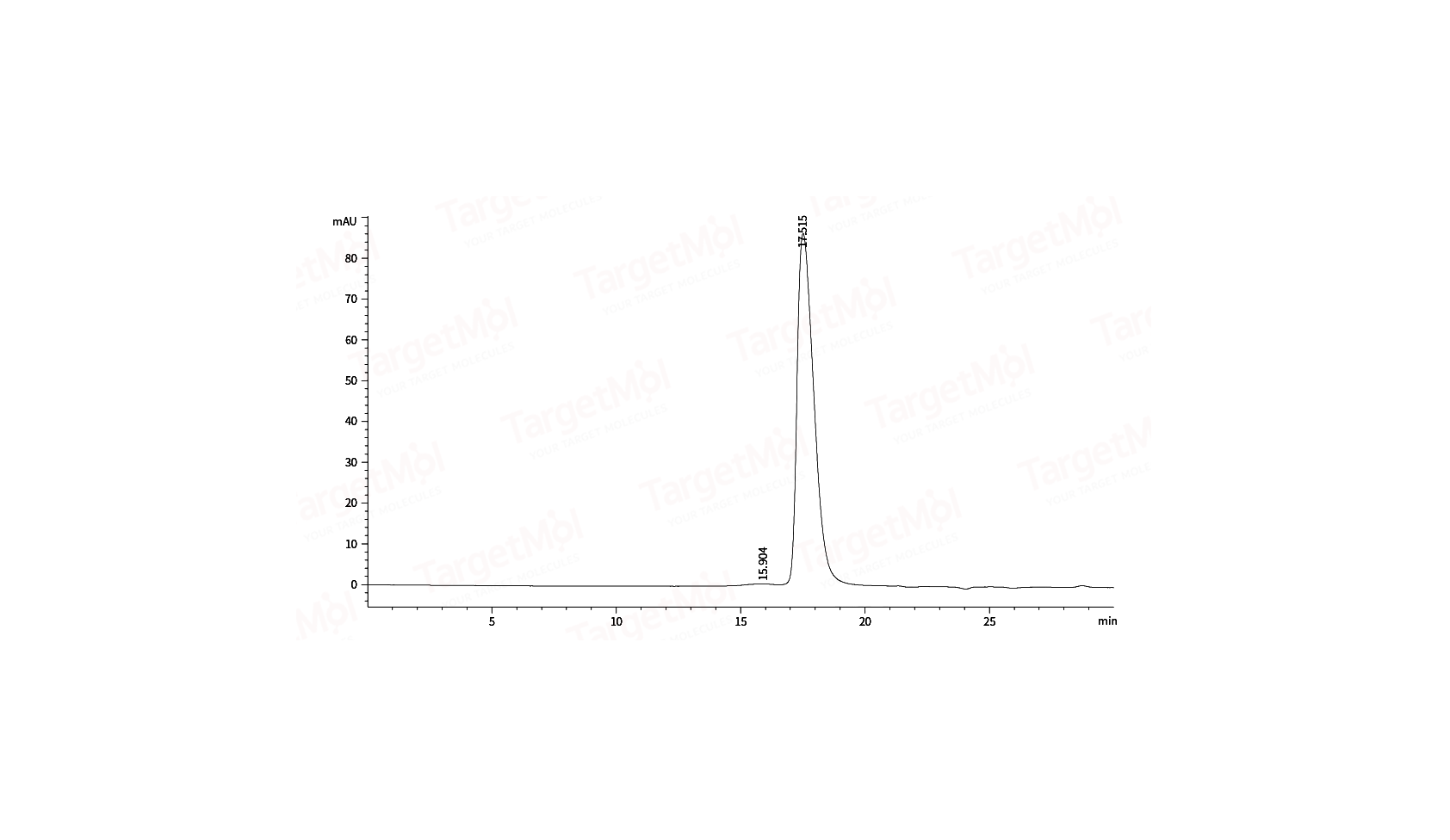 |
| Endotoxin | < 10 EU/mg of the protein. |
| Formulation | Lyophilized from a solution filtered through a 0.22 μm filter, containing PBS, pH 7.4. Typically, a mixture containing 5% to 8% trehalose, mannitol, and 0.01% Tween 80 is incorporated as a protective agent before lyophilization. |
| Reconstitution | Reconstituted with sterile deionized water to 0.25 mg/mL. Reconstitution conditions may vary depending on the lot. |
| Synonyms | fibroblast growth factor 19, FGF19 |
| Research Background | FGF19, also known as FGF-19, is a member of the fibroblast growth factor (FGF) family. FGF family members possess broad mitogenic and cell survival activities, and are involved in a variety of biological processes, including embryonic development, cell growth, morphogenesis, tissue repair, tumor growth and invasion. FGF19 interacts with FGFR1, FGFR2, FGFR3 and FGFR4. Affinity between fibroblast growth factors (FGFs) and their receptors is increased by KL, KLB and heparan sulfate glycosaminoglycans that function as coreceptors. It interacts with KL and KLB directly. However, it interacts with FGFR4 in the presence of heparin, KL or KLB. FGF19 is involved in the suppression of bile acid biosynthesis through down-regulation of CYP7A1 expression, following positive regulation of the JNK and ERK1/2 cascades. It also stimulates glucose uptake in adipocytes. |
| Molecular Weight | 21.4 kDa (predicted); 23 kDa (reducing conditions) |
| Shipping | In general, lyophilized powders are shipped with blue ice, while solutions are shipped with dry ice. |
| Storage | It is recommended to store recombinant proteins at -20°C to -80°C for future use. Lyophilized powders can be stably stored for over 12 months, while liquid products can be stored for 6-12 months at -80°C. For reconstituted protein solutions, the solution can be stored at -20°C to -80°C for at least 3 months. Please avoid multiple freeze-thaw cycles and store products in aliquots. |
Calculator
Dose Conversion
Keywords
FGF-19FGF 19
Preview
Related Tags: FGF-19 Protein, Human, Recombinant chemical structure | FGF-19 Protein, Human, Recombinant molecular weight
Generate Quote
Catalog No.: Cas No.:
Add
| Size | Quantity | Unit Price | Amount | Operation |
|---|
Generate Quote