
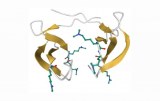
Antimicrobial peptides

Antimicrobial peptides

Antimicrobial peptides (AMPs), also known as host defense peptides, are short, positively charged peptides that play a crucial role in the innate immune response across a wide variety of organisms, from microorganisms to humans. These peptides are recognized for their ability to directly kill microbial pathogens, including bacteria, fungi, and viruses, while also modulating the host's immune response.

Structure and Classification

AMPs typically range from 12 to 50 amino acids in length and are characterized by a high proportion of positively charged residues (such as arginine and lysine) and hydrophobic residues. This unique structure allows them to interact effectively with microbial membranes. AMPs can be classified based on their secondary structures into several categories:

  • α-helical peptides: These have a coiled structure that facilitates membrane interaction.
  • β-sheet peptides: Often stabilized by disulfide bonds, these can form more complex structures.
  • β-hairpin or loop structures: These feature one or more disulfide bonds or cyclization.
  • Extended structures: These lack a defined secondary structure but can still interact with membranes.

Mechanisms of Action

The antimicrobial activity of AMPs is largely attributed to their ability to disrupt microbial membranes. The mechanisms include:

  • Membranolytic actions: AMPs can form pores in bacterial membranes through various models such as the barrel-stave model, carpet model, and toroidal model. These actions lead to leakage of cellular contents and ultimately cell death.
  • Intracellular targets: Some AMPs can penetrate the cell membrane and bind to intracellular components, inhibiting vital processes such as DNA and protein synthesis.

Therapeutic Potential

Given the rising concern over antibiotic resistance, AMPs are being explored as alternative therapeutic agents. They have several advantages:

  • Broad-spectrum activity: AMPs can target a wide range of pathogens, including antibiotic-resistant strains.
  • Rapid action: They often act quickly to disrupt microbial integrity.
  • Immunomodulatory effects: Beyond their antimicrobial properties, some AMPs enhance the host's immune response.

Research is ongoing to evaluate AMPs in clinical settings for various applications:

  • Infection control: Several AMPs are currently undergoing clinical trials as novel anti-infectives.
  • Wound healing: Their ability to promote healing and prevent infections makes them suitable candidates for wound care products.
  • Cancer treatment: Some studies suggest that AMPs may have anti-cancer properties by targeting transformed cells.

Antimicrobial peptides represent a promising class of therapeutic agents with broad applications in medicine. Their unique mechanisms of action and ability to combat resistant pathogens make them valuable in the fight against infectious diseases.

We offer a range of antimicrobial peptides for research and therapeutic purposes, supporting advancements in this exciting field of study.

Frequently Asked Questions (FAQ)

How can I quickly find a antimicrobial peptides product?

To find a antimicrobial peptides product, use the search function by name, product code, supplier, brand or sub-category. You can also browse the product families listed on the page to identify an available product code, an alternative or an equivalent product.

Does CliniSciences stock several product codes in the antimicrobial peptides category?

Yes, CliniSciences distributes several product references in the antimicrobial peptides category, sourced from specialist suppliers. Depending on the product family, references may vary in terms of format, packaging, brand, supplier, technical specifications or availability.

Can I request a quote for antimicrobial peptides products?

Yes, you can request a quote for antimicrobial peptides products from the product page or by contacting CliniSciences (info@clinisciences.com). To help us process your enquiry, please provide, where possible, the product name, catalogue reference, required quantity, the supplier or brand you are looking for, and the country of delivery.

How can I find out if a antimicrobial peptides product is available to order?

The availability of a antimicrobial peptides product depends on the product code, supplier, packaging and country of delivery. For up-to-date information, please check the product details page or contact CliniSciences with the product code or name of the product you are looking for.

What should I do if I cannot find the antimicrobial peptides product I am looking for?

If the antimicrobial peptides product you are looking for does not appear in the catalogue, please contact CliniSciences with the available information: product name, reference number, supplier, brand, format or packaging. The team will be able to search for the reference number within its network of suppliers or suggest an available alternative.

Are all antimicrobial peptides products available under the same terms and conditions?

No. Ordering, delivery, storage and documentation conditions may vary depending on the product type, the supplier and the applicable regulations. Certain product codes may require specific approval, specialised transport, a safety data sheet or additional information prior to ordering.

Search result : 1946 product found

Refine your search :

RUO
CE/IVD
NEW
  • Unconjugated 501
  • human 126
  • xenopus 112
  • mouse 82
  • cow 60
  • horse 38
  • e. coli 36
  • pig 28
  • bird 12
  • gorilla 11
  • guinea pig 11
  • rat 10
  • chicken 3
  • insect 3
  • sheep 1
  • e. coli 534
  • yeast 468
  • 265
  • human 28
  • virus 9
  • mouse 8
  • sheep 7
  • rat 4
  • cow 3
  • Protein/peptide 1946
  • WB 69
  • ELISA 35
  • IP 22
  • Chicken 3
  • Human 3
  • 2
APPLY FILTERS
REINITIALIZE


Cat#
Description
Cond.
Price Bef. VAT
NB-64-83767-5mg
 5mg 
NB-64-83767-50mg
 50mg 
NB-26-01776-10ug
 10ug 
NB-26-01776-2UG
 2ug 
    ‹
    ›