

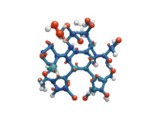
Small proteins are biological macromolecules composed of 50 amino acids or fewer. Although they have long been overlooked due to challenges related to their annotation and biochemical detection, recent advances in bioinformatics and ribosomal profiling have revealed that they are present in large numbers in bacteria, archaea, and eukaryotes.
Functions of Small Proteins
Small proteins play important roles in various biological processes, including:
- Cell signaling
- Metabolism
- Growth
- Regulation of bacterial virulence and drug resistance
They often act as regulators, interacting with other biomolecules to control different pathways and processes.
Potential Applications
Due to their small size and simple structural features, small proteins offer several advantages:
- They can serve as model systems to overcome folding speed limitations in protein folding simulations and drug design.
- Their small size makes them interesting targets for protein engineering and de novo design.
- Efforts are underway to develop peptide regulators capable of controlling bacterial virulence and drug resistance.
