

Anti-PDGFR alpha Antibody

Cat# MBS821212-0,1mL
Size : 0.1mL
Marca : MyBiosource
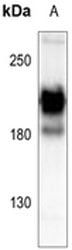
Western blot analysis of PDGFR alpha expression in C6 (A) whole cell lysates.
(Predicted band size:122 kD; Observed band size: 190 kD)
(Predicted band size:122 kD; Observed band size: 190 kD)
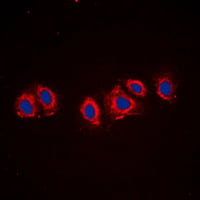
Immunofluorescent analysis of PDGFR alpha staining in NIH3T3 cells. Formalin-fixed cells were permeabilized with 0.1% Triton X-100 in TBS for 5-10 minutes and blocked with 3% BSA-PBS for 30 minutes at room temperature. Cells were probed with the primary antibody in 3% BSA-PBS and incubated overnight at 4°C in a humidified chamber. Cells were washed with PBST and incubated with a DyLight 594-conjugated secondary antibody (red) in PBS at room temperature in the dark. DAPI was used to stain the cell nuclei (blue).
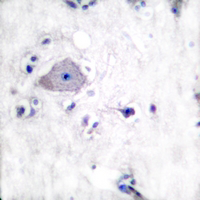
Immunohistochemical analysis of PDGFR alpha staining in human brain formalin fixed paraffin embedded tissue section. The section was pre-treated using heat mediated antigen retrieval with sodium citrate buffer (pH 6.0). The section was then incubated with the antibody at room temperature and detected using an HRP conjugated compact polymer system. DAB was used as the chromogen. The section was then counterstained with haematoxylin and mounted with DPX.
PDGFR Alpha (PDGFRA) Antibody – Rabbit Polyclonal
For Research Use Only. Not for use in diagnostic procedures. Catalog #: MBS821212MBS821212 is an antibody targeting PDGFRA. Also known as Anti-PDGFR alpha Antibody. Reactive in Human, Mouse, Rat, Bovine, Chicken, Dog, Monkey, Pig. Host: Rabbit. Rabbit polyclonal antibody to PDGFR alpha More details
Product Overview
Online Datasheet in PDFProduct Name
PDGFR alpha (PDGFRA), Polyclonal Antibody
Full Product Name
Anti-PDGFR alpha Antibody
Product Gene Name
anti-PDGFRA antibody
Product Synonym Names
PDGFR2; RHEPDGFRA; Platelet-derived growth factor receptor alpha; PDGF-R-alpha; PDGFR-alpha; Alpha platelet-derived growth factor receptor; Alpha-type platelet-derived growth factor receptor; CD140 antigen-like family member A; CD140a antigen; Platelet-derived growth factor alpha receptor; Platelet-derived growth factor receptor 2; PDGFR-2; CD140a
Clonality
Polyclonal
Host
Rabbit
Species Reactivity
Human, Mouse, Rat, Bovine, Chicken, Dog, Monkey, Pig
Form/Format
Liquid in 0.42% Potassium phosphate, 0.87% Sodium chloride, pH 7.3, 30% glycerol, and 0.01% sodium azide.
Purity/Purification
The antibody was purified by immunogen affinity chromatography.
Specificity
Recognizes endogenous levels of PDGFR alpha protein.
Preparation and Storage
Upon receipt aliquot and store at -20 degree C for one year. Avoid freeze/thaw cycles.
Antibody/Peptide Pairs
PDGFR alpha peptide (MBS822450) is used for blocking the activity of PDGFR alpha antibody (MBS821212)
Applications Tested/Suitable for anti-PDGFRA antibody
Western Blot (WB), Immunohistochemistry (IHC), Immunofluorescence (IF), Immunocytochemistry (ICC)
Application Notes for anti-PDGFRA antibody
WB: 1:500 - 1:1000
IHC: 1:50 - 1/100
IF/ICC: 1:50 - 1:200
IHC: 1:50 - 1/100
IF/ICC: 1:50 - 1:200
Immunofluorescence (IF) of anti-PDGFRA antibody
Immunofluorescent analysis of PDGFR alpha staining in NIH3T3 cells. Formalin-fixed cells were permeabilized with 0.1% Triton X-100 in TBS for 5-10 minutes and blocked with 3% BSA-PBS for 30 minutes at room temperature. Cells were probed with the primary antibody in 3% BSA-PBS and incubated overnight at 4°C in a humidified chamber. Cells were washed with PBST and incubated with a DyLight 594-conjugated secondary antibody (red) in PBS at room temperature in the dark. DAPI was used to stain the cell nuclei (blue).
Immunohistochemistry (IHC) of anti-PDGFRA antibody
Immunohistochemical analysis of PDGFR alpha staining in human brain formalin fixed paraffin embedded tissue section. The section was pre-treated using heat mediated antigen retrieval with sodium citrate buffer (pH 6.0). The section was then incubated with the antibody at room temperature and detected using an HRP conjugated compact polymer system. DAB was used as the chromogen. The section was then counterstained with haematoxylin and mounted with DPX.
Other Notes
Small volumes of anti-PDGFRA antibody vial(s) may occasionally become entrapped in the seal of the product vial during shipment and storage. If necessary, briefly centrifuge the vial on a tabletop centrifuge to dislodge any liquid in the container`s cap. Certain products may require to ship with dry ice and additional dry ice fee may apply.
Additional Details
NCBI/Uniprot data below describe general gene information for PDGFRA. It may not necessarily be applicable to this product.
NCBI Official Full Name
platelet-derived growth factor receptor alpha
NCBI Official Synonym Full Names
platelet-derived growth factor receptor, alpha polypeptide
NCBI Official Symbol
PDGFRA
NCBI Official Synonym Symbols
CD140A; PDGFR2; PDGFR-2; RHEPDGFRA
UniProt Protein Name
Platelet-derived growth factor receptor alpha
UniProt Synonym Protein Names
Alpha platelet-derived growth factor receptor; Alpha-type platelet-derived growth factor receptor; CD140 antigen-like family member A; CD140a antigen; Platelet-derived growth factor alpha receptor; Platelet-derived growth factor receptor 2; PDGFR-2; CD_antigen: CD140a
Protein Family
Platelet-derived growth factor receptor
UniProt Gene Name
PDGFRA
UniProt Synonym Gene Names
PDGFR2; RHEPDGFRA; PDGF-R-alpha; PDGFR-alpha; PDGFR-2
UniProt Entry Name
PGFRA_HUMAN
NCBI Protein Information
platelet-derived growth factor receptor alpha; PDGF-R-alpha; CD140a antigen; PDGFRA/BCR fusion; CD140 antigen-like family member A; platelet-derived growth factor receptor 2; alpha-type platelet-derived growth factor receptor; rearranged-in-hypereosinophilia-platelet derived growth factor receptor alpha fusion protein
NCBI Summary for PDGFRA
This gene encodes a cell surface tyrosine kinase receptor for members of the platelet-derived growth factor family. These growth factors are mitogens for cells of mesenchymal origin. The identity of the growth factor bound to a receptor monomer determines whether the functional receptor is a homodimer or a heterodimer, composed of both platelet-derived growth factor receptor alpha and beta polypeptides. Studies suggest that this gene plays a role in organ development, wound healing, and tumor progression. Mutations in this gene have been associated with idiopathic hypereosinophilic syndrome, somatic and familial gastrointestinal stromal tumors, and a variety of other cancers. [provided by RefSeq, Mar 2012]
Show more UniProt Comments for PDGFRA
PDGFRA: a receptor tyrosine kinase of the PDGFR family that binds members of the platelet-derived growth factor family. The identity of the growth factor bound determines whether the functional receptor is a homodimer or a heterodimer, composed of both PDGFR-alpha and -beta. Ligand binding induces receptor dimerization and autophosphorylation. Particularly important for kidney development since mice heterozygous for the receptor exhibit defective kidney phenotypes. Chromosomal rearrangments activate PDGFRalpha by fusion to BCR, causing atypical chronic myelogenous leukemia (CML), and to FIP1L1, causing idiopathic hypereosinophilic syndrome. Activating point mutations cause a minority of gastrointestinal stromal tumors (GIST). Promoter polymorphisms linked to neural tube defects including spina bifida, verified by mouse mutant model. Inhibitors: Gleevec, Sutent. OMIM: Two alternatively-spliced isoforms have been described.
Protein type: Oncoprotein; Membrane protein, integral; Protein kinase, tyrosine (receptor); Protein kinase, TK; EC 2.7.10.1; Kinase, protein; TK group; PDGFR family
Chromosomal Location of Human Ortholog: 4q12
Cellular Component: microvillus; membrane; integral to plasma membrane; cytoplasm; plasma membrane; nucleus; intrinsic to plasma membrane; external side of plasma membrane
Molecular Function: vascular endothelial growth factor receptor activity; protein binding; protein homodimerization activity; platelet-derived growth factor binding; platelet-derived growth factor receptor binding; platelet-derived growth factor alpha-receptor activity; transmembrane receptor protein tyrosine kinase activity; ATP binding
Biological Process: estrogen metabolic process; extracellular matrix organization and biogenesis; regulation of chemotaxis; peptidyl-tyrosine phosphorylation; nerve growth factor receptor signaling pathway; wound healing; viral reproduction; protein amino acid autophosphorylation; platelet-derived growth factor receptor signaling pathway; cardiac myofibril assembly; palate development; positive regulation of fibroblast proliferation; elevation of cytosolic calcium ion concentration; Leydig cell differentiation; embryonic digestive tract morphogenesis; luteinization; positive regulation of cell proliferation; male genitalia development; epidermal growth factor receptor signaling pathway; fibroblast growth factor receptor signaling pathway; phosphoinositide-mediated signaling; adrenal gland development; in utero embryonic development; positive regulation of phosphoinositide 3-kinase activity; embryonic cranial skeleton morphogenesis; odontogenesis of dentine-containing teeth; embryonic skeletal morphogenesis; positive regulation of phosphoinositide 3-kinase cascade; cell activation; innate immune response; hemopoietic progenitor cell differentiation; positive regulation of DNA replication; lung development; positive regulation of cell migration
Disease: Gastrointestinal Stromal Tumor; Hypereosinophilic Syndrome, Idiopathic
Show more Protein type: Oncoprotein; Membrane protein, integral; Protein kinase, tyrosine (receptor); Protein kinase, TK; EC 2.7.10.1; Kinase, protein; TK group; PDGFR family
Chromosomal Location of Human Ortholog: 4q12
Cellular Component: microvillus; membrane; integral to plasma membrane; cytoplasm; plasma membrane; nucleus; intrinsic to plasma membrane; external side of plasma membrane
Molecular Function: vascular endothelial growth factor receptor activity; protein binding; protein homodimerization activity; platelet-derived growth factor binding; platelet-derived growth factor receptor binding; platelet-derived growth factor alpha-receptor activity; transmembrane receptor protein tyrosine kinase activity; ATP binding
Biological Process: estrogen metabolic process; extracellular matrix organization and biogenesis; regulation of chemotaxis; peptidyl-tyrosine phosphorylation; nerve growth factor receptor signaling pathway; wound healing; viral reproduction; protein amino acid autophosphorylation; platelet-derived growth factor receptor signaling pathway; cardiac myofibril assembly; palate development; positive regulation of fibroblast proliferation; elevation of cytosolic calcium ion concentration; Leydig cell differentiation; embryonic digestive tract morphogenesis; luteinization; positive regulation of cell proliferation; male genitalia development; epidermal growth factor receptor signaling pathway; fibroblast growth factor receptor signaling pathway; phosphoinositide-mediated signaling; adrenal gland development; in utero embryonic development; positive regulation of phosphoinositide 3-kinase activity; embryonic cranial skeleton morphogenesis; odontogenesis of dentine-containing teeth; embryonic skeletal morphogenesis; positive regulation of phosphoinositide 3-kinase cascade; cell activation; innate immune response; hemopoietic progenitor cell differentiation; positive regulation of DNA replication; lung development; positive regulation of cell migration
Disease: Gastrointestinal Stromal Tumor; Hypereosinophilic Syndrome, Idiopathic
Precautions
All of MyBioSource's Products are for scientific laboratory research purposes and are not for diagnostic, therapeutics, prophylactic or in vivo use. Through your purchase, you expressly represent and warrant to MyBioSource that you will properly test and use any Products purchased from MyBioSource in accordance with industry standards. MyBioSource and its authorized distributors reserve the right to refuse to process any order where we reasonably believe that the intended use will fall outside of our acceptable guidelines.
Disclaimer
While every efforts were made to ensure the accuracy of the information provided in this datasheet, MyBioSource will not be liable for any omissions or errors contained herein. MyBioSource reserves the right to make changes to this datasheet at any time without prior notice.
It is the responsibility of the customer to report product performance issues to MyBioSource within 30 days of receipt of the product. Please visit our Terms & Conditions page for more information.
It is the responsibility of the customer to report product performance issues to MyBioSource within 30 days of receipt of the product. Please visit our Terms & Conditions page for more information.
Product Note
Select online data sheet information is drawn from bioinformatics databases, occasionally resulting in ambiguous or non-relevant product information. It is the responsibility of the customer to review, verify, and evaluate the information to make sure it matches their requirements before purchasing the kit. Our ELISA Kit assays are dynamic research tools and sometimes they may be updated and improved. If the format of this assay is important to you then please request the current manual or contact our technical support team with a presales inquiry before placing an order. We will confirm the current details of the assay. We cannot guarantee the sample manual posted online is the most current manual, it is intended to serve as an example only. Please refer to the instructions For Use provided with the assay kit for precise details.
Product PubMed Publications
Products associated with anti-PDGFRA antibody
| Reference Product | PubMed Publications |
|---|---|
| PDGFRB antibody | >1654 publications with PDGFRA and PDGFRB |
| PDGFB antibody | >360 publications with PDGFRA and PDGFB |
| FGF2 antibody | >130 publications with PDGFRA and FGF2 |
| PDGFA antibody | >44 publications with PDGFRA and PDGFA |
| GRB2 antibody | >14 publications with PDGFRA and GRB2 |
| PDGFC antibody | >12 publications with PDGFRA and PDGFC |
| CRK antibody | >10 publications with PDGFRA and CRK |
| PIK3R1 antibody | >7 publications with PDGFRA and PIK3R1 |
| CRKL antibody | >2 publications with PDGFRA and CRKL |
| PLCG1 antibody | >1 publications with PDGFRA and PLCG1 |
Pathways associated with anti-PDGFRA antibody
| Products by Pathway | Pathway Diagram |
|---|---|
| ATF-2 Transcription Factor Network Pathway antibodies | ATF-2 Transcription Factor Network Pathway Diagram |
| Adaptive Immune System Pathway antibodies | Adaptive Immune System Pathway Diagram |
| Angiogenesis Pathway antibodies | Angiogenesis Pathway Diagram |
| Calcium Signaling Pathway antibodies | Calcium Signaling Pathway Diagram |
| Calcium Signaling Pathway antibodies | Calcium Signaling Pathway Diagram |
| Cardiac Progenitor Differentiation Pathway antibodies | Cardiac Progenitor Differentiation Pathway Diagram |
| Constitutive PI3K/AKT Signaling In Cancer Pathway antibodies | Constitutive PI3K/AKT Signaling In Cancer Pathway Diagram |
| Cytokine-cytokine Receptor Interaction Pathway antibodies | Cytokine-cytokine Receptor Interaction Pathway Diagram |
| Cytokine-cytokine Receptor Interaction Pathway antibodies | Cytokine-cytokine Receptor Interaction Pathway Diagram |
| DAP12 Interactions Pathway antibodies | DAP12 Interactions Pathway Diagram |
Diseases associated with anti-PDGFRA antibody
| Disease Name | Pubmed Publications |
|---|---|
| Gastrointestinal Stromal Tumors Antibodies | >707 publications with PDGFRA and Gastrointestinal Stromal Tumors |
| Fibrosis Antibodies | >270 publications with PDGFRA and Fibrosis |
| Hypereosinophilic Syndrome Antibodies | >265 publications with PDGFRA and Hypereosinophilic Syndrome |
| Necrosis Antibodies | >256 publications with PDGFRA and Necrosis |
| Cardiovascular Diseases Antibodies | >202 publications with PDGFRA and Cardiovascular Diseases |
| Lung Diseases Antibodies | >157 publications with PDGFRA and Lung Diseases |
| Skin Diseases Antibodies | >156 publications with PDGFRA and Skin Diseases |
| Inflammation Antibodies | >151 publications with PDGFRA and Inflammation |
| Liver Diseases Antibodies | >137 publications with PDGFRA and Liver Diseases |
| Kidney Diseases Antibodies | >109 publications with PDGFRA and Kidney Diseases |
Organs/Tissues associated with anti-PDGFRA antibody
| Organ/Tissue Name | Pubmed Publications |
|---|---|
| Vascular Antibodies | >818 publications with PDGFRA and Vascular |
| Muscle Antibodies | >813 publications with PDGFRA and Muscle |
| Blood Antibodies | >644 publications with PDGFRA and Blood |
| Brain Antibodies | >454 publications with PDGFRA and Brain |
| Bone Antibodies | >365 publications with PDGFRA and Bone |
| Lung Antibodies | >292 publications with PDGFRA and Lung |
| Nerve Antibodies | >263 publications with PDGFRA and Nerve |
| Embryonic Tissue Antibodies | >255 publications with PDGFRA and Embryonic Tissue |
| Liver Antibodies | >249 publications with PDGFRA and Liver |
| Kidney Antibodies | >195 publications with PDGFRA and Kidney |