


Mouse anti-Human/Monkey/Cow/Dog/Mouse/Rat/Hamster TGF-beta Antibody
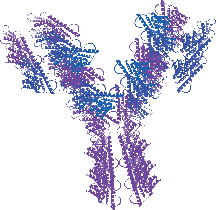
Anti-TGF-beta Antibody
Anti-TGF-beta Antibody
Contact Us for Bulk Request
Product Description
Specifications
| Size | 20 µg, 100 µg |
| Species | Human, Mouse, Rat |
| Specificity | Other species not tested. |
| Host Species | Mouse |
| Accession Number | P01137|P10600|P61812 |
| Gene Id | 7040|7042|7043 |
| Gene Symbols | TGFB1, TGFB2, TGFB3, TGFB |
| Protein Name / Synonyms | Transforming growth factor beta-1 (TGF-beta-1) [Cleaved into: Latency-associated peptide (LAP)], Transforming growth factor beta-3 (TGF-beta-3) [Cleaved into: Latency-associated peptide (LAP)], Transforming growth factor beta-2 (TGF-beta-2) (BSC-1 cell growth inhibitor) (Cetermin) (Glioblastoma-derived T-cell suppressor factor) (G-TSF) (Polyergin) [Cleaved into: Latency-associated peptide (LAP)] |
| Immunogen | Bovine TGF-beta2 protein was used as the immunogen for the TGF-beta antibody. |
| Isotype | Kappa, IgG1 |
| Purity | Protein G affinity chromatography |
| Concentration (lot specific) | 0.2 mg/ml in 1X PBS with 0.1 mg/ml BSA (US sourced) and 0.05% sodium azide |
| Recommended Applications | Functional Activity: Cytokine Neutralization (Order SAF formulation) |
| Domain / Region / Terminus | Cytoplasm and extracellular (secreted) |
| Research Area | TGF-beta Signaling |
| Shipping Type | Blue ice |
| Storage | ≤-20°C |
Description
This mAb recognizes TGF beta 1, 2 and 3. Three TGFbs have been identified in mammals. TGFb1, TGFb2 and TGFb3 are each synthesized as precursor proteins that are very similar in that each is cleaved to yield a 112 amino acid polypeptide that remains associated with the latent portion of the molecules. Biologically active TGFb requires dimerization of the monomers (usually homodimers) and release of the latent peptide portion. Overall, the mature region of the TGFb3 protein has approximately 80% identity to the mature region of both TGFb1 and TGFb2. However, the NH2 terminals or precursor regions of their molecules share only 27% sequence identity. TGFb's inhibit the growth of epithelial cells and stimulate the growth of mesenchymal cells.
Storage
Store the TGF-beta antibody at 2-8°C (with azide) or aliquot and store at -20°C or colder (without azide).
Expiration:
12 months from the date of shipment when stored properly.
documents
citations
Alginate/gum arabic-based biomimetic hydrogel enriched with immobilized nerve growth factor and carnosine improves diabetic wound regeneration
- Species:
- Rat
- Sample Type:
- Diabetic foot ulcers (DFUs) epithelial tissue
- Year:
- 2023
- Journal Name:
- Carbohydrate Polymers