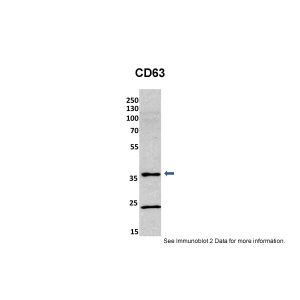
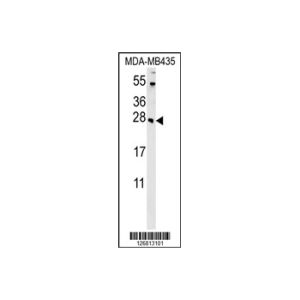
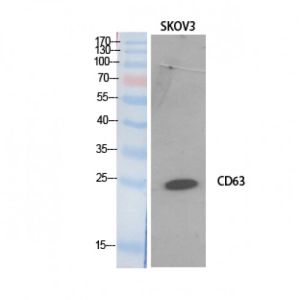
CD63 Antibody

Cat# OASA02349
Size : 25ug
Marca : Aviva Systems Biology
| Datasheets/Manuals | Printable datasheet for CD63 Antibody (OASA02349) |
|---|
| Predicted Species Reactivity | Human |
|---|---|
| Product Format | Liquid. Phosphate buffered saline |
| Clonality | Monoclonal |
| Clone | MEM-259 |
| Isotype | IgG1 |
| Host | Mouse |
| Application | FC|IF|IP |
| Reconstitution and Storage | -20°C |
| Immunogen | HPB-ALL cell line. |
| Purification | Protein A Purified |
| Concentration | 1 mg/ml |
| Specificity | Mouse anti Human CD63 antibody, clone MEM-259 recognizes the CD63 cell surface antigen, also known as granulophysin, lysozomal associated membrane protein 3 (LAMP-3), Melanoma-associated antigen ME491, Ocular melanoma-associated antigen or tetraspanin-30. |
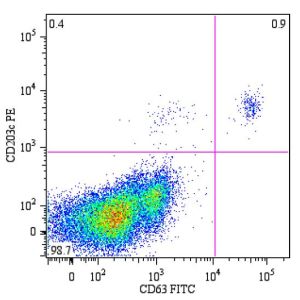
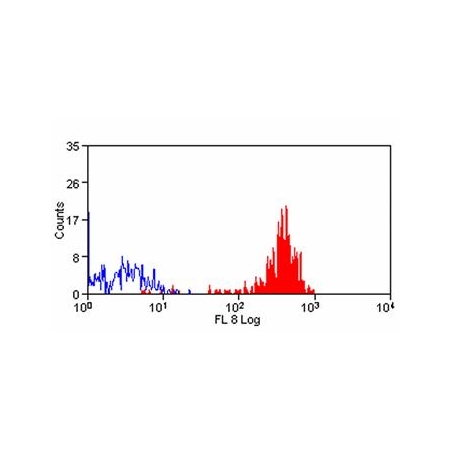
| Application Info | FC: 1/25-1/100. Use 10 uL of the suggested working dilution to label 106 cells in 100 uL or 100 uL whole blood. |
| Reference | 1. Casey, T. et al. (2007) Organelle proteomics: identification of the exocytic machinery associated with the natural killer cell secretory lysosome. Mol. Cell. Proteomics 6: 767-780. |
|---|---|
| Gene Symbol | CD63 |
| Alias Symbols | CD63 antigen, CD63 antigen (melanoma 1 antigen), granulophysin, LAMP-3, lysosomal-associated membrane protein 3, lysosome-associated membrane glycoprotein 3, ME491, melanoma-associated antigen ME491, melanoma-associated antigen MLA1, MLA1, ocular melanoma-associated antigen, OMA81H, tetraspanin-30, tspan-30, TSPAN30. |
| NCBI Gene Id | 967 |
| Protein Name | CD63 antigen |
| Description of Target | CD63 is a 238 amino acid, tetraspanin glycoprotein of ~40-60 kDa. CD63 is expressed by monocytes, macrophages, endothelial cells where it is a component of Weibel-Palade bodies and by a variety of cell lines. It is located intracellularly in lysosomal granules of platelets, being translocated to the surface upon activation. It may therefore be useful as a marker of platelet activation. CD63 expression is also associated with melanoma development and expression is rapidly down-regulated by progesterone in endometrial tissues. |
| Uniprot ID | P08962 |
| Protein Accession # | NP_001771.1 |
| Protein Size (# AA) | 238 |