

Glycerophospho-N-Oleoyl Ethanolamine [201738-24-1]

Cat# C5631-5mg
Size : 5mg
Marca : APExBIO Technology
Glycerophospho-N-Oleoyl Ethanolamine
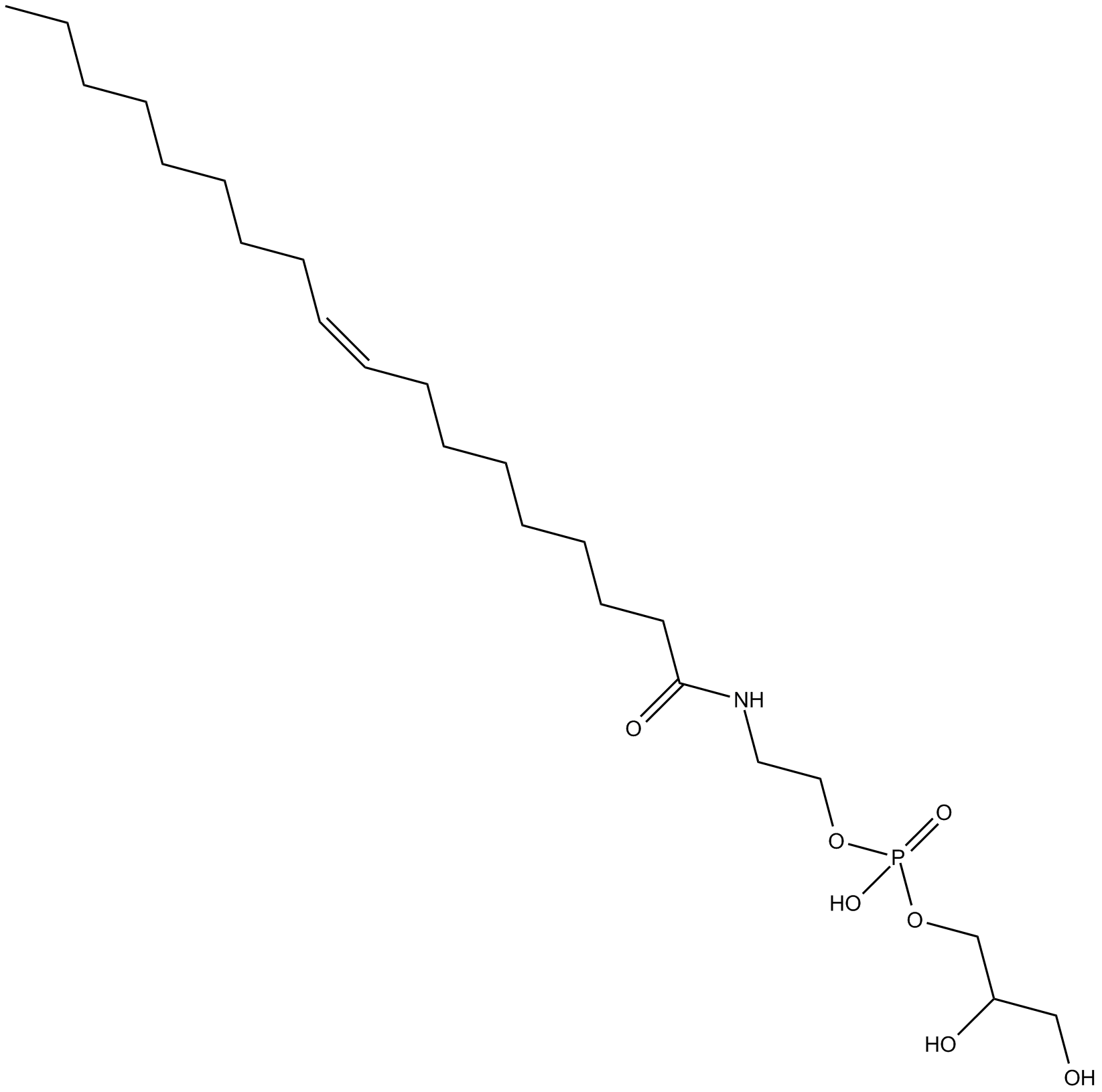
Glycerophospho-N-Oleoyl Ethanolamine is the precursor of oleoyl ethanolamide (OEA). The fatty-acid ethanolamide, oleoylethanolamide (OEA) is a naturally occurring lipid. Oleoylethanolamide is an endogenous PPAR-α agonist. Oleoylethanolamide has been involved in modulating feeding and energy homeostasis by binding to peroxisome proliferator-activated receptor-alpha (PPAR-α) [1]. PPAR-α is a transcription factor and a major regulator of lipid metabolism in the liver. Activation of PPAR-α is mainly involved in fatty acid oxidation and expressed in liver, kidney, and skeletal muscle. Through ligand binding, PPAR-α promotes uptake, utilization, and catabolism of fatty acids [2].
OEA reduced food intake and lowered body-weight gain. Subchronic OEA treatment (5 mg/kg, i.p., once daily for two weeks) in Zucker rats initiated transcription of PPAR-α and other PPAR-α target gene [1]. OEA is an endogenous, potent agonist for PPARα. OEA activated PPARα with an EC50 value of 120 nM in a transactivation assay [3]. In rodents, intraperitoneal administration of OEA induced satiety and peripheral utilization of lipid substrate. Acute oral administration induced satiety [4].
References:
[1] Fu J, Oveisi F, Gaetani S, et al. Oleoylethanolamide, an endogenous PPAR-α agonist, lowers body weight and hyperlipidemia in obese rats[J]. Neuropharmacology, 2005, 48(8): 1147-1153.
[2] Schiffrin E L, Amiri F, Benkirane K, et al. Peroxisome proliferator-activated receptors[J]. Hypertension, 2003, 42(4): 664-668.
[3] Fu J, Gaetani S, Oveisi F, et al. Oleylethanolamide regulates feeding and body weight through activation of the nuclear receptor PPAR-α[J]. Nature, 2003, 425(6953): 90-93.
[4] Thabuis C, Destaillats F, Tissot‐Favre D, et al. Oleoyl‐ethanolamide (OEA): A bioactive lipid derived from oleic acid and phosphatidylethanol‐amine[J]. Lipid Technology, 2007, 19(10): 225-227.
| Physical Appearance | A crystalline solid |
| Storage | Store at -20°C |
| M.Wt | 479.6 |
| Cas No. | 201738-24-1 |
| Formula | C23H46NO7P |
| Solubility | ≤20mg/ml in ethanol;20mg/ml in DMSO;20mg/ml in dimethyl formamide |
| Chemical Name | mono(2,3-dihydroxypropyl)-mono[2-[[(9Z)-1-oxo-9-octadecenyl]amino]ethyl] ester phosphoric acid |
| Canonical SMILES | CCCCCCCC/C=C\CCCCCCCC(NCCOP(O)(OCC(CO)O)=O)=O |
| Shipping Condition | Small Molecules with Blue Ice, Modified Nucleotides with Dry Ice. |
| General tips | We do not recommend long-term storage for the solution, please use it up soon. |
Quality Control & MSDS
- View current batch:
- Purity = 98.00%
- COA (Certificate Of Analysis)
- MSDS (Material Safety Data Sheet)
Chemical structure
