

TLR2 Antibody

Cat# MBS150600-0,1mg
Size : 0.1mg
Marca : MyBiosource
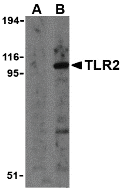
Western blot analysis of TLR2 in A20 cell lysates with TLR2 antibody at 1 μg/mL in the presence (A) and absence (B) of its blocking peptide.
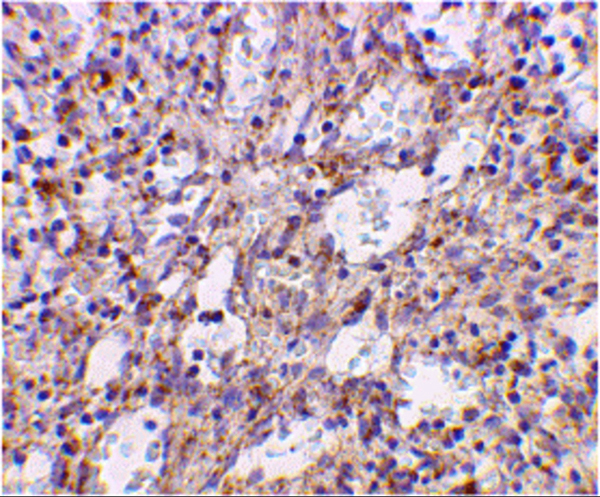
Immunohistochemical staining of human spleen cells using TLR2 antibody at 2 μg/mL.
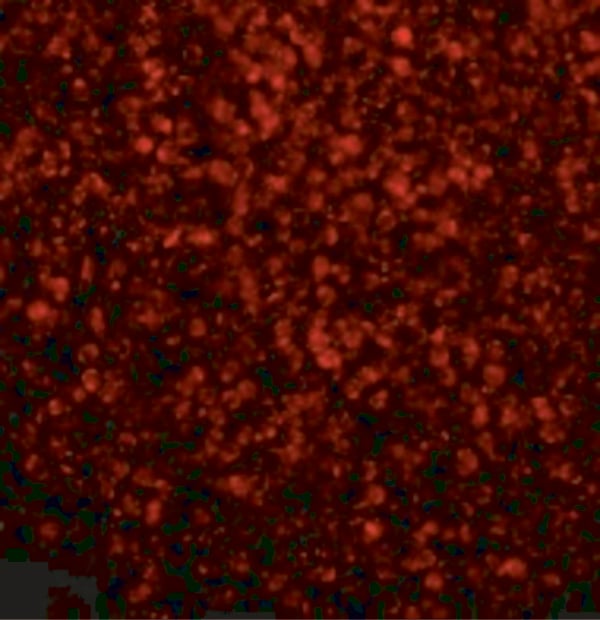
Immunofluorescence of TLR2 in Human Spleen tissue with TLR2 antibody at 10 μg/mL.
TLR2 Antibody – Rabbit Polyclonal
For Research Use Only. Not for use in diagnostic procedures. Catalog #: MBS150600TLR2 Antibody: Toll-like receptors (TLRs) are signaling molecules that recognize different microbial products during infection and serve as an important link between the innate and adaptive immune responses. These proteins act through adaptor molecules such… More details
Product Overview
Online Datasheet in PDFProduct Name
TLR2, Polyclonal Antibody
Full Product Name
TLR2 Antibody
Product Gene Name
anti-TLR2 antibody
Product Synonym Names
TLR2; TIL4; CD282; TIL4; Toll-like receptor 2; toll-like receptor 2
Clonality
Polyclonal
Isotype
IgG
Host
Rabbit
Species Reactivity
Human, Mouse
Form/Format
Liquid
Purity/Purification
TLR2 Antibody is affinity chromatography purified via peptide column.
Concentration
1 mg/mL (lot specific)
Preparation and Storage
TLR2 antibody can be stored at 4°C for three months and -20°C, stable for up to one year. As with all antibodies care should be taken to avoid repeated freeze thaw cycles. Antibodies should not be exposed to prolonged high temperatures.
Antibody/Peptide Pairs
TLR2 peptide (MBS153042) is used for blocking the activity of TLR2 antibody (MBS150600)
OMIM
phenotype 603028
Conjugate
Unconjugated
Immunogen
TLR2 antibody was raised against a peptide corresponding to 14 amino acids near the amino terminus of human TLR2.
The immunogen is located within the first 50 amino acids of TLR2.
The immunogen is located within the first 50 amino acids of TLR2.
Buffer
TLR2 Antibody is supplied in PBS containing 0.02% sodium azide.
Applications Tested/Suitable for anti-TLR2 antibody
ELISA (EIA), Western Blot (WB), Immunohistochemistry (IHC), Immunofluorescence (IF)
Application Notes for anti-TLR2 antibody
TLR2 antibody can be used for detection of TLR2 by Western blot at 1 ?g/mL. Despite itspredicted molecular weight, TLR2 runs at ~100 kDa in SDS-PAGE. This polyclonal antibodycan also detect TLR2 by immunohistochemistry at 2 ?g/mL. For immunofluorescence startat 10 ?g/mL.
Antibody validated: Western Blot in mouse samples; Immunohistochemistry in humansamples and Immunofluorescence in human samples. All other applications and speciesnot yet tested.
Antibody validated: Western Blot in mouse samples; Immunohistochemistry in humansamples and Immunofluorescence in human samples. All other applications and speciesnot yet tested.
Other Notes
Small volumes of anti-TLR2 antibody vial(s) may occasionally become entrapped in the seal of the product vial during shipment and storage. If necessary, briefly centrifuge the vial on a tabletop centrifuge to dislodge any liquid in the container`s cap. Certain products may require to ship with dry ice and additional dry ice fee may apply.
Searchable Terms for TLR2 purchase
MBS150600 is an antibody targeting TLR2. Also known as TLR2 Antibody. Reactive in Human, Mouse. Host: Rabbit.
Additional Details
NCBI/Uniprot data below describe general gene information for TLR2. It may not necessarily be applicable to this product.
NCBI Official Full Name
Toll-like receptor 2
NCBI Official Synonym Full Names
toll-like receptor 2
NCBI Official Symbol
TLR2
NCBI Official Synonym Symbols
TIL4; CD282
UniProt Protein Name
Toll-like receptor 2
UniProt Synonym Protein Names
Toll/interleukin-1 receptor-like protein 4; CD_antigen: CD282
Protein Family
Toll-like receptor
UniProt Gene Name
TLR2
UniProt Synonym Gene Names
TIL4
UniProt Entry Name
TLR2_HUMAN
NCBI Protein Information
toll-like receptor 2; toll/interleukin 1 receptor-like 4; toll/interleukin-1 receptor-like protein 4
NCBI Summary for TLR2
The protein encoded by this gene is a member of the Toll-like receptor (TLR) family which plays a fundamental role in pathogen recognition and activation of innate immunity. TLRs are highly conserved from Drosophila to humans and share structural and functional similarities. They recognize pathogen-associated molecular patterns (PAMPs) that are expressed on infectious agents, and mediate the production of cytokines necessary for the development of effective immunity. The various TLRs exhibit different patterns of expression. This gene is expressed most abundantly in peripheral blood leukocytes, and mediates host response to Gram-positive bacteria and yeast via stimulation of NF-kappaB. [provided by RefSeq, Jul 2008]
Show more UniProt Comments for TLR2
TLR2: Cooperates with LY96 to mediate the innate immune response to bacterial lipoproteins and other microbial cell wall components. Cooperates with TLR1 to mediate the innate immune response to bacterial lipoproteins or lipopeptides. Acts via MYD88 and TRAF6, leading to NF-kappa-B activation, cytokine secretion and the inflammatory response. May also promote apoptosis in response to lipoproteins. Recognizes mycoplasmal macrophage- activating lipopeptide-2kD (MALP-2), soluble tuberculosis factor (STF), phenol-soluble modulin (PSM) and B.burgdorferi outer surface protein A lipoprotein (OspA-L) cooperatively with TLR6. Interacts with LY96, TLR1 and TLR6 (via extracellular domain). Binds MYD88 (via TIR domain). Interacts with TICAM1. Ligand binding induces the formation of a heterodimer with TLR1. Interacts with CNPY3. Highly expressed in peripheral blood leukocytes, in particular in monocytes, in bone marrow, lymph node and in spleen. Also detected in lung and in fetal liver. Levels are low in other tissues. Belongs to the Toll-like receptor family.
Protein type: Cell surface; Motility/polarity/chemotaxis; Apoptosis; Receptor, misc.; Membrane protein, integral
Chromosomal Location of Human Ortholog: 4q32
Cellular Component: cell projection; cell surface; integral to plasma membrane; cytoplasm; plasma membrane; external side of plasma membrane
Molecular Function: protein binding; peptidoglycan binding; transmembrane receptor activity; triacylated lipoprotein binding; protein heterodimerization activity; lipopolysaccharide receptor activity; receptor activity; pattern recognition receptor activity; diacylated lipoprotein binding
Biological Process: positive regulation of nitric oxide biosynthetic process; response to toxin; positive regulation of leukocyte migration; leukotriene metabolic process; positive regulation of NF-kappaB import into nucleus; detection of triacylated bacterial lipoprotein; positive regulation of interleukin-10 production; activation of NF-kappaB transcription factor; positive regulation of interferon-beta production; positive regulation of oligodendrocyte differentiation; toll-like receptor 4 signaling pathway; negative regulation of interleukin-12 production; detection of diacylated bacterial lipoprotein; cell surface pattern recognition receptor signaling pathway; positive regulation of interleukin-6 production; positive regulation of tumor necrosis factor production; positive regulation of chemokine production; toll-like receptor 2 signaling pathway; defense response to Gram-positive bacterium; myelin formation in the central nervous system; positive regulation of transcription from RNA polymerase II promoter; response to progesterone stimulus; I-kappaB phosphorylation; positive regulation of nitric-oxide synthase biosynthetic process; apoptosis; positive regulation of interleukin-12 production; microglial cell activation; response to molecule of fungal origin; signal transduction; positive regulation of interleukin-18 production; nitric oxide metabolic process; response to insulin stimulus; positive regulation of interleukin-8 production; negative regulation of cell proliferation; lipopolysaccharide-mediated signaling pathway; inflammatory response; positive regulation of Wnt receptor signaling pathway; positive regulation of tumor necrosis factor biosynthetic process; positive regulation of toll-like receptor signaling pathway; induction by symbiont of defense-related host nitric oxide production; MyD88-dependent toll-like receptor signaling pathway; negative regulation of interleukin-17 production; toll-like receptor signaling pathway; response to hypoxia; innate immune response; immune response; chloramphenicol transport; positive regulation of inflammatory response; positive regulation of cytokine secretion
Disease: Leprosy, Susceptibility To, 3; Mycobacterium Tuberculosis, Susceptibility To
Show more Protein type: Cell surface; Motility/polarity/chemotaxis; Apoptosis; Receptor, misc.; Membrane protein, integral
Chromosomal Location of Human Ortholog: 4q32
Cellular Component: cell projection; cell surface; integral to plasma membrane; cytoplasm; plasma membrane; external side of plasma membrane
Molecular Function: protein binding; peptidoglycan binding; transmembrane receptor activity; triacylated lipoprotein binding; protein heterodimerization activity; lipopolysaccharide receptor activity; receptor activity; pattern recognition receptor activity; diacylated lipoprotein binding
Biological Process: positive regulation of nitric oxide biosynthetic process; response to toxin; positive regulation of leukocyte migration; leukotriene metabolic process; positive regulation of NF-kappaB import into nucleus; detection of triacylated bacterial lipoprotein; positive regulation of interleukin-10 production; activation of NF-kappaB transcription factor; positive regulation of interferon-beta production; positive regulation of oligodendrocyte differentiation; toll-like receptor 4 signaling pathway; negative regulation of interleukin-12 production; detection of diacylated bacterial lipoprotein; cell surface pattern recognition receptor signaling pathway; positive regulation of interleukin-6 production; positive regulation of tumor necrosis factor production; positive regulation of chemokine production; toll-like receptor 2 signaling pathway; defense response to Gram-positive bacterium; myelin formation in the central nervous system; positive regulation of transcription from RNA polymerase II promoter; response to progesterone stimulus; I-kappaB phosphorylation; positive regulation of nitric-oxide synthase biosynthetic process; apoptosis; positive regulation of interleukin-12 production; microglial cell activation; response to molecule of fungal origin; signal transduction; positive regulation of interleukin-18 production; nitric oxide metabolic process; response to insulin stimulus; positive regulation of interleukin-8 production; negative regulation of cell proliferation; lipopolysaccharide-mediated signaling pathway; inflammatory response; positive regulation of Wnt receptor signaling pathway; positive regulation of tumor necrosis factor biosynthetic process; positive regulation of toll-like receptor signaling pathway; induction by symbiont of defense-related host nitric oxide production; MyD88-dependent toll-like receptor signaling pathway; negative regulation of interleukin-17 production; toll-like receptor signaling pathway; response to hypoxia; innate immune response; immune response; chloramphenicol transport; positive regulation of inflammatory response; positive regulation of cytokine secretion
Disease: Leprosy, Susceptibility To, 3; Mycobacterium Tuberculosis, Susceptibility To
Precautions
All of MyBioSource's Products are for scientific laboratory research purposes and are not for diagnostic, therapeutics, prophylactic or in vivo use. Through your purchase, you expressly represent and warrant to MyBioSource that you will properly test and use any Products purchased from MyBioSource in accordance with industry standards. MyBioSource and its authorized distributors reserve the right to refuse to process any order where we reasonably believe that the intended use will fall outside of our acceptable guidelines.
Disclaimer
While every efforts were made to ensure the accuracy of the information provided in this datasheet, MyBioSource will not be liable for any omissions or errors contained herein. MyBioSource reserves the right to make changes to this datasheet at any time without prior notice.
It is the responsibility of the customer to report product performance issues to MyBioSource within 30 days of receipt of the product. Please visit our Terms & Conditions page for more information.
It is the responsibility of the customer to report product performance issues to MyBioSource within 30 days of receipt of the product. Please visit our Terms & Conditions page for more information.
Product Note
Select online data sheet information is drawn from bioinformatics databases, occasionally resulting in ambiguous or non-relevant product information. It is the responsibility of the customer to review, verify, and evaluate the information to make sure it matches their requirements before purchasing the kit. Our ELISA Kit assays are dynamic research tools and sometimes they may be updated and improved. If the format of this assay is important to you then please request the current manual or contact our technical support team with a presales inquiry before placing an order. We will confirm the current details of the assay. We cannot guarantee the sample manual posted online is the most current manual, it is intended to serve as an example only. Please refer to the instructions For Use provided with the assay kit for precise details.
Product PubMed Publications
Products associated with anti-TLR2 antibody
| Reference Product | PubMed Publications |
|---|---|
| MYD88 antibody | >1091 publications with TLR2 and MYD88 |
| CD14 antibody | >725 publications with TLR2 and CD14 |
| TLR1 antibody | >611 publications with TLR2 and TLR1 |
| TLR6 antibody | >464 publications with TLR2 and TLR6 |
| IL6 antibody | >147 publications with TLR2 and IL6 |
| TIRAP antibody | >114 publications with TLR2 and TIRAP |
| LY96 antibody | >73 publications with TLR2 and LY96 |
| IRAK1 antibody | >59 publications with TLR2 and IRAK1 |
| TOLLIP antibody | >34 publications with TLR2 and TOLLIP |
Pathways associated with anti-TLR2 antibody
| Products by Pathway | Pathway Diagram |
|---|---|
| Activated TLR4 Signalling Pathway antibodies | Activated TLR4 Signalling Pathway Diagram |
| Amoebiasis Pathway antibodies | Amoebiasis Pathway Diagram |
| Amoebiasis Pathway antibodies | Amoebiasis Pathway Diagram |
| Beta Defensins Pathway antibodies | Beta Defensins Pathway Diagram |
| Chagas Disease (American Trypanosomiasis) Pathway antibodies | Chagas Disease (American Trypanosomiasis) Pathway Diagram |
| Chagas Disease (American Trypanosomiasis) Pathway antibodies | Chagas Disease (American Trypanosomiasis) Pathway Diagram |
| Defensins Pathway antibodies | Defensins Pathway Diagram |
| Hepatitis B Pathway antibodies | Hepatitis B Pathway Diagram |
| Herpes Simplex Infection Pathway antibodies | Herpes Simplex Infection Pathway Diagram |
| Herpes Simplex Infection Pathway antibodies | Herpes Simplex Infection Pathway Diagram |
Diseases associated with anti-TLR2 antibody
| Disease Name | Pubmed Publications |
|---|---|
| Inflammation Antibodies | >2078 publications with TLR2 and Inflammation |
| Necrosis Antibodies | >1492 publications with TLR2 and Necrosis |
| Disease Models, Animal Antibodies | >511 publications with TLR2 and Disease Models, Animal |
| Respiratory Tract Diseases Antibodies | >447 publications with TLR2 and Respiratory Tract Diseases |
| Lung Diseases Antibodies | >424 publications with TLR2 and Lung Diseases |
| Atherosclerosis Antibodies | >201 publications with TLR2 and Atherosclerosis |
| Liver Diseases Antibodies | >178 publications with TLR2 and Liver Diseases |
| Asthma Antibodies | >145 publications with TLR2 and Asthma |
| Heart Diseases Antibodies | >138 publications with TLR2 and Heart Diseases |
| Kidney Diseases Antibodies | >114 publications with TLR2 and Kidney Diseases |
Organs/Tissues associated with anti-TLR2 antibody
| Organ/Tissue Name | Pubmed Publications |
|---|---|
| Blood Antibodies | >2561 publications with TLR2 and Blood |
| Lung Antibodies | >578 publications with TLR2 and Lung |
| Bone Marrow Antibodies | >452 publications with TLR2 and Bone Marrow |
| Liver Antibodies | >364 publications with TLR2 and Liver |
| Brain Antibodies | >303 publications with TLR2 and Brain |
| Kidney Antibodies | >276 publications with TLR2 and Kidney |
| Skin Antibodies | >265 publications with TLR2 and Skin |
| Heart Antibodies | >173 publications with TLR2 and Heart |
| Muscle Antibodies | >170 publications with TLR2 and Muscle |
| Mouth Antibodies | >152 publications with TLR2 and Mouth |