

Recombinant Rat TNF

Referentie MBS4159984-0,1mg
Formaat : 0.1mg
Merk : MyBiosource
TNF Rat Active Protein
For Research Use Only. Not for use in diagnostic procedures. Catalog #: MBS4159984TNF is secreted by macrophages, monocytes, neutrophils, T cells, natural killer cells following their stimulation by bacterial lipopolysaccharides. Cells expressing CD4 secrete TNF-alpha while CD8(+) cells secrete little or no TNF-alpha. Stimulated peripheral… More details
Product Overview
Online Datasheet in PDFProduct Name
TNF, Active Protein
Full Product Name
Recombinant Rat TNF
Product Gene Name
TNF active protein
Product Synonym Names
TNF-alpha; Cachectin; Tumor necrosis factor ligand superfamily member 2; TNF-a; Tnfa; Tnfsf2; Tumor necrosis factor; Recombinant Rat Tumor Necrosis Factor Alpha (TNF)
Host
E Coli
Form/Format
Lyophilized from a 0.2 um filtered PBS solution (pH 7.0)
Purity/Purification
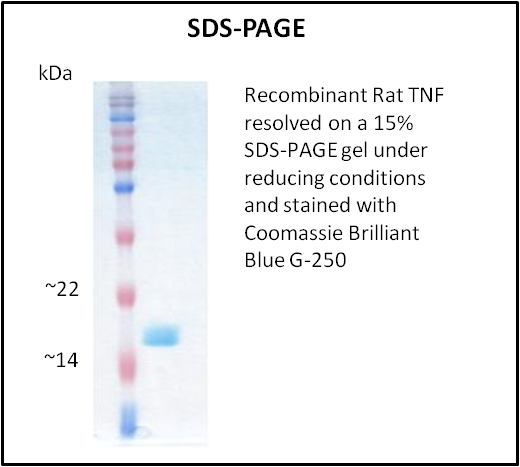
>95% as determined by SDS-PAGE
Preparation and Storage
The lyophilized protein is stable for at least one year from date of receipt at-70 degree C. Upon reconstitution, this cytokine can be stored in working aliquots at 2-8 degree C for one month, or at-20 degree C for six months, with a carrier protein without detectable loss of activity. Avoid repeated freeze/thaw cycles.
Molecular Weight
17.0 kDa
Active Protein Note
Protein activity can be an ambiguous term. Please refer to the data sheet or inquire with Technical Support to determine the definition of activity for this product.
Bioactivity
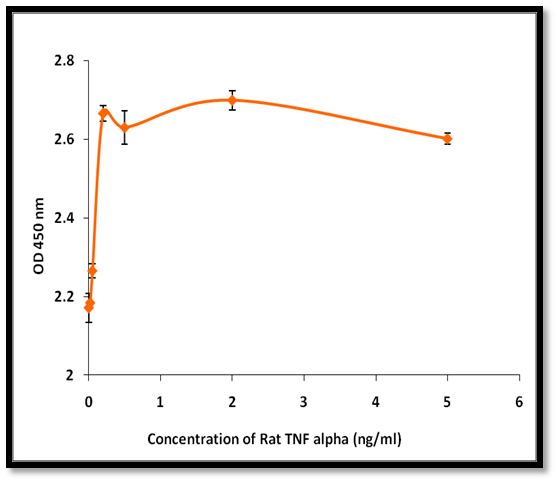
The ED50 as determined by the dose-dependent stimulation of the proliferation of monkey 4MBr-5 cells was found to be in the range of 20-40 ng/mL
Endotoxin Level
<1.0 EU/ug of recombinant protein as determined by the LAL method
Reconstitution
A quick spin of the vial followed by reconstitution in distilled water to a concentration not less than 0.1 mg/mL. This solution can then be diluted into other buffers
Other Notes
Small volumes of TNF active protein vial(s) may occasionally become entrapped in the seal of the product vial during shipment and storage. If necessary, briefly centrifuge the vial on a tabletop centrifuge to dislodge any liquid in the container`s cap. Certain products may require to ship with dry ice and additional dry ice fee may apply.
Searchable Terms for TNF purchase
MBS4159984 is an active protein targeting TNF. Also known as Recombinant Rat TNF. Host: E Coli.
Additional Details
NCBI/Uniprot data below describe general gene information for TNF. It may not necessarily be applicable to this product.
NCBI Official Full Name
tumor necrosis factor
NCBI Official Synonym Full Names
tumor necrosis factor
NCBI Official Symbol
Tnf
NCBI Official Synonym Symbols
Tnfa; RATTNF; TNF-alpha
UniProt Protein Name
Tumor necrosis factor
UniProt Synonym Protein Names
Cachectin; TNF-alpha; Tumor necrosis factor ligand superfamily member 2; TNF-a
Protein Family
Tumor necrosis factor
UniProt Gene Name
Tnf
UniProt Synonym Gene Names
Tnfa; Tnfsf2; TNF-a; NTF; ICD1; ICD2
UniProt Entry Name
TNFA_RAT
NCBI Protein Information
tumor necrosis factor
NCBI Summary for TNF
acts as a cytokine; binds TNF receptors; plays a role in regulation of cell proliferation, induction of apoptosis, and inflammatory response [RGD, Feb 2006]
UniProt Comments for TNF
TNF-a: Cytokine that binds to TNFRSF1A/TNFR1 and TNFRSF1B/TNFBR. It is mainly secreted by macrophages and can induce cell death of certain tumor cell lines. It is potent pyrogen causing fever by direct action or by stimulation of interleukin-1 secretion and is implicated in the induction of cachexia, Under certain conditions it can stimulate cell proliferation and induce cell differentiation. Homotrimer. Interacts with SPPL2B. Belongs to the tumor necrosis factor family.
Protein type: Apoptosis; Cytokine; Membrane protein, integral; Motility/polarity/chemotaxis
Cellular Component: cell surface; external side of plasma membrane; extracellular space; integral to membrane; integral to plasma membrane; intracellular; lipid raft; phagocytic cup; plasma membrane; recycling endosome
Molecular Function: cytokine activity; identical protein binding; protease binding; tumor necrosis factor receptor binding
Biological Process: activation of MAPK activity; activation of MAPKKK activity; activation of NF-kappaB transcription factor; acute inflammatory response; apoptosis; calcium-mediated signaling; caspase activation; cell activation; cellular extravasation; chronic inflammatory response to antigenic stimulus; circadian rhythm; cortical actin cytoskeleton organization and biogenesis; defense response; defense response to bacterium; defense response to Gram-positive bacterium; detection of mechanical stimulus involved in sensory perception of pain; DNA damage response, signal transduction resulting in induction of apoptosis; embryonic gut development; extracellular matrix organization and biogenesis; glucose metabolic process; humoral immune response; induction of apoptosis via death domain receptors; inflammatory response; JNK cascade; leukocyte migration; leukocyte tethering or rolling; lipopolysaccharide-mediated signaling pathway; MAPKKK cascade; multicellular organismal development; negative regulation of cell proliferation; negative regulation of cytokine secretion during immune response; negative regulation of endothelial cell proliferation; negative regulation of glucose import; negative regulation of interleukin-6 production; negative regulation of L-glutamate transport; negative regulation of lipid catabolic process; negative regulation of mitotic cell cycle; negative regulation of myelination; negative regulation of myoblast differentiation; negative regulation of osteoblast differentiation; negative regulation of protein complex disassembly; negative regulation of transcription from RNA polymerase II promoter; negative regulation of transcription, DNA-dependent; negative regulation of viral genome replication; organ morphogenesis; osteoclast differentiation; positive regulation of action potential; positive regulation of apoptosis; positive regulation of caspase activity; positive regulation of cell adhesion; positive regulation of chemokine biosynthetic process; positive regulation of chemokine production; positive regulation of chronic inflammatory response to antigenic stimulus; positive regulation of cytokine production; positive regulation of cytokine secretion; positive regulation of fever; positive regulation of hair follicle development; positive regulation of heterotypic cell-cell adhesion; positive regulation of humoral immune response mediated by circulating immunoglobulin; positive regulation of I-kappaB kinase/NF-kappaB cascade; positive regulation of inflammatory response; positive regulation of interferon-gamma production; positive regulation of interleukin-18 production; positive regulation of interleukin-6 production; positive regulation of interleukin-8 biosynthetic process; positive regulation of interleukin-8 production; positive regulation of JNK activity; positive regulation of JNK cascade; positive regulation of MAP kinase activity; positive regulation of membrane protein ectodomain proteolysis; positive regulation of mitosis; positive regulation of neuron apoptosis; positive regulation of NF-kappaB import into nucleus; positive regulation of NFAT protein import into nucleus; positive regulation of nitric oxide biosynthetic process; positive regulation of osteoclast differentiation; positive regulation of peptidyl-serine phosphorylation; positive regulation of phagocytosis; positive regulation of programmed cell death; positive regulation of protein amino acid phosphorylation; positive regulation of protein complex assembly; positive regulation of protein complex disassembly; positive regulation of protein kinase activity; positive regulation of protein kinase B signaling cascade; positive regulation of protein transport; positive regulation of smooth muscle cell proliferation; positive regulation of synaptic transmission; positive regulation of transcription factor activity; positive regulation of transcription from RNA polymerase II promoter; positive regulation of transcription, DNA-dependent; positive regulation of translational initiation by iron; protein import into nucleus, translocation; protein kinase B signaling cascade; receptor biosynthetic process; regulation of cell proliferation; regulation of I-kappaB kinase/NF-kappaB cascade; regulation of immunoglobulin secretion; regulation of insulin secretion; regulation of osteoclast differentiation; regulation of protein amino acid phosphorylation; regulation of protein secretion; response to activity; response to drug; response to glucocorticoid stimulus; response to hypoxia; response to lipopolysaccharide; response to mechanical stimulus; response to organic substance; response to radiation; response to virus; sequestering of triacylglycerol; signal transduction; skeletal muscle contraction; toll-like receptor 3 signaling pathway; tumor necrosis factor-mediated signaling pathway
Show more Protein type: Apoptosis; Cytokine; Membrane protein, integral; Motility/polarity/chemotaxis
Cellular Component: cell surface; external side of plasma membrane; extracellular space; integral to membrane; integral to plasma membrane; intracellular; lipid raft; phagocytic cup; plasma membrane; recycling endosome
Molecular Function: cytokine activity; identical protein binding; protease binding; tumor necrosis factor receptor binding
Biological Process: activation of MAPK activity; activation of MAPKKK activity; activation of NF-kappaB transcription factor; acute inflammatory response; apoptosis; calcium-mediated signaling; caspase activation; cell activation; cellular extravasation; chronic inflammatory response to antigenic stimulus; circadian rhythm; cortical actin cytoskeleton organization and biogenesis; defense response; defense response to bacterium; defense response to Gram-positive bacterium; detection of mechanical stimulus involved in sensory perception of pain; DNA damage response, signal transduction resulting in induction of apoptosis; embryonic gut development; extracellular matrix organization and biogenesis; glucose metabolic process; humoral immune response; induction of apoptosis via death domain receptors; inflammatory response; JNK cascade; leukocyte migration; leukocyte tethering or rolling; lipopolysaccharide-mediated signaling pathway; MAPKKK cascade; multicellular organismal development; negative regulation of cell proliferation; negative regulation of cytokine secretion during immune response; negative regulation of endothelial cell proliferation; negative regulation of glucose import; negative regulation of interleukin-6 production; negative regulation of L-glutamate transport; negative regulation of lipid catabolic process; negative regulation of mitotic cell cycle; negative regulation of myelination; negative regulation of myoblast differentiation; negative regulation of osteoblast differentiation; negative regulation of protein complex disassembly; negative regulation of transcription from RNA polymerase II promoter; negative regulation of transcription, DNA-dependent; negative regulation of viral genome replication; organ morphogenesis; osteoclast differentiation; positive regulation of action potential; positive regulation of apoptosis; positive regulation of caspase activity; positive regulation of cell adhesion; positive regulation of chemokine biosynthetic process; positive regulation of chemokine production; positive regulation of chronic inflammatory response to antigenic stimulus; positive regulation of cytokine production; positive regulation of cytokine secretion; positive regulation of fever; positive regulation of hair follicle development; positive regulation of heterotypic cell-cell adhesion; positive regulation of humoral immune response mediated by circulating immunoglobulin; positive regulation of I-kappaB kinase/NF-kappaB cascade; positive regulation of inflammatory response; positive regulation of interferon-gamma production; positive regulation of interleukin-18 production; positive regulation of interleukin-6 production; positive regulation of interleukin-8 biosynthetic process; positive regulation of interleukin-8 production; positive regulation of JNK activity; positive regulation of JNK cascade; positive regulation of MAP kinase activity; positive regulation of membrane protein ectodomain proteolysis; positive regulation of mitosis; positive regulation of neuron apoptosis; positive regulation of NF-kappaB import into nucleus; positive regulation of NFAT protein import into nucleus; positive regulation of nitric oxide biosynthetic process; positive regulation of osteoclast differentiation; positive regulation of peptidyl-serine phosphorylation; positive regulation of phagocytosis; positive regulation of programmed cell death; positive regulation of protein amino acid phosphorylation; positive regulation of protein complex assembly; positive regulation of protein complex disassembly; positive regulation of protein kinase activity; positive regulation of protein kinase B signaling cascade; positive regulation of protein transport; positive regulation of smooth muscle cell proliferation; positive regulation of synaptic transmission; positive regulation of transcription factor activity; positive regulation of transcription from RNA polymerase II promoter; positive regulation of transcription, DNA-dependent; positive regulation of translational initiation by iron; protein import into nucleus, translocation; protein kinase B signaling cascade; receptor biosynthetic process; regulation of cell proliferation; regulation of I-kappaB kinase/NF-kappaB cascade; regulation of immunoglobulin secretion; regulation of insulin secretion; regulation of osteoclast differentiation; regulation of protein amino acid phosphorylation; regulation of protein secretion; response to activity; response to drug; response to glucocorticoid stimulus; response to hypoxia; response to lipopolysaccharide; response to mechanical stimulus; response to organic substance; response to radiation; response to virus; sequestering of triacylglycerol; signal transduction; skeletal muscle contraction; toll-like receptor 3 signaling pathway; tumor necrosis factor-mediated signaling pathway
Precautions
All of MyBioSource's Products are for scientific laboratory research purposes and are not for diagnostic, therapeutics, prophylactic or in vivo use. Through your purchase, you expressly represent and warrant to MyBioSource that you will properly test and use any Products purchased from MyBioSource in accordance with industry standards. MyBioSource and its authorized distributors reserve the right to refuse to process any order where we reasonably believe that the intended use will fall outside of our acceptable guidelines.
Disclaimer
While every efforts were made to ensure the accuracy of the information provided in this datasheet, MyBioSource will not be liable for any omissions or errors contained herein. MyBioSource reserves the right to make changes to this datasheet at any time without prior notice.
It is the responsibility of the customer to report product performance issues to MyBioSource within 30 days of receipt of the product. Please visit our Terms & Conditions page for more information.
It is the responsibility of the customer to report product performance issues to MyBioSource within 30 days of receipt of the product. Please visit our Terms & Conditions page for more information.
Product Note
Select online data sheet information is drawn from bioinformatics databases, occasionally resulting in ambiguous or non-relevant product information. It is the responsibility of the customer to review, verify, and evaluate the information to make sure it matches their requirements before purchasing the kit. Our ELISA Kit assays are dynamic research tools and sometimes they may be updated and improved. If the format of this assay is important to you then please request the current manual or contact our technical support team with a presales inquiry before placing an order. We will confirm the current details of the assay. We cannot guarantee the sample manual posted online is the most current manual, it is intended to serve as an example only. Please refer to the instructions For Use provided with the assay kit for precise details.
Product PubMed Publications
Pathways associated with TNF active protein
| Products by Pathway | Pathway Diagram |
|---|---|
| AGE-RAGE Signaling Pathway In Diabetic Complications antibodies | AGE-RAGE Signaling Pathway In Diabetic Complications Diagram |
| AGE-RAGE Signaling Pathway In Diabetic Complications antibodies | AGE-RAGE Signaling Pathway In Diabetic Complications Diagram |
| Adipocytokine Signaling Pathway antibodies | Adipocytokine Signaling Pathway Diagram |
| Adipocytokine Signaling Pathway antibodies | Adipocytokine Signaling Pathway Diagram |
| Adipogenesis Pathway antibodies | Adipogenesis Pathway Diagram |
| African Trypanosomiasis Pathway antibodies | African Trypanosomiasis Pathway Diagram |
| African Trypanosomiasis Pathway antibodies | African Trypanosomiasis Pathway Diagram |
| Allograft Rejection Pathway antibodies | Allograft Rejection Pathway Diagram |
| Allograft Rejection Pathway antibodies | Allograft Rejection Pathway Diagram |
| Alzheimer's Disease Pathway antibodies | Alzheimer's Disease Pathway Diagram |