


The RayBiotech Superoxide Dismutase (SOD) Activity Assay Kit is a simple, reproducible, and sensitive tool for measuring SOD activity in plasma, serum, cell lysates and other biological samples.
Superoxide Dismutase (SOD) Activity Assay Kit (Colorimetric)
Superoxide Dismutase (SOD) Activity Assay Kit (Colorimetric)
Contact Us for Bulk Request
Product Description
Specifications
| Size | 1 Plate Kit, 2 Plate Kit, 5 Plate Kit |
| Compatible Sample Types | Plasma, Serum, Tissue Lysates, Cell Lysates |
| Quantitative/Semi-Quantitative | Quantitative |
| Solid Support | 96-well Microplate |
| Method Of Detection | Colorimetric |
| Research Area | Cardiovascular Disease, Inflammation, Oxidative Stress, Ferroptosis, Aging |
| Shipping Type | Blue ice |
| Storage | 2-8°C |
Related Products
Recombinant Human Sod1 Protein, HEK293 Lysate
$144.00
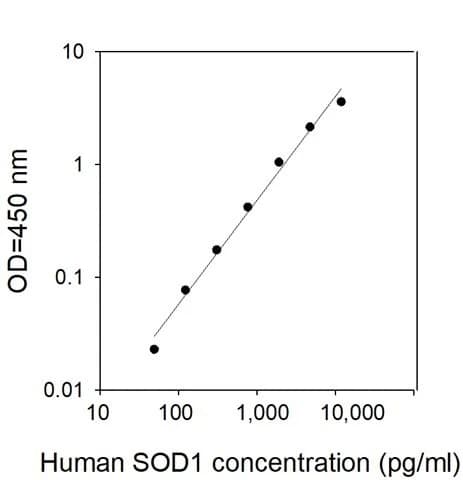
Recombinant Human Sod1 Protein, HEK293 Supernatant
$124.00
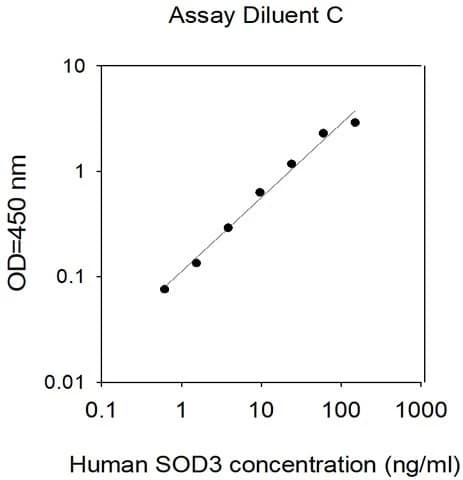
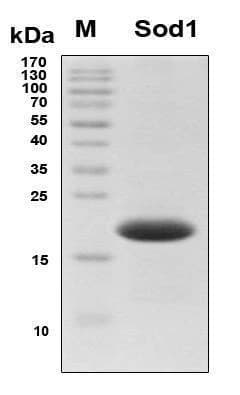
Human SOD1 ELISA Kit
As low as $479.00
Introduction
Superoxide Dismutases (SODs) are metalloenzymes crucial for cellular antioxidant defense, catalyzing the dismutation of the superoxide anion to molecular oxygen and hydrogen peroxide. Three characterized types include copper/zinc (Cu/Zn), manganese (Mn), and iron (Fe) SODs, with widespread distribution in plants and animals, particularly in organs such as the brain, liver, heart, erythrocytes, and kidney. Maintaining appropriate SOD levels in cellular and extracellular environments is crucial for the prevention of diseases associated with oxidative stress, including neurodegenerative disorders like Alzheimer’s, Parkinson’s, and Huntington’s diseases.
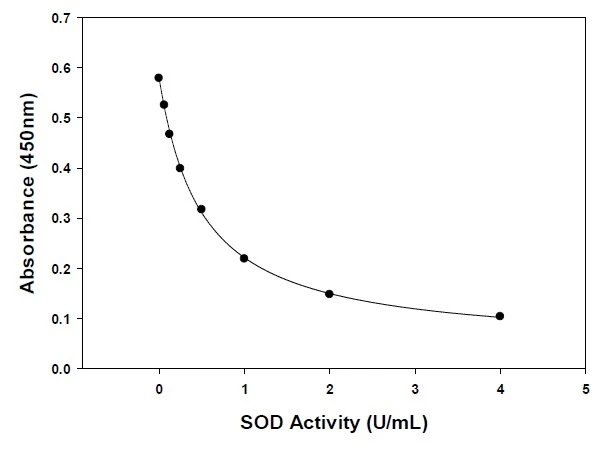
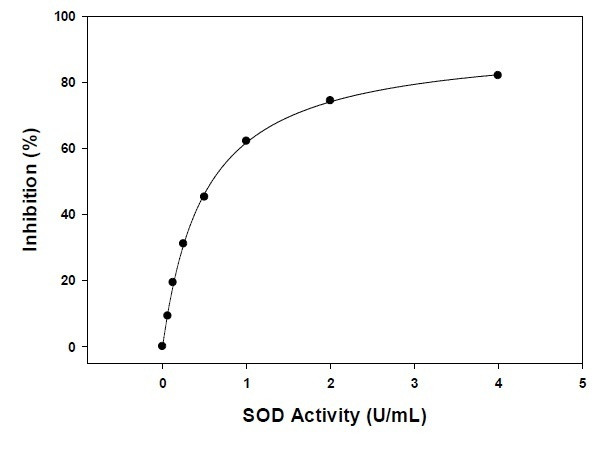
RayBio® Superoxide Dismutase (SOD) Activity Assay Kit provides a simple, reproducible, and sensitive tool for measuring SOD activity in plasma, serum, cell lysates and other biological samples. In this assay, superoxide anions, generated through xanthine conversion to uric acid and hydrogen peroxide by xanthine oxidase (XO), reduce WST-1 to water-soluble formazans. The absorbance at 450nm measures the formazans, and SODs modulate the reduction reaction rate by diminishing superoxide anion concentrations. Consequently, the percentage of inhibition in the reduction reaction serves as a quantifiable indicator of SOD activity.
Kit Components
| Component | Size / Description |
|---|---|
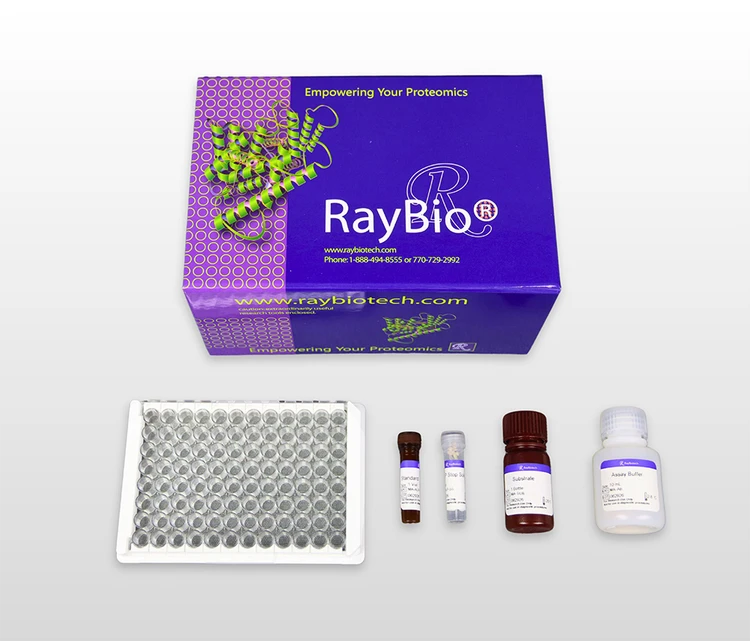
| Microplate | A 96-well (12 strips x 8 wells) plate |
| Sample Buffer | 10 mL |
| Assay Buffer | 25 mL |
| Substrate Concentrate | 1 amber vial (Lyophilized) |
| Cofactor | 1 amber vial (Lyophilized) |
| SOD Standard | 1 vial (10 μL) |
| XO Concentrate | 1 amber vials |
Additional Materials Required
- Microplate reader capable of measuring absorbance at 450 nm
- Precision pipettes to deliver 2 µL to 1 mL volumes
- Multi-channel pipettes to deliver 20 μL to 200 μL volumes
- Tubes to prepare sample dilutions
- Distilled or deionized water
- 50 ml conical tubes
Assay Procedure Summary
Each Superoxide Dismutase standard and samples should be assayed in duplicate or triplicate. A freshly prepared standard curve should be used each time the assay is performed.
- Add 20 μL of the diluted SOD standards or unknown samples to the 96-well Microplate.
- Add 200 μL Substrate Working Solution to each well. Mix thoroughly. Read and record absorbance at 450nm (A1 Reading).
- Initiate the reaction by adding 30 μL XO Working Solution into each well and mix thoroughly.
- Incubate for 30 minutes at room temperature.
- Read and record absorbance at 450nm (A2 Reading).
citations
Fused Azine Derivatives Mitigate Long-Term Paracetamol-Induced Liver Fibrosis in Mice: Role of JNK1/ASK1 and Nrf2/HO-1 Signaling Pathways
- Species:
- Mouse
- Sample Type:
- Tissue Lysate / Homogenate (liver)
- Year:
- 2026
- Journal Name:
- Inflammation
- PubMed ID:
- 42753029
Boosting Thioredoxin-1 Protects Against Acetaminophen-Induced Cardiotoxicity
- Species:
- Mouse
- Sample Type:
- Tissue Lysate / Homogenate (heart tissue homogenates)
- Year:
- 2026
- Journal Name:
- Biomedical Research and Therapy
Influence of ApoE genotype on doxorubicin-induced cognitive impairment in juvenile rats
- Species:
- Rat
- Sample Type:
- Serum
- Year:
- 2025
- Journal Name:
- Scientific Reports
- PubMed ID:
- 41436539
Microbiota-induced lipid peroxidation impairs obeticholic acid-mediated antifibrotic effect towards nonalcoholic steatohepatitis in mice
- Species:
- Mouse
- Sample Type:
- Serum
- Year:
- 2022
- Journal Name:
- Redox biology
Insight into Nephrotoxicity and Processing Mechanism of Arisaema erubescens (Wall.) Schott by Metabolomics and Network Analysis
- Species:
- Rat
- Sample Type:
- kidney
- Year:
- 2023
- Journal Name:
- Drug Design Development and Therapy
Alabi, O.A., Afelumo, O.M., Oladipupo, F.O. et al. Safety assessment of three common food additives: the reproductive, oxidative and enzymatic perspective. Discov Toxicol 1, 8 (2024).
- Year:
- 2024
- Journal Name:
- Discover Toxicology
Assessment of dietary spirulina supplementation on growth performance, nutrient digestibility, and intestinal health in lipopolysaccharide-challenged weanling pigs
- Species:
- Porcine
- Sample Type:
- Serum (LPS-challenged weanling pigs)
- Year:
- 2025
- Journal Name:
- Journal of Animal Science
- PubMed ID:
- 41014498
EPS8 Differentially Regulates Antioxidant Defense and Mitochondrial Homeostatic Signaling in LNCaP and Enzalutamide-resistant LNCaP Cells
- Species:
- Human
- Sample Type:
- Cell Lysate (LNCaP cell lysates); Tissue Lysate / Homogenate
- Year:
- 2026
- Journal Name:
- Cancer Genomics & Proteomics
- PubMed ID:
- 42674824