

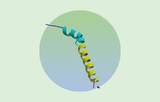
Corticotropin-releasing hormone (CRH), also known as corticotropin-releasing factor (CRF) or corticoliberin, is a 41-amino acid peptide hormone that serves as the principal orchestrator of the body's response to stress. First isolated and characterized from the ovine hypothalamus in 1981, it was the first hypothalamic factor shown to stimulate adrenocorticotropic hormone (ACTH) secretion. Human, mouse, and rat CRH share an identical amino acid sequence, underscoring its remarkable evolutionary conservation. The peptide contains an amidated C-terminus and adopts a highly amphiphilic α-helical conformation upon receptor binding, a structural feature that is essential for its biological activity.
Biosynthesis and Tissue Distribution
CRH is synthesized predominantly by neuroendocrine neurons located in the paraventricular nucleus of the hypothalamus, where it is processed from a larger precursor into the mature 41-amino acid peptide. These neurons project to the median eminence, releasing CRH into the hypophyseal portal circulation for transport to the anterior pituitary. Beyond the hypothalamus, CRH is widely distributed throughout the central nervous system, including the amygdala and locus coeruleus, where it functions as both a neurotransmitter and neuromodulator. Peripheral tissues—including the placenta, retina, stomach, intestine, spleen, lung, gonads, and immune cells such as T lymphocytes—also synthesize CRH, highlighting its diverse paracrine and autocrine functions outside classical neuroendocrine regulation.
Clinical Implications and Therapeutic Applications
Alterations in CRH signaling have been associated with numerous pathological conditions. Chronic overactivation of CRH pathways has been linked to anxiety disorders, depression, sleep disturbances, and anorexia nervosa, whereas reduced CRH expression has been reported in Alzheimer's disease. Synthetic CRH is routinely used as a diagnostic agent for the differential diagnosis of Cushing's syndrome and for localizing ACTH-secreting pituitary adenomas during bilateral inferior petrosal sinus sampling. More recently, the development of non-peptide CRH-R1 antagonists, including crinecerfont, has emerged as a promising therapeutic strategy for disorders characterized by excessive CRH activity, such as congenital adrenal hyperplasia (CAH), anxiety-related disorders, and chronic inflammatory diseases.
