

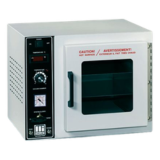
Vacuum ovens are specialized laboratory and industrial heating systems designed to dry, cure, degas, sterilize, or heat samples under reduced pressure. By lowering atmospheric pressure inside the chamber, vacuum ovens decrease the boiling point of solvents and moisture, allowing materials to dry at lower temperatures than conventional ovens. This makes them especially valuable for heat-sensitive, oxygen-sensitive, or moisture-sensitive samples.
Vacuum ovens are widely used in pharmaceutical research, biotechnology, materials science, electronics, analytical laboratories, and chemical processing. Compared with standard drying ovens, vacuum-assisted heating can accelerate solvent removal, improve drying uniformity, reduce oxidation, and minimize thermal degradation of delicate compounds.
A typical vacuum oven consists of a sealed heated chamber, temperature control system, vacuum pump connection, pressure gauge, safety valves, and adjustable shelving. Many models use stainless-steel interiors for chemical resistance and cleanability. Heat is transferred by conduction and radiation, while reduced pressure improves evaporation efficiency.
Importance of Vacuum Ovens
Vacuum ovens are essential because they help to:
- Dry samples at lower temperatures
- Remove solvents and residual moisture efficiently
- Protect heat-sensitive materials from degradation
- Reduce oxidation during heating
- Improve uniformity of drying processes
- Degas materials and remove trapped air or volatiles
- Support reproducible laboratory workflows
- Process sensitive powders, polymers, and biological materials
Main Categories of Vacuum Ovens
Customers can generally find:
- Laboratory Vacuum Ovens for research and routine drying
- High-Temperature Vacuum Ovens for advanced materials applications
- Benchtop Vacuum Ovens for compact laboratories
- Large-Capacity Vacuum Ovens for batch processing
- Digital Programmable Vacuum Ovens for precise workflows
- Cleanroom / GMP Vacuum Ovens for regulated environments
Applications
Used in:
- Solvent removal and sample drying
- Pharmaceutical powder processing
- Polymer and resin curing
- Electronics component drying
- Moisture testing laboratories
- Materials research
- Degassing sensitive samples