

AR Blocking Peptide

Referentie MBS9617301-5x1mg
Formaat : 5x1mg
Merk : MyBiosource

Ar Blocking Peptide – The purity is >90%,tested by HPLC and MS. Purity
For Research Use Only. Not for use in diagnostic procedures. Catalog #: MBS9617301Blocking peptides are peptides that bind specifically to the target antibody and block antibody binding. These peptide usually contains the epitope recognized by the antibody. Antibodies bound to the blocking peptide no longer bind to the epitope on the… More details
Product Overview
Online Datasheet in PDFProduct Name
AR, Blocking Peptide
Full Product Name
AR Blocking Peptide
Product Gene Name
AR blocking peptide
Product Synonym Names
AIS; ANDR_HUMAN; Androgen nuclear receptor variant 2; Androgen receptor (dihydrotestosterone receptor; testicular feminization; spinal and bulbar muscular atrophy; Kennedy disease); Androgen receptor; androgen receptor splice variant 4b; AR; AR8; DHTR; Dihydro testosterone receptor; Dihydrotestosterone receptor (DHTR); Dihydrotestosterone receptor; HUMARA; HYSP1; KD; Kennedy disease (KD); NR3C4; Nuclear receptor subfamily 3 group C member 4 (NR3C4); Nuclear receptor subfamily 3 group C member 4; SBMA; SMAX1; Spinal and bulbar muscular atrophy (SBMA); Spinal and bulbar muscular atrophy; Testicular Feminization (TFM); TFM
Form/Format
Synthetic peptide was lyophilized with 100% acetonitrile and is supplied as a powder. Reconstitute with 0.1 ml DI water for a final concentration of 10 mg/ml.
Purity/Purification
The purity is >90%,tested by HPLC and MS.
Preparation and Storage
Maintain refrigerated at 2-8 degree C for up to 6 months. For long term storage store at -20 degree C.
Antibody/Peptide Pairs
AR peptide (MBS9617301) is used for blocking the activity of AR antibody (MBS9601759)
Molecular Weight
98,989 Da
Chromosome Location
Chromosome: X; NC_000023.10 (66763874..66950461). Location: Xq12
OMIM
300068
Supply Chain Verification
Manufactured in a lab with traceable raw materials manufactured on site. Coordinated product portfolio of antibodies, pairs, conjugates, recombinant proteins, and immunoassay materials available, please inquire.
Notes
For phospho antibody, we provide phospho peptide (0.5mg) and non-phospho peptide (0.5mg)
ISO Certification
Manufactured in an ISO 9001:2015 Certified Laboratory.
Applications Tested/Suitable for AR blocking peptide
Blocking/Control
Related Product Information for AR blocking peptide
Blocking peptides are peptides that bind specifically to the target antibody and block antibody binding. These peptide usually contains the epitope recognized by the antibody. Antibodies bound to the blocking peptide no longer bind to the epitope on the target protein. This mechanism is useful when non-specific binding is an issue, for example, in Western blotting (immunoblot) and immunohistochemistry (IHC). By comparing the staining from the blocked antibody versus the antibody alone, one can see which staining is specific; Specific binding will be absent from the western blot or immunostaining performed with the neutralized antibody.
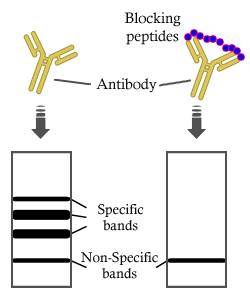
Other Notes
Small volumes of AR blocking peptide vial(s) may occasionally become entrapped in the seal of the product vial during shipment and storage. If necessary, briefly centrifuge the vial on a tabletop centrifuge to dislodge any liquid in the container`s cap. Certain products may require to ship with dry ice and additional dry ice fee may apply.
Searchable Terms for AR purchase
MBS9617301 is a blocking peptide targeting AR.
Additional Details
NCBI/Uniprot data below describe general gene information for AR. It may not necessarily be applicable to this product.
UniProt Primary Accession #
UniProt Related Accession #
GenBank Nucleotide #
NCBI Official Full Name
androgen receptor isoform 1
NCBI Official Synonym Full Names
androgen receptor
NCBI Official Symbol
AR
NCBI Official Synonym Symbols
KD; AIS; TFM; DHTR; SBMA; HYSP1; NR3C4; SMAX1; HUMARA
UniProt Protein Name
Androgen receptor
UniProt Synonym Protein Names
Dihydrotestosterone receptor; Nuclear receptor subfamily 3 group C member 4
Protein Family
Allatostatin
UniProt Gene Name
AR
UniProt Synonym Gene Names
DHTR; NR3C4
UniProt Entry Name
ANDR_HUMAN
NCBI Protein Information
androgen receptor; dihydrotestosterone receptor; androgen nuclear receptor variant 2; nuclear receptor subfamily 3 group C member 4
NCBI Summary for AR
The androgen receptor gene is more than 90 kb long and codes for a protein that has 3 major functional domains: the N-terminal domain, DNA-binding domain, and androgen-binding domain. The protein functions as a steroid-hormone activated transcription factor. Upon binding the hormone ligand, the receptor dissociates from accessory proteins, translocates into the nucleus, dimerizes, and then stimulates transcription of androgen responsive genes. This gene contains 2 polymorphic trinucleotide repeat segments that encode polyglutamine and polyglycine tracts in the N-terminal transactivation domain of its protein. Expansion of the polyglutamine tract causes spinal bulbar muscular atrophy (Kennedy disease). Mutations in this gene are also associated with complete androgen insensitivity (CAIS). Two alternatively spliced variants encoding distinct isoforms have been described. [provided by RefSeq, Jul 2008]
Show more UniProt Comments for AR
AR: a nuclear hormone receptor and transcription factor. Regulates gene expression and affects cellular proliferation and differentiation in target tissues. Two splice-variant isoforms have been described.
Protein type: Nuclear receptor; DNA-binding; Transcription factor
Chromosomal Location of Human Ortholog: Xq12
Cellular Component: nucleoplasm; protein complex; nuclear chromatin; cytoplasm; nucleus
Molecular Function: protein dimerization activity; ligand-dependent nuclear receptor activity; zinc ion binding; androgen binding; beta-catenin binding; transcription factor binding; protein binding; androgen receptor activity; enzyme binding; DNA binding; chromatin binding; transcription factor activity; receptor binding
Biological Process: prostate gland development; transcription initiation from RNA polymerase II promoter; intracellular receptor-mediated signaling pathway; transcription, DNA-dependent; positive regulation of transcription, DNA-dependent; signal transduction; protein oligomerization; activation of NF-kappaB transcription factor; negative regulation of integrin biosynthetic process; cell proliferation; cell-cell signaling; transport; positive regulation of cell proliferation; androgen receptor signaling pathway; positive regulation of transcription from RNA polymerase III promoter; gene expression; positive regulation of transcription from RNA polymerase II promoter; steroid hormone mediated signaling; positive regulation of integrin biosynthetic process; cell growth; sex differentiation; positive regulation of phosphorylation
Disease: Androgen Insensitivity Syndrome; Prostate Cancer; Androgen Insensitivity, Partial; Hypospadias 1, X-linked; Spinal And Bulbar Muscular Atrophy, X-linked 1
Show more Protein type: Nuclear receptor; DNA-binding; Transcription factor
Chromosomal Location of Human Ortholog: Xq12
Cellular Component: nucleoplasm; protein complex; nuclear chromatin; cytoplasm; nucleus
Molecular Function: protein dimerization activity; ligand-dependent nuclear receptor activity; zinc ion binding; androgen binding; beta-catenin binding; transcription factor binding; protein binding; androgen receptor activity; enzyme binding; DNA binding; chromatin binding; transcription factor activity; receptor binding
Biological Process: prostate gland development; transcription initiation from RNA polymerase II promoter; intracellular receptor-mediated signaling pathway; transcription, DNA-dependent; positive regulation of transcription, DNA-dependent; signal transduction; protein oligomerization; activation of NF-kappaB transcription factor; negative regulation of integrin biosynthetic process; cell proliferation; cell-cell signaling; transport; positive regulation of cell proliferation; androgen receptor signaling pathway; positive regulation of transcription from RNA polymerase III promoter; gene expression; positive regulation of transcription from RNA polymerase II promoter; steroid hormone mediated signaling; positive regulation of integrin biosynthetic process; cell growth; sex differentiation; positive regulation of phosphorylation
Disease: Androgen Insensitivity Syndrome; Prostate Cancer; Androgen Insensitivity, Partial; Hypospadias 1, X-linked; Spinal And Bulbar Muscular Atrophy, X-linked 1
Precautions
All of MyBioSource's Products are for scientific laboratory research purposes and are not for diagnostic, therapeutics, prophylactic or in vivo use. Through your purchase, you expressly represent and warrant to MyBioSource that you will properly test and use any Products purchased from MyBioSource in accordance with industry standards. MyBioSource and its authorized distributors reserve the right to refuse to process any order where we reasonably believe that the intended use will fall outside of our acceptable guidelines.
Disclaimer
While every efforts were made to ensure the accuracy of the information provided in this datasheet, MyBioSource will not be liable for any omissions or errors contained herein. MyBioSource reserves the right to make changes to this datasheet at any time without prior notice.
It is the responsibility of the customer to report product performance issues to MyBioSource within 30 days of receipt of the product. Please visit our Terms & Conditions page for more information.
It is the responsibility of the customer to report product performance issues to MyBioSource within 30 days of receipt of the product. Please visit our Terms & Conditions page for more information.
Product Note
Select online data sheet information is drawn from bioinformatics databases, occasionally resulting in ambiguous or non-relevant product information. It is the responsibility of the customer to review, verify, and evaluate the information to make sure it matches their requirements before purchasing the kit. Our ELISA Kit assays are dynamic research tools and sometimes they may be updated and improved. If the format of this assay is important to you then please request the current manual or contact our technical support team with a presales inquiry before placing an order. We will confirm the current details of the assay. We cannot guarantee the sample manual posted online is the most current manual, it is intended to serve as an example only. Please refer to the instructions For Use provided with the assay kit for precise details.
Product PubMed Publications
Products associated with AR blocking peptide
| Reference Product | PubMed Publications |
|---|---|
| JUN blocking peptide | >9213 publications with AR and JUN |
| CTNNB1 blocking peptide | >550 publications with AR and CTNNB1 |
| CASP3 blocking peptide | >400 publications with AR and CASP3 |
| EGFR blocking peptide | >339 publications with AR and EGFR |
| MAPK1 blocking peptide | >267 publications with AR and MAPK1 |
| CCND1 blocking peptide | >254 publications with AR and CCND1 |
| PTEN blocking peptide | >172 publications with AR and PTEN |
| HIF1A blocking peptide | >130 publications with AR and HIF1A |
| AHR blocking peptide | >125 publications with AR and AHR |
| CASP1 blocking peptide | >118 publications with AR and CASP1 |
Pathways associated with AR blocking peptide
| Products by Pathway | Pathway Diagram |
|---|---|
| Alpha6-Beta4 Integrin Signaling Pathway antibodies | Alpha6-Beta4 Integrin Signaling Pathway Diagram |
| Androgen Receptor Signaling Pathway antibodies | Androgen Receptor Signaling Pathway Diagram |
| Coregulation Of Androgen Receptor Activity Pathway antibodies | Coregulation Of Androgen Receptor Activity Pathway Diagram |
| FOXA1 Transcription Factor Network Pathway antibodies | FOXA1 Transcription Factor Network Pathway Diagram |
| Gene Expression Pathway antibodies | Gene Expression Pathway Diagram |
| Generic Transcription Pathway antibodies | Generic Transcription Pathway Diagram |
| IL-6 Signaling Pathway antibodies | IL-6 Signaling Pathway Diagram |
| Integrated Breast Cancer Pathway antibodies | Integrated Breast Cancer Pathway Diagram |
| Integrated Pancreatic Cancer Pathway antibodies | Integrated Pancreatic Cancer Pathway Diagram |
| Nongenotropic Androgen Signaling Pathway antibodies | Nongenotropic Androgen Signaling Pathway Diagram |
Diseases associated with AR blocking peptide
| Disease Name | Pubmed Publications |
|---|---|
| Neoplasms Antibodies | >9603 publications with AR and Neoplasms |
| Inflammation Antibodies | >4419 publications with AR and Inflammation |
| Heart Diseases Antibodies | >3698 publications with AR and Heart Diseases |
| Genital Diseases, Male Antibodies | >3337 publications with AR and Genital Diseases, Male |
| Necrosis Antibodies | >2987 publications with AR and Necrosis |
| Prostatic Neoplasms Antibodies | >2580 publications with AR and Prostatic Neoplasms |
| Drug Toxicity Antibodies | >2081 publications with AR and Drug Toxicity |
| Kidney Diseases Antibodies | >1724 publications with AR and Kidney Diseases |
| Hypertension Antibodies | >1265 publications with AR and Hypertension |
| Breast Neoplasms Antibodies | >1149 publications with AR and Breast Neoplasms |
Organs/Tissues associated with AR blocking peptide
| Organ/Tissue Name | Pubmed Publications |
|---|---|
| Bone Antibodies | >14708 publications with AR and Bone |
| Muscle Antibodies | >11638 publications with AR and Muscle |
| Skin Antibodies | >8075 publications with AR and Skin |
| Heart Antibodies | >5862 publications with AR and Heart |
| Vascular Antibodies | >4965 publications with AR and Vascular |
| Brain Antibodies | >4584 publications with AR and Brain |
| Prostate Antibodies | >3911 publications with AR and Prostate |
| Kidney Antibodies | >3326 publications with AR and Kidney |
| Liver Antibodies | >2900 publications with AR and Liver |
| Nerve Antibodies | >2181 publications with AR and Nerve |