

The innate immune system serves as the body's first line of defense against microbial invasion. It plays a critical role in recognizing and responding to pathogens through the detection of pathogen-associated molecular patterns (PAMPs) and endogenous danger signals, known as danger-associated molecular patterns (DAMPs). This recognition is facilitated by pattern recognition receptors (PRRs), which are essential components of the immune system.
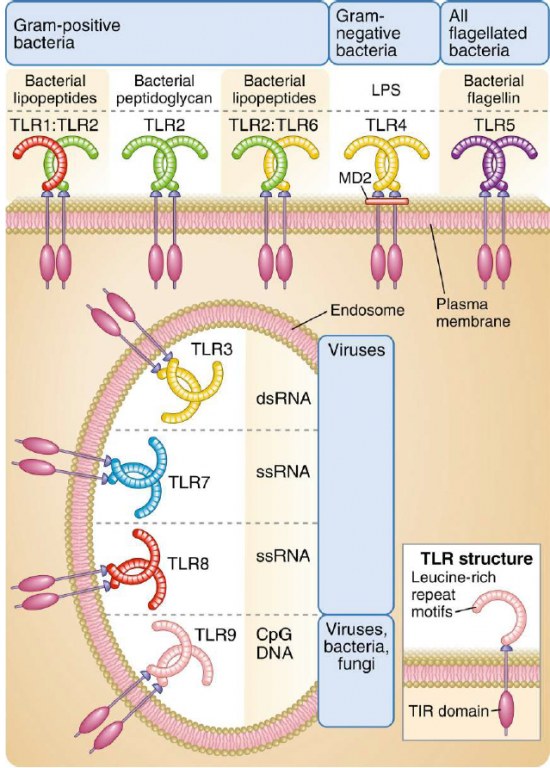
Among these receptors, Toll-Like Receptors (TLRs) are type I membrane glycoproteins that detect PAMPs in the extracellular milieu and endosomal compartments. Upon activation, TLR signaling pathways trigger the production and release of various cytokines and chemokines, which orchestrate the immune response to eliminate pathogens and initiate tissue repair.
TLR Receptor agonists and Immune Modulation
| TLR Receptors agonists | Negative Regulator of Innate Immunity | ||
| TLR1/2 | TLR7/8 | 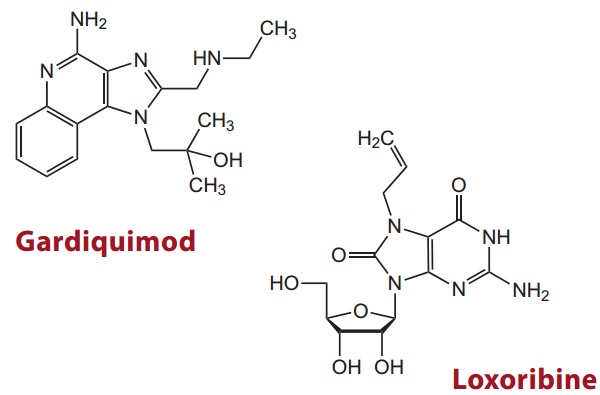
|
NLRC3 is a cytoplasmic protein that negatively regulates pro-IL-1B expression and inhibits TLR-dependent activation of NF-kB. It also reduces STING-dependent innate immune activation in response to cytosolic DNA, cyclic di-GMP and DNA viruses. |
| TLR5 | TLR9 | ||
| TLR6/2 | TLR11 | ||
| TLR7 | TLR11/12 | ||
Available Products for TLR Research
| Available products for each TLR | ||
| Antibodies (human, mouse, rat) |
 |
ELISA (human, mouse, rat) |
| RNAi | Blocking peptides | |
| cDNA | Protein, Peptides | |
| CRISPR/Cas9 | Primers | |