

Durvalumab [1428935-60-7]

Referência T11126-1mg
Tamanho : 1mg
Marca : TargetMol
Durvalumab
(Synonyms: MEDI 4736) Copy Product InfoDurvalumab (MEDI 4736) is a humanized monoclonal antibody targeting programmed cell death ligand 1 (PD-L1) and functions as an immune checkpoint inhibitor. Durvalumab blocks the interactions of PD-L1 with programmed cell death protein 1 (PD-1) and CD80, with IC50 values of 0.1 and 0.04 nM, respectively. Durvalumab can be used in research on various types of cancer, including non-small cell lung cancer (NSCLC) and advanced hepatocellular carcinoma.
Cas No. 1428935-60-7
With extensive experience in compound synthesis, we can provide rapid custom synthesis services for this product according to your research needs.
For research use only—not for human use. No sales to individuals. Use as intended only.
Select Batch
Purity:97.7% (SDS-PAGE); 99.59% (SEC-HPLC)
Appearance:Liquid
Color:Transparent
Product Information
Bioactivity
Related Conjugates and Formulations
Antigen Details
Chemical Properties
Antibody Information
Storage & Solubility Information
| Description | Durvalumab (MEDI 4736) is a humanized monoclonal antibody targeting programmed cell death ligand 1 (PD-L1) and functions as an immune checkpoint inhibitor. Durvalumab blocks the interactions of PD-L1 with programmed cell death protein 1 (PD-1) and CD80, with IC50 values of 0.1 and 0.04 nM, respectively. Durvalumab can be used in research on various types of cancer, including non-small cell lung cancer (NSCLC) and advanced hepatocellular carcinoma. |
| Targets & IC50 | PD-1/PD-L1:0.1 nM, PD-L1/CD80:0.04 nM |
| In vitro | Method: Cancer cell lines (MDA-MB-231 triple-negative breast cancer cell line and AsPC-1 pancreatic cancer cell line) were incubated with Durvalumab at concentration of 10μg/mL at 4°C overnight. PD-L1 expression was verified in the MDA-MB-231 and AsPC-1 cell lines by flow cytometry. Result: Durvalumab shows specificity for PD-L1.[2] |
| In vivo | Method: NOD/SCID mice bearing HPAC tumors co-implanted with primary human T cells received intraperitoneal injections of durvalumab at doses of 5, 1, 0.1, or 0.01 mg/kg twice weekly for 3 weeks. NOD/SCID mice bearing A375 tumors co-implanted with primary human T cells received intraperitoneal injections of durvalumab at doses of 5, 1, or 0.1 mg/kg twice weekly for 3 weeks. Result: Durvalumab significantly inhibited tumor growth in both HPAC and A375 xenograft models compared with an isotype-matched control antibody. [1] Method: 5×10^6 MDA-MB-231 cells and 4×10^6 AsPC-1 cells were implanted subcutaneously on the right shoulder of each mouse.Tumor xenograft mice (n = 3/group) were injected with 3.7-7.4 MBq (0.10-0.20 mCi) of 64^Cu-NOTA_x0002_Durvalumab/NOTA-IgG via the lateral tail vein. PET/CT scans were acquired at 4, 24, and 48 h post-injection (p.i.). Result: 64^Cu-NOTA_x0002_Durva showed longer blood retention in the non-targeting group.[2] |
| Expression System | CHO |
| Endotoxin | <1.0 EU/mg |
| Synonyms | MEDI 4736 |
| Reactivity | Human |
| Verified Activity | Immobilized Human PD-L1 Protein (His) (TMPY-04343) at 1 μg/mL (100 μL/well) can bind Durvalumab. The EC50 is 1.210 ng/mL.  |
| Application | Functional assay |
| Antibody Type | Monoclonal |
| Formulation | Supplied as a sterile solution in a buffered formulation system (e.g., phosphate-, citrate-, or amino acid-based). Please refer to the CoA for lot-specific composition. |
| Endotoxin | <1.0 EU/mg |
| Conjucates | Unconjugated |
| Gene ID | 29126 |
| Uniprot ID | Q9NZQ7 / Q9EP73 / A0A2K5VLY1 |
| Target | B7-H1/PD-L1/CD274 |
| Molecular Weight | 146.03 kDa |
| Cas No. | 1428935-60-7 |
| Relative Density. | no data available |
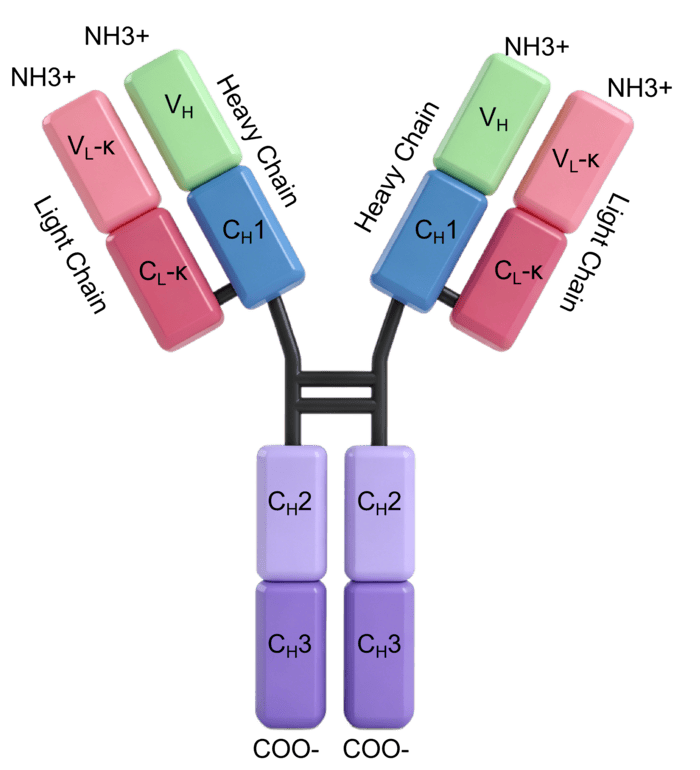
| Isotype | Human IgG1 kappa |
| Recommended Isotype Control | Human IgG1 kappa, Isotype Control |
| Storage | Store at low temperature -20°C for 1 year Shipping with blue ice/Shipping at ambient temperature. |