

Recombinant Midline 1 (MID1)

Referência MBS2030329-5mg
Tamanho : 5mg
Marca : MyBiosource
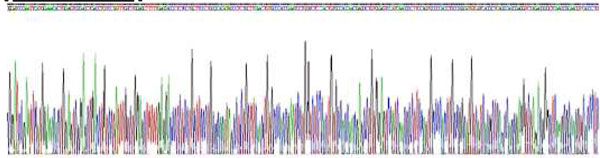
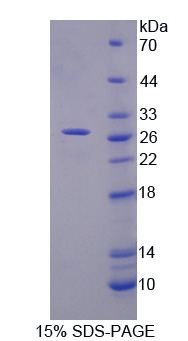
Midline 1 (MID1) Recombinant Protein
For Research Use Only. Not for use in diagnostic procedures. Special Promotion Catalog #: MBS2030329SPECIAL PROMOTION: Get FREE Starbucks gift card (Maximum 5 gift cards/product). Gift card(s) will be included with shipment
MBS2030329 is a recombinant protein targeting MID1. Also known as Recombinant Midline 1 (MID1). Host: E.coli. More details
Product Overview
Online Datasheet in PDFProduct Name
Midline 1 (MID1), Recombinant Protein
Full Product Name
Recombinant Midline 1 (MID1)
Product Gene Name
MID1 recombinant protein
Sequence
METLESELTC PICLELFEDP LLLPCAHSLC FNCAHRILVS HCATNEPVES INAFQCPTCR HVITLSQRGL DGLKRNVTLQ NIIDRFQKAS VSGPNSPSET RRERAFDANT MSSAEKVLCQ FCDQDPAQDA VKTCVTCEVS YCDECLKATH PNKKPFTGHR LIEPIPDSHI RGLMCLEHED EKVNMYCVTD DQLICALCKL VGRHRDHQVA AL
Host
E.coli
Form/Format
100mMNaHCO3, 500mMNaCl, pH8.3, containing 0.01% SKL, 5% Trehalose.
Purity/Purification
> 90%
Concentration
Original Concentration: 500ug/mL (lot specific)
Preparation and Storage
Storage:
Avoid repeated freeze/thaw cycles.
Store at 2-8 degree C for one month.
Aliquot and store at -80 degree C for 12 months.
Stability Test:
The thermal stability is described by the loss rate. The loss rate was determined by accelerated thermal degradation test, that is, incubate the protein at 37 degree C for 48h, and no obvious degradation and precipitation were observed. The loss rate is less than 5% within the expiration date under appropriate storage condition.
Matching Pairs
Unconjugated Antibody: MID1 (MBS2028226)
Immunogen: MID1 (MBS2030329)
Immunogen: MID1 (MBS2030329)
Matching Pairs
APC-CY7 Conjugated Antibody: MID1 (MBS2067187)
Immunogen: MID1 (MBS2030329)
Immunogen: MID1 (MBS2030329)
Molecular Weight
Predicted Molecular Mass: 27.5KDa
Accurate Molecular Mass: 28kDa as determined by SDS-PAGE reducing conditions.
Accurate Molecular Mass: 28kDa as determined by SDS-PAGE reducing conditions.
OMIM
300000
Supply Chain Verification
Manufactured in a lab with traceable raw materials. Bulk orders can typically be prepared to the customer’s specifications, please inquire.
Organism Species
Mus musculus (Mouse)
Source
Prokaryotic expression
Residues
Met1~Leu212
Tags
N-terminal His Tag
Subcellular Location
Cytoplasm
Traits
Freeze-dried powder
Predicted isoelectric point
5.7
Usage
Reconstitute in ddH2O to a concentration of 0.1-1.0 mg/mL. Do not vortex.
ISO Certification
Manufactured in an ISO 9001:2015 and ISO 13485:2016 Certified Laboratory.
Applications Tested/Suitable for MID1 recombinant protein
Positive Control; Immunogen; SDS-PAGE; Western Blot (WB).
Other Notes
Small volumes of MID1 recombinant protein vial(s) may occasionally become entrapped in the seal of the product vial during shipment and storage. If necessary, briefly centrifuge the vial on a tabletop centrifuge to dislodge any liquid in the container`s cap. Certain products may require to ship with dry ice and additional dry ice fee may apply.
Additional Details
NCBI/Uniprot data below describe general gene information for MID1. It may not necessarily be applicable to this product.
NCBI Official Full Name
midline 1
NCBI Official Synonym Full Names
midline 1
NCBI Official Symbol
MID1
NCBI Official Synonym Symbols
OS; FXY; OSX; OGS1; XPRF; BBBG1; GBBB1; MIDIN; RNF59; ZNFXY; TRIM18
UniProt Protein Name
E3 ubiquitin-protein ligase Midline-1
UniProt Synonym Protein Names
Midin; Putative transcription factor XPRF; RING finger protein 59; RING finger protein Midline-1; Tripartite motif-containing protein 18
Protein Family
Division mal foutue 1 protein
UniProt Gene Name
MID1
UniProt Synonym Gene Names
FXY; RNF59; TRIM18; XPRF
UniProt Entry Name
TRI18_HUMAN
NCBI Protein Information
E3 ubiquitin-protein ligase Midline-1
NCBI Summary for MID1
The protein encoded by this gene is a member of the tripartite motif (TRIM) family, also known as the 'RING-B box-coiled coil' (RBCC) subgroup of RING finger proteins. The TRIM motif includes three zinc-binding domains, a RING, a B-box type 1 and a B-box type 2, and a coiled-coil region. This protein forms homodimers which associate with microtubules in the cytoplasm. The protein is likely involved in the formation of multiprotein structures acting as anchor points to microtubules. Mutations in this gene have been associated with the X-linked form of Opitz syndrome, which is characterized by midline abnormalities such as cleft lip, laryngeal cleft, heart defects, hypospadias, and agenesis of the corpus callosum. This gene was also the first example of a gene subject to X inactivation in human while escaping it in mouse. Multiple different transcript variants are generated by alternate splicing; however, the full-length nature of some of the variants has not been determined. [provided by RefSeq, Jul 2010]
Show more UniProt Comments for MID1
MID1: Has E3 ubiquitin ligase activity towards IGBP1, promoting its monoubiquitination, which results in deprotection of the catalytic subunit of protein phosphatase PP2A, and its subsequent degradation by polyubiquitination. Defects in MID1 are the cause of Opitz GBBB syndrome 1 (OGS1). A congenital midline malformation syndrome characterized by hypertelorism, genital-urinary defects such as hypospadias in males and splayed labia in females, lip-palate- laryngotracheal clefts, imperforate anus, developmental delay and congenital heart defects. MID1 mutations produce proteins with a decreased affinity for microtubules. Belongs to the TRIM/RBCC family. 2 isoforms of the human protein are produced by alternative splicing.
Protein type: Ligase; Cytoskeletal; Ubiquitin ligase; EC 6.3.2.19; EC 6.3.2.-; Ubiquitin conjugating system
Chromosomal Location of Human Ortholog: Xp22
Cellular Component: microtubule; microtubule associated complex; cytoplasmic microtubule; spindle; cytosol
Molecular Function: protein homodimerization activity; zinc ion binding; protein heterodimerization activity; microtubule binding; ubiquitin protein ligase binding; phosphoprotein binding; ligase activity
Biological Process: negative regulation of microtubule depolymerization; metabolic process; cytokine and chemokine mediated signaling pathway; microtubule cytoskeleton organization and biogenesis; pattern specification process; positive regulation of stress-activated MAPK cascade
Disease: Tracheoesophageal Fistula With Or Without Esophageal Atresia; Opitz Gbbb Syndrome, X-linked
Show more Protein type: Ligase; Cytoskeletal; Ubiquitin ligase; EC 6.3.2.19; EC 6.3.2.-; Ubiquitin conjugating system
Chromosomal Location of Human Ortholog: Xp22
Cellular Component: microtubule; microtubule associated complex; cytoplasmic microtubule; spindle; cytosol
Molecular Function: protein homodimerization activity; zinc ion binding; protein heterodimerization activity; microtubule binding; ubiquitin protein ligase binding; phosphoprotein binding; ligase activity
Biological Process: negative regulation of microtubule depolymerization; metabolic process; cytokine and chemokine mediated signaling pathway; microtubule cytoskeleton organization and biogenesis; pattern specification process; positive regulation of stress-activated MAPK cascade
Disease: Tracheoesophageal Fistula With Or Without Esophageal Atresia; Opitz Gbbb Syndrome, X-linked
Research Articles on MID1
Precautions
All of MyBioSource's Products are for scientific laboratory research purposes and are not for diagnostic, therapeutics, prophylactic or in vivo use. Through your purchase, you expressly represent and warrant to MyBioSource that you will properly test and use any Products purchased from MyBioSource in accordance with industry standards. MyBioSource and its authorized distributors reserve the right to refuse to process any order where we reasonably believe that the intended use will fall outside of our acceptable guidelines.
Disclaimer
While every efforts were made to ensure the accuracy of the information provided in this datasheet, MyBioSource will not be liable for any omissions or errors contained herein. MyBioSource reserves the right to make changes to this datasheet at any time without prior notice.
It is the responsibility of the customer to report product performance issues to MyBioSource within 30 days of receipt of the product. Please visit our Terms & Conditions page for more information.
It is the responsibility of the customer to report product performance issues to MyBioSource within 30 days of receipt of the product. Please visit our Terms & Conditions page for more information.
Product Note
Select online data sheet information is drawn from bioinformatics databases, occasionally resulting in ambiguous or non-relevant product information. It is the responsibility of the customer to review, verify, and evaluate the information to make sure it matches their requirements before purchasing the kit. Our ELISA Kit assays are dynamic research tools and sometimes they may be updated and improved. If the format of this assay is important to you then please request the current manual or contact our technical support team with a presales inquiry before placing an order. We will confirm the current details of the assay. We cannot guarantee the sample manual posted online is the most current manual, it is intended to serve as an example only. Please refer to the instructions For Use provided with the assay kit for precise details.
Product PubMed Publications
Products associated with MID1 recombinant protein
| Reference Product | PubMed Publications |
|---|---|
| PPP2CA recombinant protein | >20 publications with MID1 and PPP2CA |
| MID2 recombinant protein | >14 publications with MID1 and MID2 |
| MID1IP1 recombinant protein | >4 publications with MID1 and MID1IP1 |
| IGBP1 recombinant protein | >4 publications with MID1 and IGBP1 |
| ANXA2 recombinant protein | >1 publications with MID1 and ANXA2 |
Pathways associated with MID1 recombinant protein
| Products by Pathway | Pathway Diagram |
|---|---|
| Cytokine Signaling In Immune System Pathway antibodies | Cytokine Signaling In Immune System Pathway Diagram |
| Immune System Pathway antibodies | Immune System Pathway Diagram |
| Interferon Signaling Pathway antibodies | Interferon Signaling Pathway Diagram |
| Interferon Gamma Signaling Pathway antibodies | Interferon Gamma Signaling Pathway Diagram |
| Ubiquitin Mediated Proteolysis Pathway antibodies | Ubiquitin Mediated Proteolysis Pathway Diagram |
| Ubiquitin Mediated Proteolysis Pathway antibodies | Ubiquitin Mediated Proteolysis Pathway Diagram |
Diseases associated with MID1 recombinant protein
| Disease Name | Pubmed Publications |
|---|---|
| Nervous System Diseases Antibodies | >11 publications with MID1 and Nervous System Diseases |
| Chromosome Aberrations Antibodies | >8 publications with MID1 and Chromosome Aberrations |
| Brain Diseases Antibodies | >5 publications with MID1 and Brain Diseases |
| Heart Diseases Antibodies | >5 publications with MID1 and Heart Diseases |
| Opitz GBBB Syndrome, X-Linked Antibodies | >5 publications with MID1 and Opitz GBBB Syndrome, X-Linked |
| Lung Diseases Antibodies | >4 publications with MID1 and Lung Diseases |
| Eye Diseases Antibodies | >4 publications with MID1 and Eye Diseases |
| Disease Models, Animal Antibodies | >4 publications with MID1 and Disease Models, Animal |
| Cardiovascular Diseases Antibodies | >4 publications with MID1 and Cardiovascular Diseases |
| Inflammation Antibodies | >3 publications with MID1 and Inflammation |
Organs/Tissues associated with MID1 recombinant protein
| Organ/Tissue Name | Pubmed Publications |
|---|---|
| Brain Antibodies | >15 publications with MID1 and Brain |
| Heart Antibodies | >13 publications with MID1 and Heart |
| Nerve Antibodies | >9 publications with MID1 and Nerve |
| Embryonic Tissue Antibodies | >9 publications with MID1 and Embryonic Tissue |
| Muscle Antibodies | >8 publications with MID1 and Muscle |
| Kidney Antibodies | >5 publications with MID1 and Kidney |
| Bone Antibodies | >5 publications with MID1 and Bone |
| Liver Antibodies | >4 publications with MID1 and Liver |
| Placenta Antibodies | >3 publications with MID1 and Placenta |
| Mouth Antibodies | >3 publications with MID1 and Mouth |