Clinisciences > CD4 Antibody
CD4 Antibody

Referência OAEE00848
Tamanho : 100tests(T100)
Marca : Aviva Systems Biology
Aviva Systems Biology will be closed on Friday, July 3rd, in observance of Independence Day.
Bulk
Order
Order
Aviva's
Satisfaction
Guarantee
Satisfaction
Guarantee
Contact Us:
- Toll Free: 888-880-0001
- Phone: 858-552-6979
- Email: info@avivasysbio.com
Shipping Info:
- : Antibody & Protein in US
- + /Kit in US
- Contact us for international orders.

| Datasheets/Manuals | Printable datasheet for CD4 Antibody |
|---|
| Predicted Species Reactivity | Human |
|---|---|
| Product Format | Stabilizing phosphate buffered saline (PBS), pH 7.4, 15 mM sodium azide |
| Clonality | Monoclonal |
| Clone | MEM-241 |
| Isotype | IgG1 |
| Host | Mouse |
| Conjugation | PerCP |
| Application | FC |
| Reconstitution and Storage | 2°C to 8°C |
| Immunogen | 2 N-terminal domains of human CD4 fused to human IgG1 Fc |
| Purification | Purified by size-exclusion chromatography |
| Concentration | 10 ul / test |
| Specificity | The antibody MEM-241 recognizes CD4 antigen, a 55 kDa transmebrane glycoprotein expressed on a subset of T lymphocytes (“helper“ T-cells) and also on monocytes, tissue macrophages and granulocytes. HCDM (former HLDA VIII) Meeting, May 2006, Québec, Canada; WS Code M241 |
| Formulation | PerCP |
| Storage Buffer | The reagent is provided in phosphate buffered saline (PBS) containing 15 mM sodium azide and 0.2% (w/v) high-grade protease free Bovine Serum Albumin (BSA) as a stabilizing agent. |
| Reference | Zola H, Swart B, Banham A, Barry S, Beare A, Bensussan A, Boumsell L, D Buckley C, Buhring HJ, Clark G, Engel P, Fox D, Jin BQ, Macardle PJ, Malavasi F, Mason D, Stockinger H, Yang X: CD molecules 2006--human cell differentiation molecules. J Immunol Methods. 2007 Jan 30;319(1-2):1-5. Hovden AO, Karlsen M, Jonsson R, Aarstad HJ, Appel S: Maturation of monocyte derived dendritic cells with OK432 boosts IL-12p70 secretion and conveys strong T-cell responses. BMC Immunol. 2011 Jan 5;12:2. Anderson AE, Sayers BL, Haniffa MA, Swan DJ, Diboll J, Wang XN, Isaacs JD, Hilkens CM: Differential regulation of naïve and memory CD4+ T cells by alternatively activated dendritic cells. J Leukoc Biol. 2008 Jul;84(1):124-33. Manasa J, Musabaike H, Masimirembwa C, Burke E, Luthy R, Mudzori J: Evaluation of the Partec flow cytometer against the BD FACSCalibur system for monitoring immune responses of human immunodeficiency virus-infected patients in Zimbabwe. Clin Vaccine Immunol. 2007 Mar;14(3):293-8. Karlsson KR, Cowley S, Martinez FO, Shaw M, Minger SL, James W: Homogeneous monocytes and macrophages from human embryonic stem cells following coculture-free differentiation in M-CSF and IL-3. Exp Hematol. 2008 Sep;36(9):1167-75. Brdickova N. et al.: LIME: a new membrane Raft-associated adaptor protein involved in CD4 and CD8 coreceptor signaling. J Exp Med. 2003 Nov 17;198(10):1453-62. Clapham PR, McKnight A: Cell surface receptors, virus entry and tropism of primate lentiviruses. J Gen Virol. 2002 Aug;83(Pt 8):1809-29. Foti M, Phelouzat MA, Holm A, Rasmusson BJ, Carpentier JL: p56Lck anchors CD4 to distinct microdomains on microvilli. Proc Natl Acad Sci U S A. 2002 Feb 19;99(4):2008-13. Millan J, Cerny J, Horejsi V, Alonso MA: CD4 segregates into specific detergent-resistant T-cell membrane microdomains. Tissue Antigens. 1999 Jan;53(1):33-40. |
|---|---|
| Gene Symbol | CD4 |
| Gene Full Name | CD4 molecule |
| Alias Symbols | CD4 antigen (p55), CD4 receptor, CD4mut, IMD79, OKT4D, T-cell surface antigen T4/Leu-3, T-cell surface glycoprotein CD4. |
| NCBI Gene Id | 920 |
| Protein Name | T-cell surface glycoprotein CD4 |
| Description of Target | Integral membrane glycoprotein that plays an essential role in the immune response and serves multiple functions in responses against both external and internal offenses. In T-cells, functions primarily as a coreceptor for MHC class II molecule:peptide complex. The antigens presented by class II peptides are derived from extracellular proteins while class I peptides are derived from cytosolic proteins. Interacts simultaneously with the T-cell receptor (TCR) and the MHC class II presented by antigen presenting cells (APCs). In turn, recruits the Src kinase LCK to the vicinity of the TCR-CD3 complex. LCK then initiates different intracellular signaling pathways by phosphorylating various substrates ultimately leading to lymphokine production, motility, adhesion and activation of T-helper cells. In other cells such as macrophages or NK cells, plays a role in differentiation/activation, cytokine expression and cell migration in a TCR/LCK-independent pathway. Participates in the development of T-helper cells in the thymus and triggers the differentiation of monocytes into functional mature macrophages. |
| Uniprot ID | P01730 |
| Protein Accession # | NP_000607.1 |
| Nucleotide Accession # | NM_000616.4 |
Protein interactions
| Name | # of Products |
|---|---|
| DHRS2 | 36 |
| EIF3B | 101 |
| EIF3C | 86 |
| EIF3D | 71 |
| EIF3I | 172 |
| FARSB | 41 |
| GAP | 36 |
| GNAI2 | 135 |
| HNRNPA1 | 218 |
| HNRNPA2B1 | 88 |
| HNRNPD | 127 |
| HNRNPH1 | 126 |
| HSP90AA1 | 525 |
| HSP90AB1 | 130 |
| HSPA8 | 331 |
| HSPD1 | 127 |
| KPNB1 | 204 |
| LCK | 537 |
| LRPPRC | 81 |
| MME | 191 |
| MYL12A | 42 |
| NCL | 142 |
| NPM1 | 146 |
| PHB | 83 |
| RPL18 | 37 |
| RPL22 | 53 |
| RPL7 | 50 |
| RPLP0 | 58 |
| RPLP1 | 71 |
| RPS10 | 79 |
| RPS12 | 37 |
| RPS19 | 76 |
| RPS9 | 48 |
| RPSA | 79 |
| SSRP1 | 129 |
| STUB1 | 399 |
| TNPO1 | 67 |
| TUBB | 135 |
| UBC | 7030 |
| VDAC1 | 110 |
| VDAC2 | 75 |
| VDAC3 | 44 |
| VIM | 324 |
Biological pathways
| Name | # of Products |
|---|---|
| Cell adhesion | 1115 |
| Entry into host cell | 52 |
| Immune response | 1416 |
| Induction by virus of host cell-cell fusion | 36 |
| Initiation of viral infection | 65 |
| Maintenance of protein location in cell | 46 |
| Positive regulation of interleukin-2 biosynthetic process | 148 |
| Positive regulation of protein kinase activity | 132 |
| Protein palmitoleylation | 36 |
| Regulation of defense response to virus by virus | 124 |
| T cell costimulation | 425 |
| T cell receptor signaling pathway | 453 |
| T cell selection | 111 |
| Transmembrane receptor protein tyrosine kinase signaling pathway | 153 |
Biological process
| Name | # of Products |
|---|---|
| Cell adhesion | 446 |
| Cell surface receptor signaling pathway | 179 |
| Cytokine production | 33 |
| Entry into host cell | 4 |
| Enzyme linked receptor protein signaling pathway | 8 |
| Immune response | 404 |
| Induction by virus of host cell-cell fusion | 4 |
| Initiation of viral infection | 11 |
| Innate immune response | 300 |
| Interspecies interaction between organisms | 281 |
| Maintenance of protein location in cell | 5 |
| Positive regulation of calcium-mediated signaling | 36 |
| Positive regulation of interleukin-2 biosynthetic process | 29 |
| Positive regulation of peptidyl-tyrosine phosphorylation | 112 |
| Positive regulation of protein kinase activity | 36 |
| Protein palmitoleylation | 4 |
| Regulation of defense response to virus by virus | 24 |
| Regulation of T cell activation | 10 |
| Signal transduction | 1058 |
| T cell costimulation | 87 |
| T cell differentiation | 39 |
| T cell receptor signaling pathway | 90 |
| T cell selection | 7 |
| Transmembrane receptor protein tyrosine kinase signaling pathway | 67 |
| Viral reproduction | 279 |
Cellular components
| Name | # of Products |
|---|---|
| Early endosome | 107 |
| Endoplasmic reticulum lumen | 87 |
| Endoplasmic reticulum membrane | 498 |
| External side of plasma membrane | 261 |
| Integral to membrane | 2793 |
| Membrane raft | 140 |
| Plasma membrane | 2678 |
| T cell receptor complex | 14 |
Protein function
| Name | # of Products |
|---|---|
| Coreceptor activity | 164 |
| Enzyme binding | 898 |
| Extracellular matrix structural constituent | 167 |
| Glycoprotein binding | 377 |
| MHC class II protein binding | 54 |
| Protein binding | 12191 |
| Protein homodimerization activity | 1852 |
| Protein kinase binding | 1101 |
| Receptor activity | 3624 |
| Transmembrane signaling receptor activity | 687 |
| Zinc ion binding | 3721 |
-
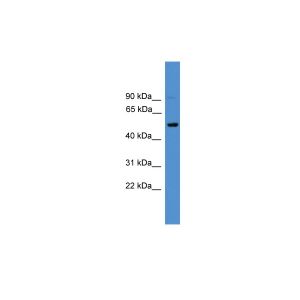 CD4 Antibody - C-terminal region (ARP59105_P050)Catalog #: ARP59105_P050Species Tested: HumanApplication: WBFormat: Liquid. Purified antibody supplied in 1x PBS buffer with 0.09% (w/v) sodium azide and 2% sucrose.
 -
 CD4 Antibody (OASA00630)Catalog #: OASA00630Clone: CA13.1E4Application: FC|IHC-Fr|IPFormat: Liquid
 -
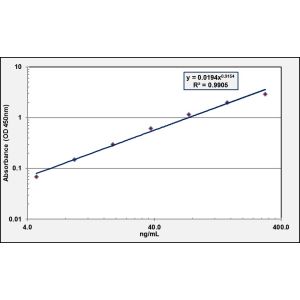 CD4 ELISA Kit (Human) : 96 Wells (OKEH00706)Catalog #: OKEH00706Application: ELISA-SandwichKit Range: 4.68-300ng/mLSensitivity: 2.1 ng/mL
 -
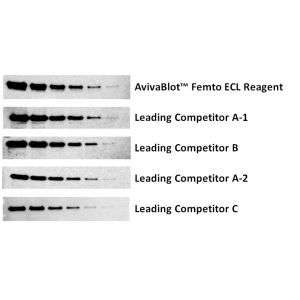 AvivaBlot Femto ECL Reagent (OKCF00002)Catalog #: OKCF00002Application: WBFormat: LiquidSize: 250 mL
 -