Lipids
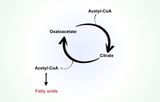
Lipid anabolism, or lipogenesis, synthesizes fatty acids, triglycerides, and phospholipids primarily in the cytosol and endoplasmic reticulum from acetyl-CoA derived from glucose via glycolysis and the TCA cycle. This process requires a high NADPH/NADP+ ratio, supplied by the pentose phosphate pathway, and occurs when energy is abundant, such as post-carbohydrate meals. Compartmentation separates it from catabolism in mitochondria, ensuring reciprocal regulation.
Fatty Acid Synthesis Mechanism
Fatty acid synthesis initiates with acetyl-CoA carboxylase (ACC) converting acetyl-CoA to malonyl-CoA using ATP, followed by fatty acid synthase (FASN) assembling palmitate through seven elongation cycles. Each cycle involves condensation of malonyl-ACP with acyl-ACP to form β-ketoacyl-ACP, followed by reduction, dehydration, and second reduction using NADPH, releasing CO2 and extending the chain by two carbons. The final 16-carbon palmitate detaches for elongation or desaturation in the endoplasmic reticulum.
Triglyceride and Phospholipid Assembly
Glycerol-3-phosphate, from glycolysis or glycerol kinase, accepts fatty acyl-CoAs via acyltransferases to form phosphatidic acid, which dephosphorylates to diacylglycerol and acylates to triglycerides in the endoplasmic reticulum. Phospholipids arise similarly by incorporating a phosphorylated head group like choline. These lipids package into lipoproteins for storage or export.
Regulation by Hormones and Nutrients
Insulin activates lipogenesis by dephosphorylating ACC via protein phosphatase, promoting malonyl-CoA production, while glucagon and AMPK phosphorylate ACC to inhibit it during energy demand. Sterol regulatory element-binding proteins (SREBPs) transcriptionally upregulate FASN and HMG-CoA reductase when cholesterol is low, with low levels triggering proteolytic release and nuclear translocation. Nutrient status fine-tunes this balance to prevent futile cycling with β-oxidation.