

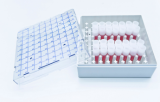
Magnetic bead-based cell separation is a widely adopted and essential technology in cell and gene therapy, enabling the efficient isolation and purification of specific cell populations from complex mixtures. This technique is critical for producing high-quality therapeutic cells such as T cells, stem cells, and natural killer (NK) cells, which are foundational for therapies like CAR-T and other personalized treatments.
How Magnetic Bead Cell Separation Works
Magnetic beads typically consist of tiny iron oxide particles coated with antibodies or ligands that specifically bind to target cell surface markers. When mixed with a heterogeneous cell suspension, these beads attach selectively to the desired cells. Applying a magnetic field then immobilizes the bead-bound cells, allowing separation from unlabeled cells:
- Positive Selection: Target cells are labeled and retained by the magnet, enriching the desired population.
- Negative Selection (Depletion): Unwanted cells are labeled and removed, leaving the target cells untouched.
- Cell Depletion: Specific cell types are selectively removed to enrich the remaining population.
This method preserves cell viability and functionality due to its gentle, non-invasive nature, which is crucial for downstream therapeutic applications.
Advantages in Cell and Gene Therapy
Magnetic bead separation offers several advantages for CGT manufacturing:
- High Purity and Yield: Magnetic bead separation achieves highly purified cell populations, essential for safety and efficacy in CGT products.
- Speed and Simplicity: The protocol is straightforward and rapid, facilitating scalable manufacturing workflows.
- Compatibility with Automation: Automated systems like RoboSep™ and Cocoon® Platform integrate magnetic separation to reduce manual labor, improve reproducibility, and minimize contamination risks.
- Clinical-Grade Reagents: Products such as Gibco™ CTS™ Dynabeads are designed for GMP-compliant manufacturing, meeting regulatory standards for clinical use.
- Versatility: Applicable to a wide range of cell types including T cells, stem cells, NK cells, and dendritic cells.
Challenges and Innovations
While magnetic bead separation is highly effective, challenges include variability in patient-derived samples and the need for efficient bead removal post-isolation to avoid interference with cell function. Recent advances focus on automated bead removal systems to improve throughput and consistency, which are critical for clinical manufacturing timelines and product quality.
Applications in CAR-T and Other Therapies
Magnetic bead separation is integral to CAR-T cell therapy manufacturing, where isolating pure, functional T cells from patient samples is a prerequisite for successful genetic modification and expansion. The flexibility of magnetic bead technology supports multiple isolation strategies tailored to diverse patient materials, enhancing final product consistency and therapeutic efficacy.