

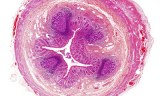
Tissue sections are thin slices of biological tissue prepared for microscopic examination and molecular analysis, fundamental in histopathology, molecular biology, and biomedical research. These sections enable detailed visualization and localization of cellular structures, DNA, RNA, and protein markers, facilitating the study of normal and diseased tissues.
Applications of Tissue Sections
- Localization and identification of mRNA and protein markers within specific tissue contexts.
- Detection of tumor markers and disease-specific genes for diagnostics and research.
- Study of gene and protein expression patterns in normal and pathological tissues.
- Cell culture substrata for tissue reconstruction and serum-free culture, maintaining in vivo-like biochemical attributes to study cell behavior and differentiation.
Innovations in Tissue-Based Biomaterials
Beyond traditional histology, novel biomaterials such as "tissue papers" derived from decellularized extracellular matrices of organ-specific tissues (e.g., heart, kidney, liver) are emerging. These materials retain unique microstructural and mechanical properties of native tissues, supporting applications in tissue engineering, regenerative medicine, and drug discovery. They are flexible, biocompatible, and can support stem cell growth, highlighting their potential for wound healing and surgical uses.