

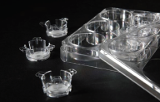
Alvetex® Scaffold polystyrene inserts provide a reproducible three-dimensional (3D) cell culture platform that enables cells to infiltrate a highly porous polystyrene matrix and assemble into physiologically relevant tissue-like structures. Unlike conventional two-dimensional monolayers, porous polystyrene scaffolds promote extensive cell–cell and cell–extracellular matrix interactions, endogenous extracellular matrix deposition, and the formation of biologically relevant gradients of oxygen, nutrients, and metabolites. These properties improve cellular morphology, differentiation, gene expression, and functional responses, making Alvetex® Scaffold inserts valuable for cancer research, stem cell biology, tissue engineering, drug discovery, toxicology, regenerative medicine, and advanced in vitro models.
Key Features
-
Highly Porous, Inert Polystyrene Scaffold – Supports uniform 3D cell infiltration and long-term culture.
-
Broad Laboratory Compatibility – Compatible with standard laboratory workflows, imaging, histology, immunocytochemistry, and molecular assays.
-
Physiologically Relevant Tissue Architecture – Promotes physiologically relevant 3D cell culture architecture and endogenous extracellular matrix production.
-
Wide Cell Type Compatibility – Supports multiple mammalian cell types, including primary cells, stem cells, immortalized cell lines, and co-culture systems.
-
Enhanced Biological Relevance – Improves the physiological relevance of in vitro tissue models compared with conventional 2D culture.
-
Convenient Insert Format – Available as insert formats compatible with standard multiwell plates, facilitating integration into existing experimental workflows.