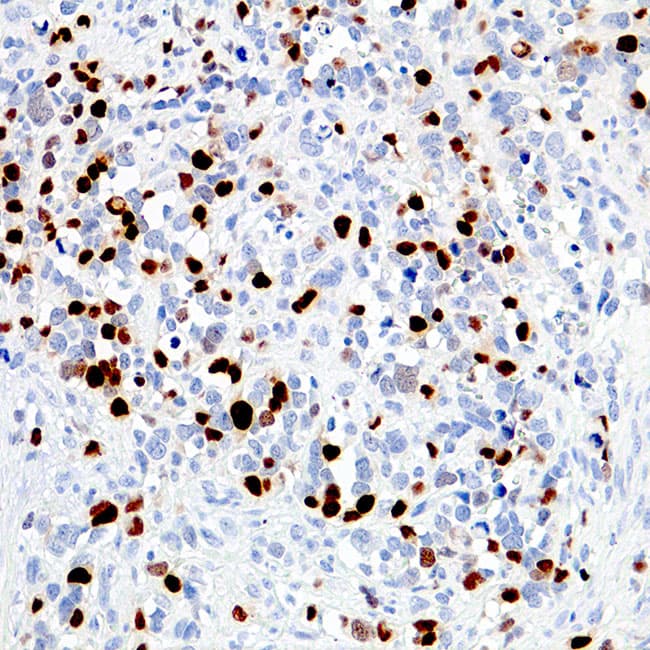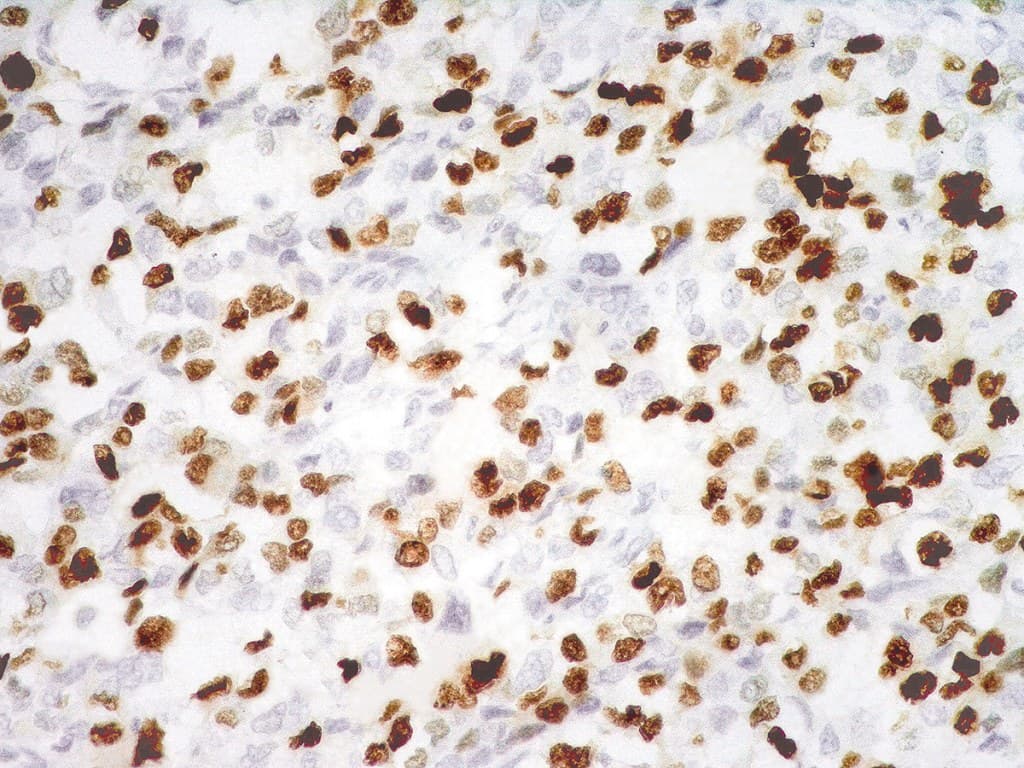
Myogenin (MYOG) is a nuclear basic helix–loop–helix transcription factor belonging to the myogenic regulatory factor (MRF) family, together with MyoD, MYF5, and MRF4. Acting downstream of myogenic lineage commitment signals, myogenin promotes terminal skeletal muscle differentiation, cell-cycle exit, and activation of muscle-specific transcriptional programs during embryonic myogenesis and postnatal muscle regeneration. Owing to its highly restricted expression in differentiating skeletal muscle cells, myogenin is recognized as one of the most specific immunohistochemical markers of rhabdomyoblastic differentiation.
Biological Significance of Myogenin
- Master regulator of terminal skeletal muscle differentiation.
- Controls transcription of genes involved in myofibril assembly and skeletal muscle maturation.
- Functions downstream of MyoD and MYF5 within the hierarchical myogenic transcriptional network.
- Expressed predominantly in differentiating myoblasts and regenerating skeletal muscle fibers.
Diagnostic Utility of Myogenin in Soft Tissue Pathology
- Highly sensitive and specific nuclear marker of rhabdomyoblastic differentiation.
- Essential for distinguishing rhabdomyosarcoma (RMS) from other small round cell tumors and poorly differentiated soft tissue neoplasms.
- Typically demonstrates diffuse, strong nuclear staining in alveolar rhabdomyosarcoma and more focal staining in embryonal rhabdomyosarcoma, providing useful subtype-supportive information.
- Commonly incorporated into diagnostic immunohistochemical panels alongside MyoD1, desmin, and muscle-specific actin markers to confirm skeletal muscle differentiation.
Key Features of CE/IVD Anti-Myogenin Antibodies
- Validated for immunohistochemistry on formalin-fixed, paraffin-embedded (FFPE) tissue sections.
- Produce a distinct nuclear staining pattern that facilitates interpretation and scoring.
- Optimized for automated IHC staining platforms and standardized laboratory workflows.
- CE-marked and intended for in vitro diagnostic use in accordance with manufacturer instructions for use (IFUs).
- Manufactured under quality-controlled processes to support reproducible performance and compatibility with routine soft tissue pathology testing.