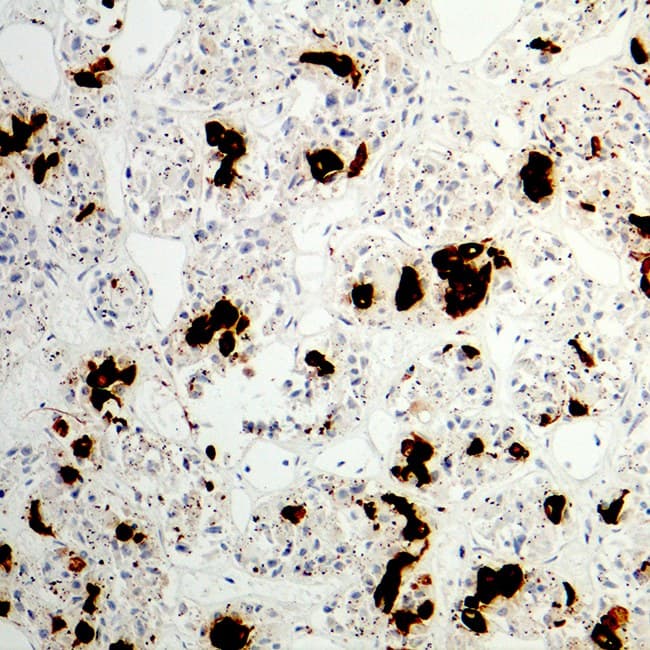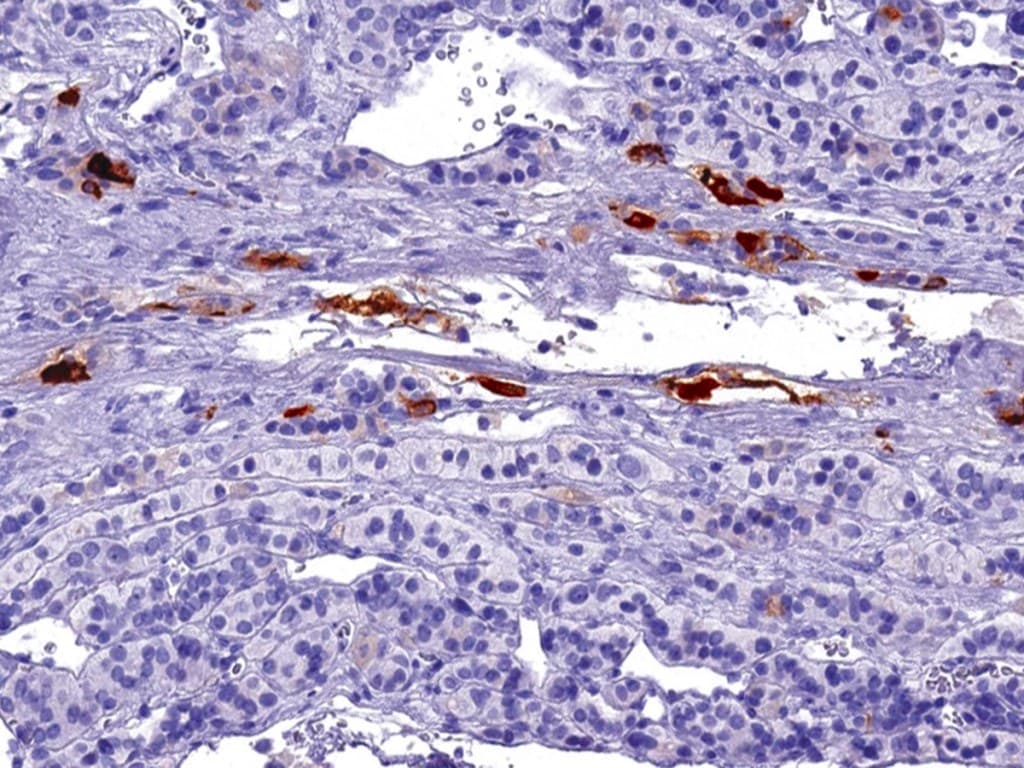
Thyroid-stimulating hormone (TSH, thyrotropin) is a glycoprotein hormone produced by adenohypophyseal thyrotroph cells of the anterior pituitary gland. It consists of a common α-subunit shared with luteinizing hormone (LH), follicle-stimulating hormone (FSH), and human chorionic gonadotropin (hCG), together with a hormone-specific β-subunit that confers biological specificity. TSH secretion is regulated by hypothalamic thyrotropin-releasing hormone (TRH) and by negative feedback from circulating thyroid hormones through the hypothalamic-pituitary-thyroid axis. In normal pituitary tissue, TSH expression is restricted to a small population of PIT1-lineage thyrotroph cells.
Biological Significance of TSH
- Essential regulator of thyroid follicular cell proliferation, differentiation, and thyroid hormone synthesis and secretion.
- Marker of terminal differentiation of pituitary thyrotroph cells.
- Typically co-expressed with the pituitary lineage-specific transcription factor PIT1 in thyrotroph lineage cells.
- Thyrotroph cells constitute approximately 5% of anterior pituitary endocrine cells.
Diagnostic Utility of TSH in Neuropathology
- Identification and classification of thyrotroph pituitary neuroendocrine tumors (PitNETs).
- Differentiation of TSH-producing PitNETs from other PIT1-lineage tumors, including somatotroph and lactotroph neoplasms.
- Characterization of plurihormonal PitNETs using multihormonal immunohistochemical panels.
- Support for the WHO lineage-based classification of pituitary neuroendocrine neoplasms when interpreted in conjunction with PIT1 immunostaining.
Key Features of CE/IVD Anti-TSH Antibodies
- Validated for use on formalin-fixed paraffin-embedded (FFPE) tissue sections.
- Optimized for immunohistochemistry on paraffin sections (IHC-P) workflows.
- Commercially available as rabbit monoclonal, rabbit polyclonal, and mouse monoclonal reagents.
- Demonstrate characteristic cytoplasmic granular to diffuse cytoplasmic staining in normal thyrotroph cells and thyrotroph PitNETs.
- Manufactured under CE/IVD quality standards to support routine diagnostic pathology laboratories.
- Compatible with automated staining platforms and heat-induced epitope retrieval (HIER) protocols commonly used in clinical laboratories.