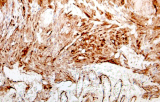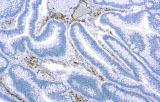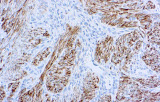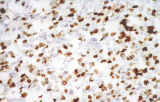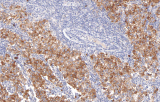


Primary antibodies for immunohistochemistry (IHC) are indispensable tools for the classification, differential diagnosis, and characterization of mesenchymal neoplasms in modern soft tissue pathology. CE-IVD antibodies enable standardized and reproducible detection of lineage-associated, differentiation-associated, and molecular surrogate biomarkers in formalin-fixed paraffin-embedded (FFPE) tissues, supporting routine diagnostic pathology as well as translational research applications.
The diagnosis of soft tissue tumors increasingly relies on integrated immunophenotypic profiling to distinguish fibroblastic, myogenic, adipocytic, vascular, peripheral nerve sheath, and translocation-associated sarcomas from their morphologic mimics. In addition to establishing cellular differentiation, immunohistochemistry plays a critical role in identifying surrogate markers associated with recurrent molecular alterations and gene fusion events, thereby complementing histomorphology and molecular pathology techniques within contemporary diagnostic workflows.
Key Features of CE-IVD Primary Antibodies for Soft Tissue Pathology
- CE-IVD compliance for use in regulated diagnostic laboratory environments.
- Validation for formalin-fixed paraffin-embedded tissue sections used in routine surgical pathology.
- High analytical sensitivity and optimized specificity for target antigen detection.
- Optimized performance on both automated and manual IHC staining platforms.
- Availability in ready-to-use and concentrated formats to support laboratory workflow flexibility.
- Reproducible staining intensity with minimal background reactivity.
- Defined subcellular localization patterns, including nuclear, cytoplasmic, membranous, or combined staining profiles.
- Lot-to-lot consistency supported by rigorous quality control and manufacturing standards.
- Suitability for multiplex diagnostic panels and contemporary algorithm-based approaches to sarcoma classification.