

Clinisciences > HSPA8 Antibody
HSPA8 Antibody

Cat# OAED00188
Size : 50ug
Brand : Aviva Systems Biology
HSPA8 Antibody (OAED00188)
| Datasheets/Manuals | Printable datasheet for HSPA8 Antibody (OAED00188) |
|---|
| Predicted Species Reactivity | Human, Mouse, Rat, Drosophila, Insect |
|---|---|
| Clonality | Monoclonal |
| Clone | BB70 |
| Isotype | IgG2a |
| Host | Mouse |
| Application | IHC, IP, WB |
| Reconstitution and Storage | Long Term Storage : -20C |
| Immunogen | Chicken Hsp70/Hsp90 complex. |
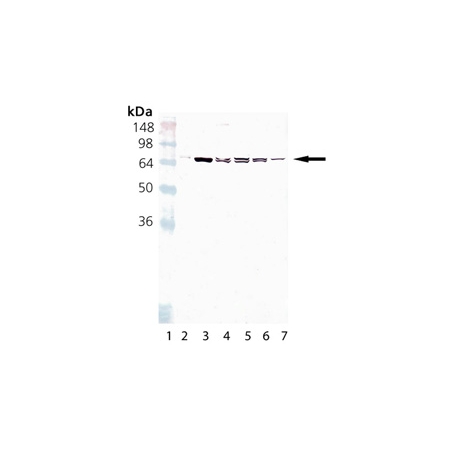
| Specificity | Recognizes human, mouse, rat, Drosophila, insect (housefly), rabbit, sponge, and yeast HSC70 (HSP70). Detects a band of ~72kDa by Western blot. |
| Formulation | Liquid. In PBS, pH 7.2, containing 50% glycerol and 0.09% sodium azide. |
| Purity | Protein G affinity purified. |
| Application Info | Immunohistochemistry Immunoprecipitation Western Blot (1:1000, colorimetric) Optimal conditions must be determined individually for each application. |
| Reference | The Expression of Tubulin Polymerization Promoting Protein TPPP/p25alpha is Developmentally Regulated in Cultured Rat Brain Oligodendrocytes and Affected by Proteolytic Stress: C. Richter-Landsberg, et al. ; Glia 56, 1736 (2008), Application(s): WB, IF using rat tissue, Abstract; Uptake of the antifungal cationic peptide Histatin 5 by Candida albicans Ssa2p requires binding to non-conventional sites within the ATPase domain: M. Edgerton, et al. ; Mol. Microbiol. 70, 1246 (2008), Application(s): WB using yeast cell lysates, Abstract; Developmental and hyperthermia-induced expression of the heat shockproteins HSP60 and HSP70 in tissues of the housefly Musca domestica:An in vitro study: P. Tiwari, et al. ; Genet. Mol. Biol. 30, 159 (2007), Application(s): WB, IHC using housefly tissue, Abstract; Phosphoglucose isomerase genotype affects running speed and heat shockprotein expression after exposure to extreme temperatures in a montanewillow beetle: N. Rank, et al. ; J. Exp. Biol. 210, 750 (2007), Application(s): WB using insect cell lysates, Abstract; Co-translational folding of caspase-activated DNase with Hsp70, Hsp40, and inhibitor of caspase-activated DNase: S. Nagata, et al. ; J. Biol. Chem. 277, 3364 (2002), Application(s): IP using rabbit samples, Abstract; Tumor necrosis factor receptor 1 is an ATPase regulated by silencer of death domain: E.M. Eddy, et al. ; Mol. Cell. Biol. 22, 2536 (2002), Application(s): WB using mouse samples, Abstract; Modulation of Drosophila heat shock transcription factor activity by the molecular chaperone DROJ1: C. Wu, et al. ; EMBO J. 20, 499 (2001), Application(s): WB using drosophila samples, Abstract; Regional distribution of Hsp70 in the CNS of young and old food-restricted rats following hyperthermia: P.A. Mason, et al. ; Brain Res. Bull. 55, 367 (2001), Application(s): WB using rat samples, Abstract; Identification of genes that modify ataxin-1-induced neurodegeneration: J. Botas, et al. ; Nature 408, 101 (2000), Application(s): IHC using drosophila samples, Abstract; Repression of heat shock transcription factor HSF1 activation by HSP90 (HSP90 complex) that forms a stress-sensitive complex with HSF1: R. Voellmy, et al. ; Cell 94, 471 (1998), Application(s): WB, IP using human samples, Abstract; |
|---|---|
| Gene Symbol | HSPA8 |
| Gene Full Name | Heat shock cognate 71 kDa protein |
| Alias Symbols | LAP1, HSC54, HSC70, HSC71, HSP71, HSP73, LAP-1, NIP71, HEL-33, HSPA10, HEL-S-72p |
| NCBI Gene Id | 3312 |
| Protein Name | Heat shock cognate 71 kDa protein |
| Description of Target | The Hsp70 family of heat shock protiens contains multiple homologs ranging in size from 66-78 kDa, and are the eukaryotic equivalents of the bacterial DnaK. The most studied Hsp70 members include the cytosolic stress-induced Hsp70 (Hsp72), the constitutive cytosolic Hsc70 (Hsp73), and the ER-localized BiP (Grp78). Hsp70 family members contain highly conserved N-terminal ATP-ase and C-terminal protein binding domains. Binding of peptide to Hsp70 is assisted by Hsp40, and stimulates the inherent ATPase activity of Hsp70, facilitating ATP hydrolysis and enhanced peptide binding. Hsp70 nucleotide exchange and substrate binding coordinates the folding of newly synthesized proteins, the re-folding of misfolded or denatured proteins, coordinates trafficking of proteins across cellular membranes, inhibits protein aggregation, and targets the degradation of proteins via the proteasomal pathway. |
| Uniprot ID | P11142 |
| Protein Accession # | NP_006588.1; NP_694881.1 |
| Nucleotide Accession # | NM_006597.5; NM_153201.3 |
Protein interactions
| Name | # of Products | ||
|---|---|---|---|
| ABL1 | 260 | ||
| BAG1 | 37 | ||
| BAG3 | 45 | ||
| BCR | 79 | ||
| CD4 | 497 | ||
| CDKN2A | 229 | ||
| CFTR | 80 | ||
| CLTA | 29 | ||
| DGCR8 | 42 | ||
| DYRK2 | 82 | ||
| EBNA-LP | 380 | ||
| EIF2C4 | 131 | ||
| ERG | 36 | ||
| FANCC | 81 | ||
| FGFR3 | 94 | ||
| HLA-DRA | 84 | ||
| HLA-DRB1 | 80 | ||
| HLA-DRB3 | 82 | ||
| HLA-DRB4 | 68 | ||
| HLA-DRB5 | 65 | ||
| HMGB1 | 209 | ||
| HNRNPD | 127 | ||
| HSP90AA1 | 525 | HTT | 289 |
| INSIG2 | 96 | ||
| LALBA | 14 | ||
| MAPK8 | 256 | ||
| MAPT | 120 | ||
| MDM2 | 445 | ||
| MME | 191 | ||
| PSMA3 | 438 | ||
| RAF1 | 213 | ||
| RGS2 | 117 | ||
| STUB1 | 399 | ||
| SUMO1 | 972 | ||
| TLR4 | 158 | ||
| TLR9 | 58 | ||
| TP53 | 1010 | ||
| UBC | 7030 | ||
| UBE3A | 147 | ||
| USP50 | 62 | ||
| VHL | 414 | ||
| YWHAQ | 716 |
Biological pathways
| Name | # of Products |
|---|---|
| Cellular membrane organization | 93 |
| Interspecies interaction between organisms | 817 |
| MRNA metabolic process | 273 |
| Negative regulation of transcription, DNA-dependent | 660 |
| Neurotransmitter secretion | 85 |
| Post-Golgi vesicle-mediated transport | 80 |
| Protein folding | 257 |
| Response to unfolded protein | 117 |
| Transcription, DNA-dependent | 3394 |
Biological process
| Name | # of Products |
|---|---|
| Cellular membrane organization | 69 |
| Gene expression | 503 |
| Interspecies interaction between organisms | 281 |
| MRNA metabolic process | 178 |
| Negative regulation of transcription, DNA-dependent | 520 |
| Neurotransmitter secretion | 49 |
| Post-Golgi vesicle-mediated transport | 32 |
| Protein folding | 164 |
| Response to stress | 160 |
| Response to unfolded protein | 47 |
| RNA metabolic process | 206 |
| Synaptic transmission | 332 |
Cellular components
| Name | # of Products |
|---|---|
| Cell surface | 369 |
| Clathrin sculpted gamma-aminobutyric acid transport vesicle membrane | 7 |
| Cytoplasm | 4549 |
| Cytosol | 1868 |
| Intracellular | 1678 |
| Melanosome | 87 |
| Plasma membrane | 2678 |
| Ribonucleoprotein complex | 114 |
Protein function
| Name | # of Products |
|---|---|
| ATP binding | 2814 |
| ATPase activity, coupled | 19 |
| Nucleotide binding | 3928 |
| Protein binding | 12191 |
-
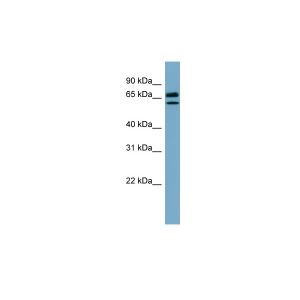 HSPA8 Antibody - N-terminal region (ARP48446_P050)Catalog #: ARP48446_P050Conjugation: UnconjugatedSpecies Tested: Human, RatApplication: IHC, WBFormat: Liquid. Purified antibody supplied in 1x PBS buffer with 0.09% (w/v) sodium azide and 2% sucrose.
 -
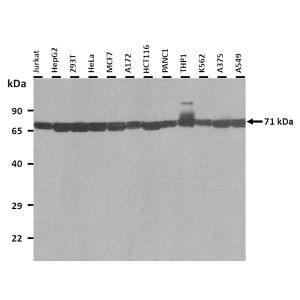 HSPA8 Antibody - N-terminal region (ARP48445_P050)Catalog #: ARP48445_P050Species Tested: Human, Mouse, RatApplication: IHC, WBFormat: Liquid. Purified antibody supplied in 1x PBS buffer with 0.09% (w/v) sodium azide and 2% sucrose.
 -
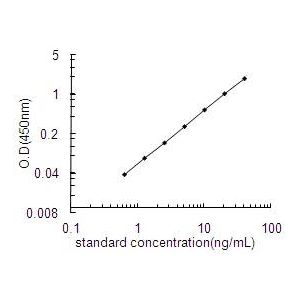 HSPA8 ELISA Kit (Rat) : 96 Wells (OKEH00763)Catalog #: OKEH00763Application: ELISA-SandwichKit Range: 0.625-40ng/mLSensitivity: 0.323 ng/mL
 -
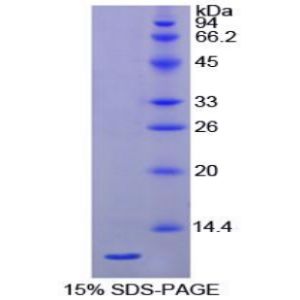 HSPA8 Recombinant Protein (OPCD04027)Catalog #: OPCD04027Conjugation: UnconjugatedApplication: Ctrl (+), SDS-PAGE, WBFormat: Freeze-dried Powder. PBS, pH7.4, containing 0.01% SKL, 5% Trehalose.
 -
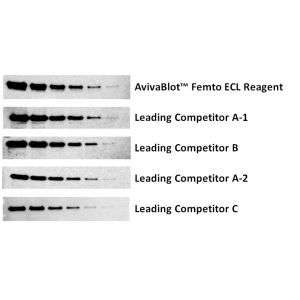 AvivaBlot Femto ECL Reagent (OKCF00002)Catalog #: OKCF00002Application: WBFormat: LiquidSize: 250 mL