
Caldesmon (CaD), encoded by the CALD1 gene, is an actin-, myosin-, tropomyosin-, and calmodulin-binding protein that plays a central role in the regulation of smooth muscle contraction and cytoskeletal organization. Two major isoforms are recognized: low-molecular-weight caldesmon (l-caldesmon), which is widely expressed in non-muscle cells, and high-molecular-weight caldesmon (h-caldesmon), which is predominantly restricted to differentiated smooth muscle cells and serves as the principal diagnostic target in surgical pathology.
Biological Significance of Caldesmon
- Regulates actomyosin interactions and smooth muscle contractility through calcium/calmodulin-dependent modulation of caldesmon binding to actin and myosin.
- Contributes to cytoskeletal stabilization, mechanotransduction, and the regulation of cellular motility, morphology, and adhesion.
- h-Caldesmon is strongly associated with mature smooth muscle differentiation and is typically absent or only focally expressed in myofibroblastic proliferations and fibroblastic lesions.
Diagnostic Utility of Caldesmon in Soft Tissue Pathology
- One of the most specific immunohistochemical markers for smooth muscle differentiation in mesenchymal neoplasms.
- Supports the diagnosis of benign and malignant smooth muscle tumors, including leiomyoma and leiomyosarcoma.
- Helps distinguish true smooth muscle neoplasms from myofibroblastic proliferations and fibroblastic spindle cell lesions that may exhibit α-SMA or desmin expression.
- Frequently incorporated into diagnostic immunopanels for spindle cell, myoid, and smooth muscle soft tissue tumors.
Key Features of Caldesmon CE/IVD Antibodies
- CE/IVD validated for use on formalin-fixed, paraffin-embedded (FFPE) tissue specimens.
- Optimized for immunohistochemistry workflows on automated staining platforms.
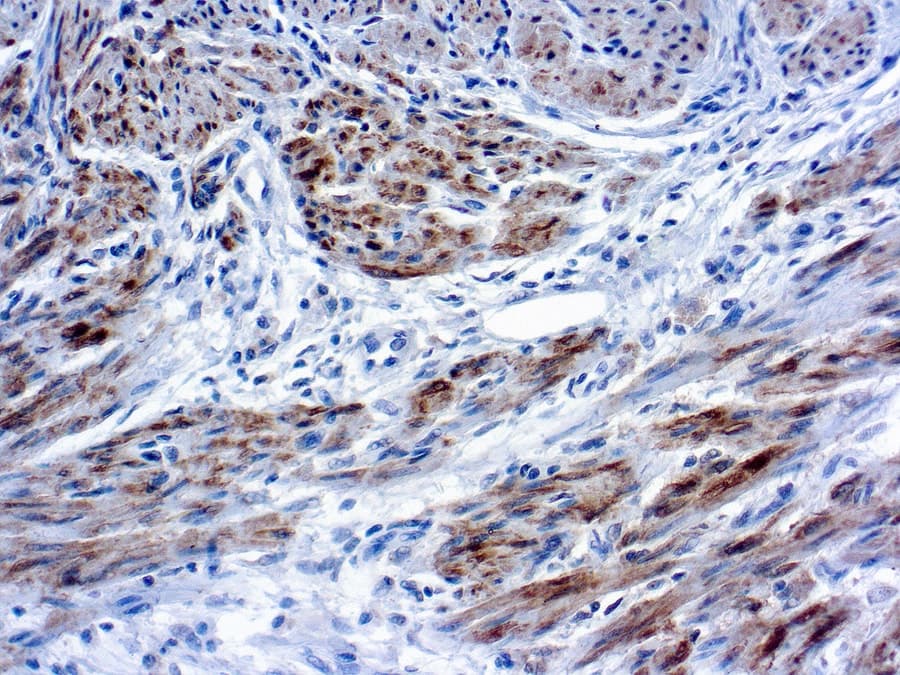
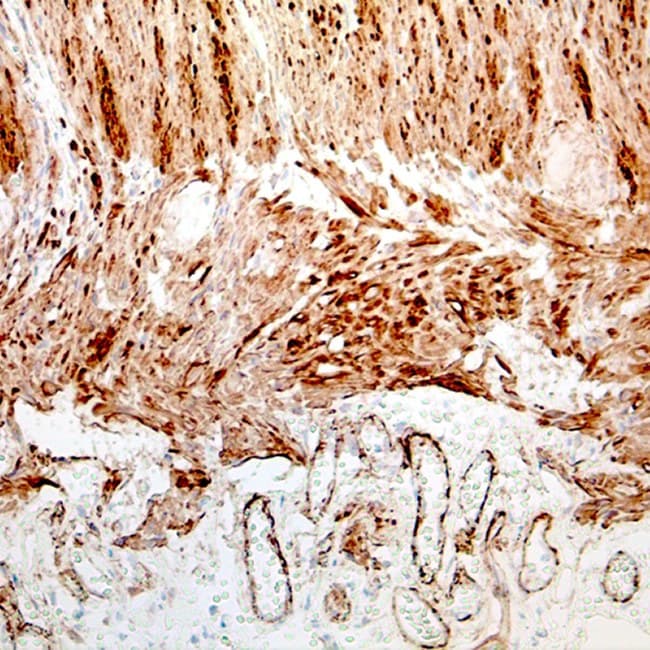
- Produces a strong cytoplasmic staining pattern in smooth muscle cells with minimal background reactivity.
- High specificity for smooth muscle differentiation, supporting confident interpretation in soft tissue pathology.
- Designed to provide reproducible performance, lot-to-lot consistency, and standardized implementation in clinical diagnostic laboratories.