

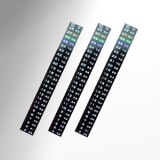
Laboratory thermometers are temperature measurement instruments used to monitor, verify, and control temperature in scientific, industrial, and analytical applications. They are essential for ensuring experimental accuracy, regulatory compliance, and reproducible results, as many biological, chemical, and physical processes are highly temperature dependent.
Thermometers are widely used in research laboratories, pharmaceutical facilities, food safety testing, cold storage units, incubators, water baths, freezers, darkrooms, and controlled storage environments. Depending on the application, they may operate using digital sensors, infrared technology, probe systems, or calibrated liquid-based mechanisms.
Accurate temperature monitoring is critical for preserving biological samples, maintaining cold chain integrity, valid
Importance of Laboratory Thermometers
Laboratory thermometers help to:
- Measure sample and equipment temperatures accurately
- Monitor freezers, refrigerators, and cold rooms
- Maintain stable laboratory conditions
- Support quality assurance and regulatory compliance
- Prevent degradation of sensitive biological samples
- Verify food safety temperatures
- Improve process traceability
- Enhance reproducibility of experiments
Main Categories of Thermometers
Customers can generally find:
- Freezer Thermometers for low-temperature storage monitoring
- Food Safety Thermometers with Infrared (IR) for contact and non-contact temperature checks
- Digital Thermometers for rapid and precise readings
- Darkroom Thermometers for photographic and chemical processing environments
- Luminescent Thermometers for low-light visibility
- Certified / Calibrated Thermometers for regulated applications
Applications
Used in:
- Research laboratories
- Biological sample storage
- Food safety monitoring
- Pharmaceutical and biotech facilities
- Photography and darkroom processing
- Industrial quality control