

A Tri-Segmented RNA Genome Encoding Three Key Proteins
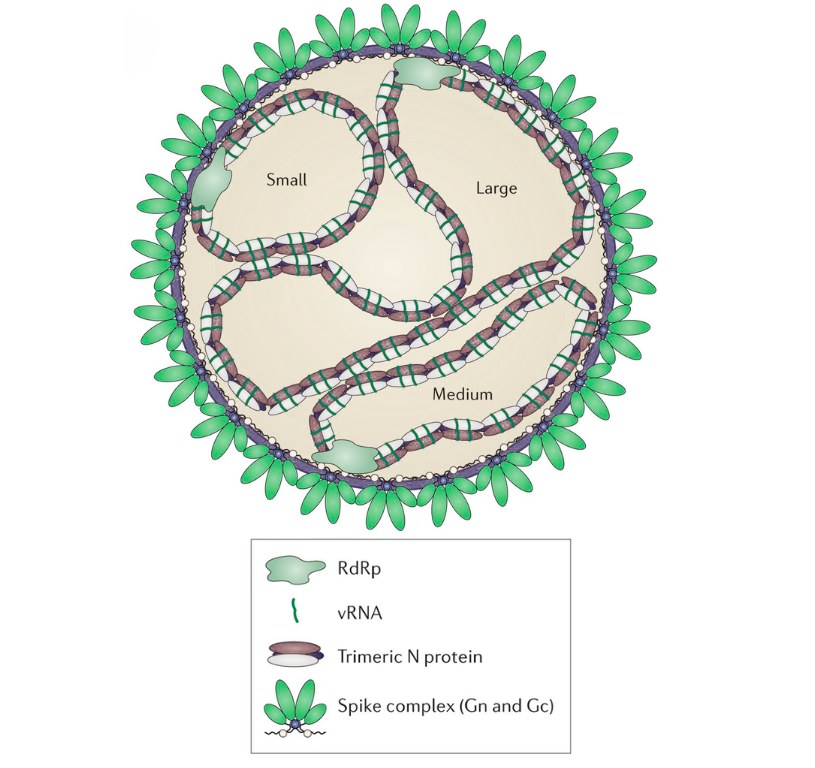
The HTNV genome is composed of three negative-sense RNA segments — S (small), M (medium), and L (large) — each encapsidated by nucleocapsid protein N to form a ribonucleoprotein (RNP) complex, the functional template for transcription and replication.[4]
The M segment encodes the glycoprotein precursor (GPC), co-translationally cleaved by host signal peptidase into mature Gn (G1) and Gc (G2). Gn mediates receptor binding, membrane fusion, and viral morphogenesis. Gc forms homotetramers with Gn at the virion surface and attaches to host cell receptors via integrins ITGAV/ITGB3.[4] Antibodies targeting Gn and Gc exhibit potent neutralizing activity and confer lasting protection in vivo, making them the primary targets for vaccine and therapeutic antibody development.[4]
The S segment encodes the Nucleocapsid protein N (NP, ~50 kDa) — the most conserved and abundantly expressed structural protein during infection. NP is essential for viral RNA replication and is the dominant immunogenic antigen, triggering strong humoral and cellular immune responses detectable early in the acute phase of HFRS.[2,5]
The L segment encodes the RNA-dependent RNA polymerase (RdRp), the largest viral protein, responsible for genome replication and mRNA transcription. Uniquely, the hantavirus RdRp can recombine homologous RNA sequences, enabling viral evolution through superinfection.[4]