

Gluconeogenesis pathway
Gluconeogenesis is a critical metabolic pathway that enables the synthesis of glucose from non-carbohydrate precursors. This anabolic process is essential for maintaining blood glucose levels during fasting, prolonged exercise, or stress when glycogen stores are depleted. Predominantly occurring in the liver and to a lesser extent in the kidneys, gluconeogenesis ensures adequate glucose supply to glucose-dependent tissues such as the brain, red blood cells, and muscles.
Primary Substrates and Their Entry into Gluconeogenesis
The main substrates for gluconeogenesis include lactate, glycerol, and glucogenic amino acids. Lactate is produced by anaerobic glycolysis in muscles and transported to the liver via the Cori cycle, where lactate dehydrogenase converts it back to pyruvate. Glycerol is derived from triglyceride breakdown in adipose tissue and enters the pathway as dihydroxyacetone phosphate (DHAP). Glucogenic amino acids undergo deamination and conversion into intermediates such as pyruvate or citric acid cycle intermediates, facilitating their entry into gluconeogenesis.
Stepwise Mechanism of Gluconeogenesis
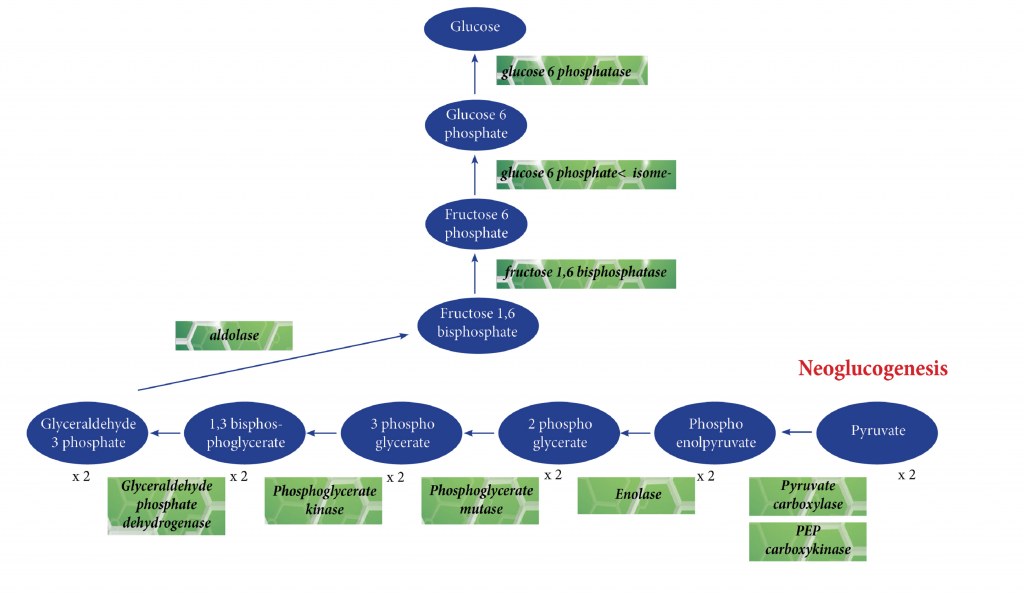
1. Conversion of Pyruvate to Oxaloacetate
The process begins inside the mitochondria, where pyruvate is carboxylated to oxaloacetate by the enzyme pyruvate carboxylase. This ATP-dependent reaction requires biotin as a cofactor and bicarbonate as a carbon source, marking the first committed step.
2. Transport of Oxaloacetate to the Cytosol
Due to the mitochondrial membrane's impermeability to oxaloacetate, it is reduced to malate by mitochondrial malate dehydrogenase using NADH. Malate crosses into the cytosol, where it is re-oxidized to oxaloacetate by cytosolic malate dehydrogenase.
3. Formation of Phosphoenolpyruvate (PEP)
Oxaloacetate is decarboxylated and phosphorylated by phosphoenolpyruvate carboxykinase (PEPCK) using guanosine triphosphate (GTP), yielding PEP. This reaction bypasses the irreversible pyruvate kinase step of glycolysis.
4. Conversion of PEP to Fructose-1,6-bisphosphate
PEP undergoes several enzymatic steps reversing glycolysis, culminating in the formation of fructose-1,6-bisphosphate. This multi-step sequence shares numerous enzymes with glycolysis but runs in reverse.
5. Dephosphorylation of Fructose-1,6-bisphosphate
The enzyme fructose-1,6-bisphosphatase hydrolyzes fructose-1,6-bisphosphate to fructose-6-phosphate, a rate-limiting and highly regulated step unique to gluconeogenesis, bypassing the phosphofructokinase-1 catalyzed irreversible step in glycolysis.
6. Formation of Glucose-6-phosphate and Free Glucose
Fructose-6-phosphate is isomerized to glucose-6-phosphate by phosphoglucose isomerase. Glucose-6-phosphatase, located in the endoplasmic reticulum, then hydrolyzes glucose-6-phosphate to free glucose, which can be released into the bloodstream. This step also circumvents the irreversible hexokinase reaction of glycolysis.
 |
Energetics and Regulatory Aspects
Gluconeogenesis is energetically expensive, consuming 4 ATP, 2 GTP, and 2 NADH molecules per glucose synthesized. It is tightly regulated by allosteric effectors and hormonal signals, primarily insulin (inhibitory) and glucagon/cortisol (stimulatory). These regulatory mechanisms prevent futile cycling with glycolysis and ensure glucose homeostasis in response to physiological demands.
Conclusion
Gluconeogenesis is a sophisticated and essential metabolic pathway enabling endogenous glucose production from diverse non-carbohydrate sources. By bypassing glycolysis's irreversible steps through specific enzymes and regulated mechanisms, gluconeogenesis sustains blood glucose levels during metabolic stress. Its precise coordination with hormonal signals and energy metabolism underscores its vital role in organismal survival and metabolic balance.