


Detection of binding partners for 100 different glycans in purified proteins, serum, plasma, cell culture supernatants, cell/tissue lysates or other body fluids.
High Density
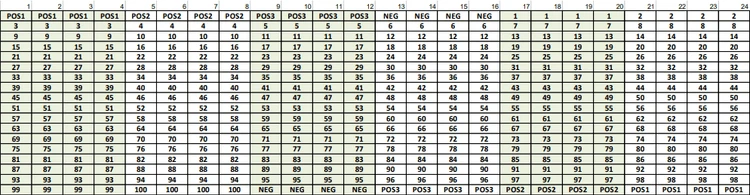
Glycan Array 100
Glycan Array 100
Contact Us for Bulk Request
Product Description
Specifications
| Size | 4 Sample Kit, 8 Sample Kit, 16 Sample Kit |
| Compatible Sample Types | Cell Culture Supernatants, Plasma, Serum, Tissue Lysates, Cell Lysates, Purified Proteins |
| Quantitative/Semi-Quantitative | Semi-Quantitative |
| Number of Targets Detected | 100 |
| Solid Support | Glass Slide |
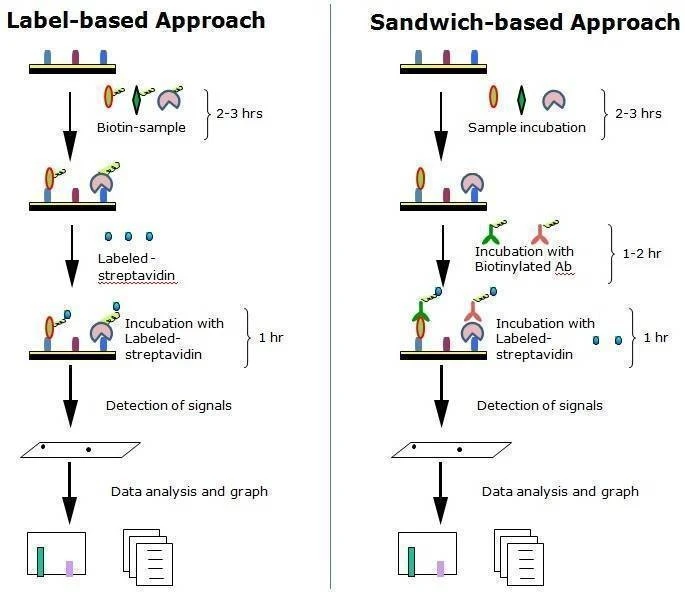
| Design Principle | Sandwich-based, Label-based |
| Method Of Detection | Fluorescence Laser Scanner |
| Research Area | Post-Translational Modifications, Glycosylation |
| Shipping Type | Blue ice |
| Storage | -20°C |
Related Products
Lectin Array 95
As low as $1,461.00
Human Glycosylation Array 1000
As low as $1,460.00
Introduction
Glycocalyx, literally meaning ‘sugar coat’, is an extracellular polymeric coating surrounding many prokaryotic and eukaryotic cells consisting of glycoproteins, glycolipids, proteoglycans and glycosaminoglycans. The constituents of the glycocalyx play an important role in the process of cell signaling, virus infections, and immunity. However, detection tools for the research of glycobiology are currently in very limited supply.
Raybiotech has pioneered the development of antibody arrays which are now widely applied in the research community with thousands of peer reviewed publications, including Cell and Nature. Taking advantage of advancements in microarray technology developed for antibody arrays, we have developed the first commercially available glycan array for screening protein-carbohydrate interactions. This array will help researchers:
- Identify the glycans binding partners in biological samples
- Identify whether target proteins are carbohydrate binding proteins
- Probe binding of viruses and whole cells to glycans1-3
- Profile the substrate specificity of enzymes (glycosyltransferases, glycosidases, etc.)4-6
- Profile the inflammatory immune response
The 100 synthetic glycans featured in the Glycan Array 100 are the most frequently identified structures showing important binding function in the literature. For example, influenza virus binds to a variety of sialosides with a serotype-specific pattern.7-9 Galectins, which are involved in apoptosis, cell adhesion and T-cell activation suppression, function by binding beta-galactosides.10-12
Glycan Names (100):Click Here for the Glycan Chart
| β-Glc-sp | β-Gal-sp | α-Man-sp | α-Fuc-sp |
| α-Rha-sp | β-GlcNAc-sp | β-GalNAc-sp | Tobramycin |
| Gal-β-1,3-GlcNAc-β-sp | Gal-α-1,3-Gal-β-1,3-GlcNAc-β-sp | Neu5Ac-α-2,3-Gal-β-1,3-GlcNAc-β-sp | Neu5Ac-α-2,6-Gal-β-1,3-GlcNAc-β-sp |
| Neu5Gc-α-2,3-Gal-β-1,3-GlcNAc-β-sp | Neu5Gc-α-2,6-Gal-β-1,3-GlcNAc-β-sp | Gal-β-1,3-(Fuc-α-1,4)-GlcNAc-β-sp [Lewis A] | Gal-β-1,4-Glc-β-sp |
| Gal-α-1,3-Gal-β-1,4-Glc-β-sp | Gal-α-1,4-Gal-β-1,4-Glc-β-sp | GlcNAc-β-1,3-Gal-β-1,4-Glc-β-sp | GalNAc-β-1,3-Gal-β-1,4-Glc-β-sp |
| Neu5Ac-α-2,3-Gal-β-1,4-Glc-β-sp | Neu5Ac-α-2,6-Gal-β-1,4-Glc-β-sp | Neu5Gc-α-2,3-Gal-β-1,4-Glc-β-sp | Neu5Gc-α-2,6-Gal-β-1,4-Glc-β-Sp |
| Gal-β-1,4-(Fuc-α-1,3)-Glc-β-sp | GalNAc-β-1,3-Gal-α-1,4-Gal-β-1,4-Glc-β-sp | GlcNAc-β-1,6-GlcNAc-β-sp | 4-P-GlcNAc-β-1,4-Man-β-sp |
| Glc-α-1,2-Gal-α-1,3-Glc-α-sp | Gal-β-1,3-GalNAc-α-sp | Gal-β-1,4-GlcNAc-β-sp | Gal-β-1,4 -(Fuc-α-1,3)-GlcNAc-β-sp [Lewis X] |
| Neu5Ac-α-2,3-Gal-β-1,4-(Fuc-α-1,3)-GlcNAc-β-sp [Sialyl Lewis X] | Neu5Ac-α-2,3-Gal-β-1,3 -(Fuc-α-1,4)-GlcNAc-β-sp [Sialyl Lewis A] | Neu5Gc-α-2,3-Gal-β-1,3-(Fuc-α-1,4)-GlcNAc-β-sp [Sialyl Lewis A] | Gal-α-1,4-Gal-β-1,3-GlcNAc-β-sp |
| Gal-β-1,4-GlcNAc-β-1,3-Gal-β-1,4-Glc-β-sp [LNnT] | GlcA-β-1,4-GlcNAc-α-1,4-GlcA-β-sp | GlcNAc-β-1,6-(Gal-β-1,3)-GalNAc-α-O-Ser | Neu5Ac-α-2,3Gal-β-1,4-(6S)GlcNAc-β-sp |
| GalNAc-β-1,4-GlcNAc-β-sp | Neu5Ac-α-2,8-Neu5Ac-α-2,3-Gal β-1,4-Glc-β-sp | Neu5Gc-α-2,8-Neu5Ac-α-2,3-Gal-β-1,4-Glc-β-sp | GalNAc-α-1,3-(Fuc-α-1,2)-Gal-β-1,4-Glc-β-sp [Blood A antigen tetrose] |
| GlcNAc-β-1,2-Man-α-sp | Neu5Ac-α-2,3-Gal-β-sp | Gal-β-1,3 -GalNAc-β-1,3-Gal-β-sp | Gal-α-1,2-Gal-α-sp |
| Gal-β-1,4-(Fuc-α-1,3)-GlcNAc-β-1,3-Gal-β-sp | Neu5Ac-α-2,3-Gal-β-1,4-(Fuc-α-1,3)-Glc-β-sp [3-Sialyl-3-fucosyllactose/ F-SL] | GlcNAc-β-1,4-GlcNAc-β-sp | β-D-GlcA-sp |
| Gal-β-1,4-(6S)GlNAc-β-sp | GlcNAc-α-1,3-(Glc-α-1,2-Glc-α-1,2)-Gal-α-1,3-Glc-α-sp | Gal-β-1,3-GalNAc-β-1,4-(Neu5Gc-α-2,3)-Gal-β-1,4-Glc-β-sp | Sisomicin Sulfate |
| GalNAc-α-1,3-(Fuc-α-1,2)-Gal-β-sp [Blood A antigen trisaccharide] | Fuc-α-1,2-Gal-β-1,4-GlcNAc-β-sp [Blood H antigen trisaccharide] | Gal-α-1,3-(Fuc-α-1,2)-Gal-β-sp [Blood B antigen trisaccharide] | Fuc-α-1,2-Gal-β-1,3-GlcNAc-β-1,3-Gal-β-1,4-Glc-β-sp [LNFP I] |
| Fuc-α-1,2-Gal-β-1,4-Glc-β-sp [Blood H antigen trisaccharide] | Gal-α-1,3-(Fuc-α-1,2)-Gal-β-1,4-Glc-β-sp [Blood B antigen tetrasaccharide] | (Fuc-α-1,2)-Gal-β-1,4-(Fuc-α-1,3)-GlcNAc-β-sp [ Lewis Y] | (Fuc-α-1,2)-Gal-β-1,3-(Fuc-α-1,4)-GlcNAc-β-sp [Lewis B] |
| Gal-β-1,3-(Fuc-α-1,4)-GlcNAc-β-1,3-Gal-β-1,4-(Fuc-α-1,4)-Glc-β-sp [Lewis A] | Gal-β-1,3-GalNAc-β-sp | Gal-β-1,3-(Neu5Ac-α-2,6)-GalNAc-β-sp | Neu5Ac-α-2,6-Gal-β-1,3-GalNAc-β-sp |
| Neu5Ac-α-2,6-Gal-β-1,3-(Neu5Ac-α-2,6)-GalNAc-β-sp | Neu5Ac-α-2,3-Gal-β-1,3-(Neu5Ac-α-2,6)-GalNAc-β-sp | Neu5Ac-α-2,6-(Neu5Ac-α-2,3)-Gal-β-1,3-GalNAc-β-sp | GalNAc-β-1,4-(Neu5Ac-α-2,3)-Gal-β-1,4-Glc-β-sp [GM2] |
| GalNAc-β-1,4-(Neu5Ac-α-2,8-Neu5Ac-α-2,3)-Gal-β-1,4-Glc-β-sp [GD2] | Gal-α-1,4-Gal-β-1,4-GlcNAc-β-sp | β-D-Rha-sp | Glc-α-1,4-Glc-β-sp |
| Glc-α-1,6-Glc-α-1,4-Glc-β-sp | Maltotriose-β-sp | Glc-α-1,6-Glc-α-1,6-Glc-β-sp | Maltotetraose-β-sp |
| GlcNAc-α-1,4-GlcA-β-1,4-GlcNAc-α1,4-GlcA-β-sp | Maltohexaose-β-sp | Maltoheptaose-β-sp | Acarbose-β-sp |
| D-pentamannuronic acid-β-sp | L-pentaguluronic acid-β-sp | D-cellose-β-sp | Gal-α-1,3-Gal-β-sp |
| β-1,4-Xylotetrose | Chitin-trisaccharide | KDN-α-2,8-Neu5Ac-α-2,3-Gal-β-1,4-Glc-β-sp | Neu5Ac-α-2,8-Neu5Gc-α-2,3-Gal-β-1,4-Glc-β-sp |
| Neu5Ac-α-2,8-Neu5Ac-α-2,8-Neu5Ac-α-2,3-Gal-β-1,4-Glc-β-sp | Neu5Ac-α-2,8-Neu5Ac-α-2,6-Gal-β-1,4-Glc-sp | Gal-β-1,3-GalNAc-β-1,4-(Neu5Ac-α-2,3)-Gal-β-1,4-Glc-β-sp | Gentamicin Sulfate |
| Kanamycin sulfate | Geneticin Disulfate Salt (G418) | Neomycin trisulfate | SGP |
Application Data
Kit Components
- Dialysis Vials
- Labeling Reagent
- Stop Solution
- Glycan Array Glass Slide Assembly
- Sample Diluent
- 20X Wash Buffer I
- 20X Wash Buffer II
- Cy3 equivalent dye-conjugated Streptavidin
- Slide Washer/Dryer
- Adhesive device sealer
- Labeling Buffer
- Floating Dialysis Rack
Other Materials Required
- Detection antibodies of interest (For sandwich-based method only)
- Pipettors, pipet tips and other common lab consumables
- Orbital shaker or oscillating rocker
- Aluminum foil
- Distilled or de-ionized water
- 1.5ml Polypropylene microcentrifuge tubes
- Gene microarray scanner or similar laser fluorescence scanner
- Small plastic or glass containers
- KCl, NaCl, KH2PO4 and Na2HPO4 (For label-based method only)
- Beaker, stir plate and stir bar
Protocol Outline
- Dry the glass slide
- Block array surfaces
- Incubate samples (samples need to be biotinylated for the label-based approach)
- For the the sandwich-based principle, incubate with a detection antibody cocktail
For the label-based principle, incubate the labeled-streptavidin. - Incubate with Cy3 Equivalent Dye-Streptavidin
- Disassemble the glass slide
- Scan with a gene microarray laser scanner
- Perform densitometry and analysis
Storage/Stability
Upon receipt, all components of the RayBiotech Glycan Array 100 kit should be stored at -20°C. After initial use, remaining reagents should be stored at 4°C to avoid repeated freeze-thaw cycles and may be stored for up to 3 months (Labeling Reagent, Item B, should be prepared fresh each time before use). Unused glass slides should be kept at -20°C and repeated freeze-thaw cycles should be avoided (slides may be stored for up to 6 months). The entire kit should be used within 6 months of purchase.
References
- Amonsen, M.; Smith, D. F.; Cummings, R. D.; Air, G. M. J Virol 2007, 81, 8341-8345.
- Paulson, J. C.; de Vries, R. P. Virus Res 2013, 178, 99-113.
- Stencel-Baerenwald, J. E.; Reiss, K.; Reiter, D. M.; Stehle, T.; Dermody, T. S. Nat Rev Microbiol 2014, 12, 739-749.
- Park, S.; Shin, I. Org Lett 2007, 9, 1675-1678.
- Pourceau, G.; Chevolot, Y.; Goudot, A.; Giroux, F.; Meyer, A.; Moules, V.; Lina, B.; Cecioni, S.; Vidal, S.; Yu, H.; Chen, X.; Ferraris, O.; Praly, J. P.; Souteyrand, E.; Vasseur, J. J.; Morvan, F. Chembiochem 2011, 12, 2071-2080.
- Laurent, N.; Voglmeir, J.; Flitsch, S. L. Chem Commun 2008, 4400-4412.
- Xu, R.; de Vries, R. P.; Zhu, X.; Nycholat, C. M.; McBride, R.; Yu, W.; Paulson, J. C.; Wilson, I. A. Science 2013, 342, 1230-1235.
- Xu, R.; McBride, R.; Nycholat, C. M.; Paulson, J. C.; Wilson, I. A. J Virol 2012, 86, 982-990.
- Stevens, J.; Chen, L. M.; Carney, P. J.; Garten, R.; Foust, A.; Le, J.; Pokorny, B. A.; Manojkumar, R.; Silverman, J.; Devis, R.; Rhea, K.; Xu, X.; Bucher, D. J.; Paulson, J. C.; Cox, N. J.; Klimov, A.; Donis, R. O. J Virol 2010, 84, 8287-8299.
- Stowell, S. R.; Arthur, C. M.; Mehta, P.; Slanina, K. A.; Blixt, O.; Leffler, H.; Smith, D. F.; Cummings, R. D. J Biol Chem 2008, 283, 10109-10123.
- Stowell, S. R.; Arthur, C. M.; Slanina, K. A.; Horton, J. R.; Smith, D. F.; Cummings, R. D. J Biol Chem 2008, 283, 20547-20559.
- Carlsson, S.; Oberg, C. T.; Carlsson, M. C.; Sundin, A.; Nilsson, U. J.; Smith, D.; Cummings, R. D.; Almkvist, J.; Karlsson, A.; Leffler, H. Glycobiology 2007, 17, 663-676.
documents
GAL (GAL-GA-Glycan-100.gal)
Excel (GA-Glycan-100_Analysis_Tool.xls)
citations
Molecular insights into the capsular polysaccharide transporter Wza-Wzc complex
- Species:
- Other
- Sample Type:
- Purified / Recombinant Protein (biotinylated recombinant WzcJR, WzcPeri proteins)
- Year:
- 2026
- Journal Name:
- Nature Communications
- PubMed ID:
- 41644548
Live imaging of the extracellular matrix with a glycan-binding fluorophore
- Year:
- 2025
- Journal Name:
- Nature Methods
- PubMed ID:
- 39915692
Host range and zoonotic potential linked to P-like fimbrial (PLF) adhesin specificity in avian pathogenic Escherichia coli
- Species:
- Other
- Sample Type:
- Other / Unspecified (dye-labeled E. coli strains expressing PlfG adhesins)
- Year:
- 2026
- Journal Name:
- Plos Pathogens
- PubMed ID:
- 41941531
Tuning charge density of chimeric antigen receptor optimizes tonic signaling and CAR-T cell fitness
- Species:
- Human
- Sample Type:
- Nalm6 cell
- Year:
- 2023
- Journal Name:
- Cell Research
Proline Dehydrogenase (PRODH) Is Expressed in Lung Adenocarcinoma and Modulates Cell Survival and 3D Growth by Inducing Cellular Senescence
- Species:
- Human
- Sample Type:
- Cell Culture Supernatant (conditioned media from NCI-H1299 clones)
- Year:
- 2024
- Journal Name:
- International Journal of Molecular Sciences
- PubMed ID:
- 38255788
Alteration of microbiota antibody-mediated immune selection contributes to dysbiosis in inflammatory bowel diseases
- Species:
- Mouse
- Sample Type:
- stool
- Year:
- 2022
- Journal Name:
- Embo Molecular Medicine
RANK links senescence to stemness in the mammary epithelia, delaying tumor onset but increasing tumor aggressiveness
- Species:
- Mouse
- Sample Type:
- Tissue Lysate / Homogenate (mammary epithelial cells lysates)
- Year:
- 2021
- Journal Name:
- Developmental Cell
- PubMed ID:
- 34004159
Glycan Activation of Clec4b Induces Reactive Oxygen Species Protecting against Neutrophilia and Arthritis
- Species:
- Rat
- Sample Type:
- Other / Unspecified (Clec4b proteins)
- Year:
- 2021
- Journal Name:
- Antioxidants
- PubMed ID:
- 35052516
VT68.2: An Antibody to Chondroitin Sulfate Proteoglycan 4 (CSPG4) Displays Reactivity against a Tumor-Associated Carbohydrate Antigen
- Species:
- Human
- Sample Type:
- MDA-MB-231 cell
- Year:
- 2023
- Journal Name:
- International Journal of Molecular Sciences
Maternal IgA2 Recognizes Similar Fractions of Colostrum and Fecal Neonatal Microbiota
- Species:
- Human
- Sample Type:
- Other / Unspecified (immunoglobulins eluted from IgA1+, IgA2+ colostrum bacterial fractions)
- Year:
- 2021
- Journal Name:
- Frontiers in Immunology
- PubMed ID:
- 34804008