

Oct4 (POU5F1) (NM_002701) Human Recombinant Protein

Cat# TP311998
Size : 20ug
Oct4 (POU5F1) (NM_002701) Human Recombinant Protein

SKU
TP311998
Recombinant protein of human POU class 5 homeobox 1 (POU5F1), transcript variant 1, 20 µg

| Product Data | |
| Species | Human |
|---|---|
| Expression Host | HEK293 |
| Expression cDNA Clone or AA Sequence | |
| Tag | C-Myc/DDK |
| Predicted MW | 38.4 kDa |
| Concentration | >0.05 µg/µL as determined by microplate BCA method |
| Purity | > 80% as determined by SDS-PAGE and Coomassie blue staining |
| Buffer | 25 mM Tris-HCl, 100 mM glycine, pH 7.3, 10% glycerol |
| Bioactivity | EMSA assay (PMID: 25892221) |
| Preparation | Recombinant protein was captured through anti-DDK affinity column followed by conventional chromatography steps. |
| Note | For testing in cell culture applications, please filter before use. Note that you may experience some loss of protein during the filtration process. |
| Storage | Store at -80°C. |
| Stability | Stable for 12 months from the date of receipt of the product under proper storage and handling conditions. Avoid repeated freeze-thaw cycles. |
| Shipping | Dry Ice |
| Reference Data | |
| RefSeq | NP_002692 |
| Locus ID | 5460 |
| UniProt ID | Q01860 |
| Cytogenetics | 6p21.33 |
| RefSeq Size | 1417 |
| RefSeq ORF | 1080 |
| Synonyms | Oct-3; Oct-4; OCT3; OCT4; OTF-3; OTF3; OTF4 |
| Summary | This gene encodes a transcription factor containing a POU homeodomain that plays a key role in embryonic development and stem cell pluripotency. Aberrant expression of this gene in adult tissues is associated with tumorigenesis. This gene can participate in a translocation with the Ewing's sarcoma gene on chromosome 21, which also leads to tumor formation. Alternative splicing, as well as usage of alternative AUG and non-AUG translation initiation codons, results in multiple isoforms. One of the AUG start codons is polymorphic in human populations. Related pseudogenes have been identified on chromosomes 1, 3, 8, 10, and 12. provided by RefSeq, Oct 2013 |
| Protein Categories | ADC Targets, Cytokines, Intracellular Proteins, Transciption Factors |
| Protein Families | Adult stem cells, Cancer stem cells, Embryonic stem cells, Induced pluripotent stem cells, Stem cell - Pluripotency, Transcription Factors |
| FAQs |
|
| SDS |
| Recombinant Protein Resources |
| SKU | Description | Size | ||
|---|---|---|---|---|
| PH311998 | POU5F1 MS Standard C13 and N15-labeled recombinant protein (NP_002692) | 10 ug | | |
| LC400950 | Lyophilized POU5F1 HEK293T cell transient overexpression lysate (as WB positive control) | 20 ug | | |
| LC404373 | Lyophilized POU5F1 HEK293T cell transient overexpression lysate (as WB positive control) | 20 ug | | |
| LY400950 | Transient overexpression lysate of POU class 5 homeobox 1 (POU5F1), transcript variant 1 (as WB positive control) | 100 ug | | |
| LY404373 | Transient overexpression lysate of POU class 5 homeobox 1 (POU5F1), transcript variant 2 (as WB positive control) | 100 ug | | |
| TP760938 | Purified recombinant protein of Human POU class 5 homeobox 1 (POU5F1/OCT4), transcript variant 2, full length, with N-terminal HIS tag, expressed in E. coli, 50ug | 50 ug | | |
Citations
Structural Constraints of Nucleosomes on Transcription-Factor Binding
Wilson
Thesis (2026)
Wilson
Thesis (2026)
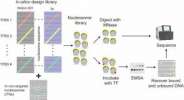
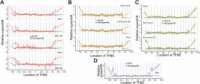
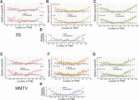
AI Summary: OriGene products contributed full-length human transcription factors KLF4 (TP306691), OCT4 (TP311998), SOX2 (TP300757), and MYC (TP301611) for protein-nucleosome binding assays in the study.
Snippet: The protein-nucleosome binding assays were carried out by incubating the purified nucleosome libraries described above and human full-length KLF4 (Origene TP306691), OCT4 (Origene TP311998), SOX2 (Origene TP300757), and MYC (Origene TP301611) with MAX
Defining transcription factor nucleosome binding with Pioneer-seq
Tsompana, Wilson, Murugaiyan et al
PLoS Genet (2025) 21 (8), e1011813 DOI: 10.1371/journal.pgen.1011813
Tsompana, Wilson, Murugaiyan et al
PLoS Genet (2025) 21 (8), e1011813 DOI: 10.1371/journal.pgen.1011813
Cited by 6
Snippet: or up to 1 month. DNA binding assay followed by EMSA The protein-nucleosome binding assays were carried out by incubating the purified nucleosome libraries described above and human full-length KLF4 (Origene TP306691), OCT4 (Origene TP311998), SOX2 (Origene TP300757), and MYC (Origene TP301611) with MAX (Origene TP306812) (in 7 µl DNA binding buffer (10 mM Tris-Cl [pH7.5], 50 mM NaCl, 1 mM
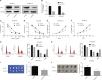
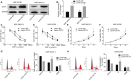
OCT4 accelerates tumorigenesis through activating JAK/STAT signaling in ovarian cancer side population cells
Ruan, Yang, Cheng
Cancer Manag Res (2019) 11, 389-399 DOI: 10.2147/CMAR.S180418
Ruan, Yang, Cheng
Cancer Manag Res (2019) 11, 389-399 DOI: 10.2147/CMAR.S180418
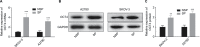
AI Summary: OriGene products contributed to this study by providing the shRNA targeting human OCT4 (No. TR310267) and the OCT4 overexpression plasmid (RC211998L1), which were used to manipulate OCT4 expression in ovarian cancer cells to investigate its role in tumorigenesis and JAK/STAT signaling activation.
Snippet: For knockdown of the expression of OCT4 stably, the shR-NAs targeting human OCT4 (No. TR310267) gene was purchased from OriGene (Rockville, MD, USA) RC211998L1, OriGene) was used. RNA extraction and real-time PCR (RT-PCR)
Pioneer transcription factors target partial DNA motifs on nucleosomes to initiate reprogramming
Soufi, Garcia, Jaroszewicz et al
Cell (2015) 161 (3), 555-68 DOI: 10.1016/j.cell.2015.03.017
Soufi, Garcia, Jaroszewicz et al
Cell (2015) 161 (3), 555-68 DOI: 10.1016/j.cell.2015.03.017
Cited by 855
AI Summary: OriGene contributed mammalian-expressed recombinant human Oct4 (TP311998), Sox2 (TP300757), Klf4 (TP306691), and c-Myc (TP301611) proteins that were used to study how pioneer transcription factors target nucleosomal DNA motifs during cellular reprogramming.
Snippet: Protein Expression and Purification We made the bacterial expression plasmids pET-28B-huOct4, pET-28B-huSox2, pET-28B-huKlf4, and pET-28B-huMyc encoding the full-length human O, S, K, M, respectively, fused to an N-terminal 6× histidine tag. The recombinant proteins were expressed in E. coli Rosetta (DE3) pLysS (Novagen #70956-3) and purified using a nickel charged column under denaturing conditions The mammalian expressed human OSKM recombinant proteins were obtained from OriGene (Oct4 #TP311998, Sox2 #TP300757, Klf4 #TP306691, c-Myc #TP301611). …
Acetylated histone H3K56 interacts with Oct4 to promote mouse embryonic stem cell pluripotency
Tan, Xue, Song et al
PNAS (2013) 110 (28), 11493-8 DOI: 10.1073/pnas.1309914110
Tan, Xue, Song et al
PNAS (2013) 110 (28), 11493-8 DOI: 10.1073/pnas.1309914110
Cited by 85
AI Summary: OriGene’s recombinant Oct4 protein (TP311998) was used in gel shift experiments to investigate the direct interaction between Oct4 and acetylated histone H3K56, helping to elucidate the molecular mechanisms promoting mouse embryonic stem cell pluripotency.
Snippet: replication-independent histone assembly (12), DNA repair (13), silencing at heterochromatin (14), transcription elongation (15), and life span regulation ... We then performed gel shift experiments with recombinant Oct4 protein (Origene TP311998) as described (28, 35) to probe
Showing 1-5 of 5 papers.
Powered by BizGenius
*Delivery time may vary from web posted schedule. Occasional delays may occur due to unforeseen complexities in the preparation of your product. International customers may expect an additional 1-2 weeks in shipping.