

Recombinant 2019-nCoV S Protein HR1

Cat# DRA84-500ug
Size : 500ug
Brand : Novoprotein
 Description
 Recombinant SARS-CoV-2 S protein HR1 Protein is produced by our E.coli expression system and the target gene encoding Gly910-Glu988 is expressed.
Accession QHD43416.1
Known As SARS-CoV-2 S Protein HR1
Mol Mass 8.4kDa
APMol Mass 8kDa, reducing conditions
Formulation Description Supplied as a 0.2 μm filtered solution of PBS, pH 7.4
Purity-SDS-PAGE 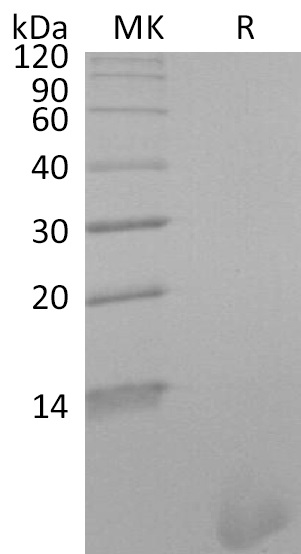 Greater than 95% as determined by reducing SDS-PAGE. (QC verified) Storage
 - Reconstituted protein solution should be stored at ≤ -20°C.
- Stable for at least 24 months when stored as instructed.
Shipping The product is shipped on dry ice pack.Upon receipt, store it immediately at the temperature listed below.
Background The spike (S) glycoprotein of coronaviruses is known to be essential in the binding of the virus to the host cell at the advent of the infection process. Most notable is severe acute respiratory syndrome (SARS). The severe acute respiratory syndrome-coronavirus (SARS-CoV) spike (S) glycoprotein alone can mediate the membrane fusion required for virus entry and cell fusion. It is also a major immunogen and a target for entry inhibitors. It's been reported that 2019-nCoV can infect the human respiratory epithelial cells through interaction with the human ACE2 receptor. The spike protein is a large type I transmembrane protein containing two subunits, S1 and S2. S1 mainly contains a receptor binding domain (RBD), which is responsible for recognizing the cell surface receptor. S2 contains basic elements needed for the membrane fusion. After binding of RBD in S1 subunit of S protein on the virion to the ACE2 receptor on the target cell, the heptad repeat 1 (HR1) and 2 (HR2) domains in its S2 subunit of S protein interact with each other to form a six-helix bundle (6-HB) fusion core, bringing viral and cellular membranes into close proximity for fusion and infection. The S protein plays key parts in the induction of neutralizing-antibody and T-cell responses, as well as protective immunity.