

Fish transforming growth factor, beta 1, TGFB1 ELISA Kit

Referencia MBS937119-96
embalaje : 96-Strip-Wells
Marca : MyBiosource
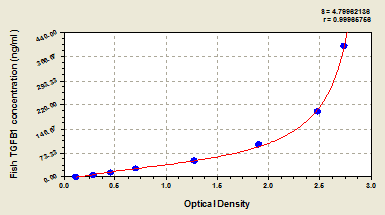
Transforming Growth Factor, Beta 1 (TGFB1) ELISA Kit for Fish
For Research Use Only. Not for use in diagnostic procedures. Catalog #: MBS937119Principle of the Assay: This assay employs the quantitative sandwich enzyme immunoassay technique. Antibody specific for TGFB1 has been pre-coated onto a microplate. Standards and samples are pipetted into the wells and any TGFB1 present is bound by the… More details
Product Overview
Online Datasheet in PDFProduct Name
transforming growth factor, beta 1 (TGFB1), ELISA Kit
Full Product Name
Fish transforming growth factor, beta 1, TGFB1 ELISA Kit
Product Gene Name
TGFB1 elisa kit
Product Synonym Names
Fish transforming growth factor; beta 1 (TGFB1) ELISA kit; transforming growth factor; beta 1 (TGFB1)
Species Reactivity
Fish
Assay Type
Quantitative Sandwich
Samples
Serum, plasma
Detection Range
6.25 ng/ml-400 ng/ml
Sensitivity
< 3.12ng/ml
Specificity
This assay has high sensitivity and excellent specificity for detection of fish TGFB1. No significant cross-reactivity or interference between fish TGFB1 and analogues was observed.
Preparation and Storage
Unopened test kits should be stored at 2 to 8 degree C upon receipt. Please refer to pdf manual for further storage instructions.
Inter-assay Precision
Inter-assay Precision (Precision between assays): CV%<10%. Three samples of known concentration were tested in twenty assays to assess.
Intra-assay Precision
Intra-assay Precision (Precision within an assay): CV%<8%. Three samples of known concentration were tested twenty times on one plate to assess.
Molecular Weight
44,341 Da
OMIM
190180
ISO Certification
Manufactured in an ISO 9001:2015 Certified Laboratory.
Other Notes
Small volumes of TGFB1 elisa kit vial(s) may occasionally become entrapped in the seal of the product vial during shipment and storage. If necessary, briefly centrifuge the vial on a tabletop centrifuge to dislodge any liquid in the container`s cap. Certain products may require to ship with dry ice and additional dry ice fee may apply.
Searchable Terms for TGFB1 purchase
MBS937119 is a ready-to-use microwell, strip plate ELISA (enzyme-linked immunosorbent assay) Kit for analyzing the presence of the transforming growth factor, beta 1 (TGFB1) ELISA Kit target analytes in biological samples. The concentration gradients of the kit standards or positive controls render a theoretical kit detection range in biological research samples containing TGFB1. The ELISA analytical biochemical technique of the MBS937119 kit is based on TGFB1 antibody-TGFB1 antigen interactions (immunosorbency) and an HRP colorimetric detection system to detect TGFB1 antigen targets in samples. The ELISA Kit is designed to detect native, not recombinant, TGFB1. Appropriate sample types may include undiluted body fluids and/or tissue homogenates, secretions. Quality control assays assessing reproducibility identified the intra-assay CV (%) and inter-assay CV(%).
Additional Details
NCBI/Uniprot data below describe general gene information for TGFB1. It may not necessarily be applicable to this product.
UniProt Primary Accession #
UniProt Related Accession #
GenBank Nucleotide #
NCBI Official Full Name
transforming growth factor beta-1
NCBI Official Synonym Full Names
transforming growth factor, beta 1
NCBI Official Symbol
TGFB1
NCBI Official Synonym Symbols
CED; LAP; DPD1; TGFB; TGFbeta
UniProt Protein Name
Transforming growth factor beta-1
Protein Family
Transforming growth factor
UniProt Gene Name
TGFB1
UniProt Synonym Gene Names
TGFB; TGF-beta-1; LAP
UniProt Entry Name
TGFB1_HUMAN
NCBI Protein Information
transforming growth factor beta-1; TGF-beta-1; latency-associated peptide; prepro-transforming growth factor beta-1
NCBI Summary for TGFB1
This gene encodes a member of the transforming growth factor beta (TGFB) family of cytokines, which are multifunctional peptides that regulate proliferation, differentiation, adhesion, migration, and other functions in many cell types. Many cells have TGFB receptors, and the protein positively and negatively regulates many other growth factors. The secreted protein is cleaved into a latency-associated peptide (LAP) and a mature TGFB1 peptide, and is found in either a latent form composed of a TGFB1 homodimer, a LAP homodimer, and a latent TGFB1-binding protein, or in an active form composed of a TGFB1 homodimer. The mature peptide may also form heterodimers with other TGFB family members. This gene is frequently upregulated in tumor cells, and mutations in this gene result in Camurati-Engelmann disease.[provided by RefSeq, Oct 2009]
Show more UniProt Comments for TGFB1
TGFB1: Multifunctional protein that controls proliferation, differentiation and other functions in many cell types. Many cells synthesize TGFB1 and have specific receptors for it. It positively and negatively regulates many other growth factors. It plays an important role in bone remodeling as it is a potent stimulator of osteoblastic bone formation, causing chemotaxis, proliferation and differentiation in committed osteoblasts. Homodimer; disulfide-linked, or heterodimer with TGFB2. Secreted and stored as a biologically inactive form in the extracellular matrix in a 290 kDa complex (large latent TGF-beta1 complex) containing the TGFB1 homodimer, the latency-associated peptide (LAP), and the latent TGFB1 binding protein-1 (LTBP1). The complex without LTBP1 is known as the'small latent TGF-beta1 complex'. Dissociation of the TGFB1 from LAP is required for growth factor activation and biological activity. Release of the large latent TGF-beta1 complex from the extracellular matrix is carried out by the matrix metalloproteinase MMP3. May interact with THSD4; this interaction may lead to sequestration by FBN1 microfibril assembly and attenuation of TGFB signaling. Interacts with the serine proteases, HTRA1 and HTRA3: the interaction with either inhibits TGFB1-mediated signaling. The HTRA protease activity is required for this inhibition. Interacts with CD109, DPT and ASPN. Activated in vitro at pH below 3.5 and over 12.5. Highly expressed in bone. Abundantly expressed in articular cartilage and chondrocytes and is increased in osteoarthritis (OA). Co-localizes with ASPN in chondrocytes within OA lesions of articular cartilage. Belongs to the TGF-beta family.
Protein type: Secreted, signal peptide; Motility/polarity/chemotaxis; Secreted
Chromosomal Location of Human Ortholog: 19q13.1
Cellular Component: proteinaceous extracellular matrix; extracellular space; microvillus; cell surface; cell soma; Golgi lumen; axon; cytoplasm; extracellular region; plasma membrane; nucleus
Molecular Function: protein binding; enzyme binding; protein homodimerization activity; growth factor activity; protein heterodimerization activity; punt binding; cytokine activity; protein N-terminus binding; glycoprotein binding; antigen binding
Biological Process: extracellular matrix organization and biogenesis; positive regulation of apoptosis; positive regulation of transcription, DNA-dependent; female pregnancy; SMAD protein nuclear translocation; positive regulation of protein amino acid dephosphorylation; activation of NF-kappaB transcription factor; regulation of protein import into nucleus; positive regulation of MAP kinase activity; connective tissue replacement during inflammatory response; regulation of transforming growth factor beta receptor signaling pathway; negative regulation of ossification; cell cycle arrest; positive regulation of isotype switching to IgA isotypes; inner ear development; regulatory T cell differentiation; response to drug; positive regulation of interleukin-17 production; positive regulation of smooth muscle cell differentiation; positive regulation of chemotaxis; active induction of host immune response by virus; positive regulation of blood vessel endothelial cell migration; regulation of sodium ion transport; negative regulation of fat cell differentiation; negative regulation of blood vessel endothelial cell migration; lymph node development; positive regulation of protein secretion; positive regulation of transcription from RNA polymerase II promoter; response to progesterone stimulus; endoderm development; myelination; positive regulation of odontogenesis; negative regulation of phagocytosis; evasion of host defenses by virus; positive regulation of cellular protein metabolic process; myeloid dendritic cell differentiation; negative regulation of transcription from RNA polymerase II promoter; phosphate metabolic process; negative regulation of cell proliferation; negative regulation of T cell proliferation; ureteric bud development; regulation of DNA binding; negative regulation of release of sequestered calcium ion into cytosol; positive regulation of cell proliferation; salivary gland morphogenesis; protein kinase B signaling cascade; protein export from nucleus; inflammatory response; aging; positive regulation of exit from mitosis; epidermal growth factor receptor signaling pathway; mitotic cell cycle checkpoint; common-partner SMAD protein phosphorylation; positive regulation of phosphoinositide 3-kinase activity; positive regulation of bone mineralization; positive regulation of peptidyl-serine phosphorylation; SMAD protein complex assembly; positive regulation of protein kinase B signaling cascade; positive regulation of protein complex assembly; positive regulation of protein import into nucleus; response to hypoxia; epithelial to mesenchymal transition; negative regulation of cell-cell adhesion; negative regulation of cell growth; negative regulation of transforming growth factor beta receptor signaling pathway; negative regulation of skeletal muscle development; mononuclear cell proliferation; protein amino acid phosphorylation; regulation of cell migration; hyaluronan catabolic process; regulation of apoptosis; response to vitamin D; negative regulation of neuroblast proliferation; positive regulation of superoxide release; transforming growth factor beta receptor signaling pathway; receptor catabolic process; germ cell migration; response to glucose stimulus; chondrocyte differentiation; defense response to fungus, incompatible interaction; T cell homeostasis; negative regulation of mitotic cell cycle; cell growth; tolerance induction to self antigen; regulation of striated muscle development; platelet activation; organ regeneration; negative regulation of DNA replication; virus-host interaction; hemopoietic progenitor cell differentiation; negative regulation of transcription, DNA-dependent; positive regulation of epithelial cell proliferation; positive regulation of collagen biosynthetic process; viral infectious cycle; response to estradiol stimulus; negative regulation of cell cycle; response to radiation; positive regulation of histone deacetylation; platelet degranulation; negative regulation of protein amino acid phosphorylation; response to wounding; lipopolysaccharide-mediated signaling pathway; adaptive immune response based on somatic recombination of immune receptors built from immunoglobulin superfamily domains; negative regulation of epithelial cell proliferation; intercellular junction assembly and maintenance; regulation of binding; MAPKKK cascade; cellular calcium ion homeostasis; gut development; protein import into nucleus, translocation; ATP biosynthetic process; positive regulation of histone acetylation; positive regulation of protein amino acid phosphorylation; negative regulation of myoblast differentiation; blood coagulation; positive regulation of cell migration
Disease: Cystic Fibrosis; Camurati-engelmann Disease
Show more Protein type: Secreted, signal peptide; Motility/polarity/chemotaxis; Secreted
Chromosomal Location of Human Ortholog: 19q13.1
Cellular Component: proteinaceous extracellular matrix; extracellular space; microvillus; cell surface; cell soma; Golgi lumen; axon; cytoplasm; extracellular region; plasma membrane; nucleus
Molecular Function: protein binding; enzyme binding; protein homodimerization activity; growth factor activity; protein heterodimerization activity; punt binding; cytokine activity; protein N-terminus binding; glycoprotein binding; antigen binding
Biological Process: extracellular matrix organization and biogenesis; positive regulation of apoptosis; positive regulation of transcription, DNA-dependent; female pregnancy; SMAD protein nuclear translocation; positive regulation of protein amino acid dephosphorylation; activation of NF-kappaB transcription factor; regulation of protein import into nucleus; positive regulation of MAP kinase activity; connective tissue replacement during inflammatory response; regulation of transforming growth factor beta receptor signaling pathway; negative regulation of ossification; cell cycle arrest; positive regulation of isotype switching to IgA isotypes; inner ear development; regulatory T cell differentiation; response to drug; positive regulation of interleukin-17 production; positive regulation of smooth muscle cell differentiation; positive regulation of chemotaxis; active induction of host immune response by virus; positive regulation of blood vessel endothelial cell migration; regulation of sodium ion transport; negative regulation of fat cell differentiation; negative regulation of blood vessel endothelial cell migration; lymph node development; positive regulation of protein secretion; positive regulation of transcription from RNA polymerase II promoter; response to progesterone stimulus; endoderm development; myelination; positive regulation of odontogenesis; negative regulation of phagocytosis; evasion of host defenses by virus; positive regulation of cellular protein metabolic process; myeloid dendritic cell differentiation; negative regulation of transcription from RNA polymerase II promoter; phosphate metabolic process; negative regulation of cell proliferation; negative regulation of T cell proliferation; ureteric bud development; regulation of DNA binding; negative regulation of release of sequestered calcium ion into cytosol; positive regulation of cell proliferation; salivary gland morphogenesis; protein kinase B signaling cascade; protein export from nucleus; inflammatory response; aging; positive regulation of exit from mitosis; epidermal growth factor receptor signaling pathway; mitotic cell cycle checkpoint; common-partner SMAD protein phosphorylation; positive regulation of phosphoinositide 3-kinase activity; positive regulation of bone mineralization; positive regulation of peptidyl-serine phosphorylation; SMAD protein complex assembly; positive regulation of protein kinase B signaling cascade; positive regulation of protein complex assembly; positive regulation of protein import into nucleus; response to hypoxia; epithelial to mesenchymal transition; negative regulation of cell-cell adhesion; negative regulation of cell growth; negative regulation of transforming growth factor beta receptor signaling pathway; negative regulation of skeletal muscle development; mononuclear cell proliferation; protein amino acid phosphorylation; regulation of cell migration; hyaluronan catabolic process; regulation of apoptosis; response to vitamin D; negative regulation of neuroblast proliferation; positive regulation of superoxide release; transforming growth factor beta receptor signaling pathway; receptor catabolic process; germ cell migration; response to glucose stimulus; chondrocyte differentiation; defense response to fungus, incompatible interaction; T cell homeostasis; negative regulation of mitotic cell cycle; cell growth; tolerance induction to self antigen; regulation of striated muscle development; platelet activation; organ regeneration; negative regulation of DNA replication; virus-host interaction; hemopoietic progenitor cell differentiation; negative regulation of transcription, DNA-dependent; positive regulation of epithelial cell proliferation; positive regulation of collagen biosynthetic process; viral infectious cycle; response to estradiol stimulus; negative regulation of cell cycle; response to radiation; positive regulation of histone deacetylation; platelet degranulation; negative regulation of protein amino acid phosphorylation; response to wounding; lipopolysaccharide-mediated signaling pathway; adaptive immune response based on somatic recombination of immune receptors built from immunoglobulin superfamily domains; negative regulation of epithelial cell proliferation; intercellular junction assembly and maintenance; regulation of binding; MAPKKK cascade; cellular calcium ion homeostasis; gut development; protein import into nucleus, translocation; ATP biosynthetic process; positive regulation of histone acetylation; positive regulation of protein amino acid phosphorylation; negative regulation of myoblast differentiation; blood coagulation; positive regulation of cell migration
Disease: Cystic Fibrosis; Camurati-engelmann Disease
Research Articles on TGFB1
Precautions
All of MyBioSource's Products are for scientific laboratory research purposes and are not for diagnostic, therapeutics, prophylactic or in vivo use. Through your purchase, you expressly represent and warrant to MyBioSource that you will properly test and use any Products purchased from MyBioSource in accordance with industry standards. MyBioSource and its authorized distributors reserve the right to refuse to process any order where we reasonably believe that the intended use will fall outside of our acceptable guidelines.
Disclaimer
While every efforts were made to ensure the accuracy of the information provided in this datasheet, MyBioSource will not be liable for any omissions or errors contained herein. MyBioSource reserves the right to make changes to this datasheet at any time without prior notice.
It is the responsibility of the customer to report product performance issues to MyBioSource within 30 days of receipt of the product. Please visit our Terms & Conditions page for more information.
It is the responsibility of the customer to report product performance issues to MyBioSource within 30 days of receipt of the product. Please visit our Terms & Conditions page for more information.
Product Note
Select online data sheet information is drawn from bioinformatics databases, occasionally resulting in ambiguous or non-relevant product information. It is the responsibility of the customer to review, verify, and evaluate the information to make sure it matches their requirements before purchasing the kit. Our ELISA Kit assays are dynamic research tools and sometimes they may be updated and improved. If the format of this assay is important to you then please request the current manual or contact our technical support team with a presales inquiry before placing an order. We will confirm the current details of the assay. We cannot guarantee the sample manual posted online is the most current manual, it is intended to serve as an example only. Please refer to the instructions For Use provided with the assay kit for precise details.
Product PubMed Publications
Products associated with TGFB1 elisa kit
| Reference Product | PubMed Publications |
|---|---|
| TGFB2 elisa kit | >932 publications with TGFB1 and TGFB2 |
| CTGF elisa kit | >489 publications with TGFB1 and CTGF |
| BMP2 elisa kit | >190 publications with TGFB1 and BMP2 |
| THBS1 elisa kit | >134 publications with TGFB1 and THBS1 |
| ENG elisa kit | >113 publications with TGFB1 and ENG |
| TGFBR3 elisa kit | >81 publications with TGFB1 and TGFBR3 |
| DCN elisa kit | >80 publications with TGFB1 and DCN |
| MMP2 elisa kit | >79 publications with TGFB1 and MMP2 |
| SPARC elisa kit | >57 publications with TGFB1 and SPARC |
| TGFBR2 elisa kit | >45 publications with TGFB1 and TGFBR2 |
Pathways associated with TGFB1 elisa kit
| Products by Pathway | Pathway Diagram |
|---|---|
| ACE Inhibitor Pathway antibodies | ACE Inhibitor Pathway Diagram |
| ALK1 Signaling Events Pathway antibodies | ALK1 Signaling Events Pathway Diagram |
| Adipogenesis Pathway antibodies | Adipogenesis Pathway Diagram |
| Amoebiasis Pathway antibodies | Amoebiasis Pathway Diagram |
| Amoebiasis Pathway antibodies | Amoebiasis Pathway Diagram |
| Cell Cycle Pathway antibodies | Cell Cycle Pathway Diagram |
| Cell Cycle Pathway antibodies | Cell Cycle Pathway Diagram |
| Cell Cycle Pathway antibodies | Cell Cycle Pathway Diagram |
| Chagas Disease (American Trypanosomiasis) Pathway antibodies | Chagas Disease (American Trypanosomiasis) Pathway Diagram |
| Chagas Disease (American Trypanosomiasis) Pathway antibodies | Chagas Disease (American Trypanosomiasis) Pathway Diagram |
Diseases associated with TGFB1 elisa kit
| Disease Name | Pubmed Publications |
|---|---|
| Fibrosis Antibodies | >3649 publications with TGFB1 and Fibrosis |
| Neoplasms Antibodies | >2385 publications with TGFB1 and Neoplasms |
| Inflammation Antibodies | >1711 publications with TGFB1 and Inflammation |
| Necrosis Antibodies | >1677 publications with TGFB1 and Necrosis |
| Kidney Diseases Antibodies | >1362 publications with TGFB1 and Kidney Diseases |
| Cardiovascular Diseases Antibodies | >1246 publications with TGFB1 and Cardiovascular Diseases |
| Lung Diseases Antibodies | >1108 publications with TGFB1 and Lung Diseases |
| Carcinoma Antibodies | >1062 publications with TGFB1 and Carcinoma |
| Vascular Diseases Antibodies | >1052 publications with TGFB1 and Vascular Diseases |
| Liver Diseases Antibodies | >1050 publications with TGFB1 and Liver Diseases |
Organs/Tissues associated with TGFB1 elisa kit
| Organ/Tissue Name | Pubmed Publications |
|---|---|
| Blood Antibodies | >4335 publications with TGFB1 and Blood |
| Muscle Antibodies | >2511 publications with TGFB1 and Muscle |
| Kidney Antibodies | >2215 publications with TGFB1 and Kidney |
| Bone Antibodies | >1920 publications with TGFB1 and Bone |
| Liver Antibodies | >1533 publications with TGFB1 and Liver |
| Lung Antibodies | >1518 publications with TGFB1 and Lung |
| Connective Tissue Antibodies | >1392 publications with TGFB1 and Connective Tissue |
| Skin Antibodies | >986 publications with TGFB1 and Skin |
| Heart Antibodies | >912 publications with TGFB1 and Heart |
| Bone Marrow Antibodies | >644 publications with TGFB1 and Bone Marrow |
Usted podría estar interesado también en los siguientes productos:
Referencia
Descripción
Cond.
Precio Sin IVA