

Recombinant Human TNF alpha

Referencia C008-1mg
embalaje : 1mg
Marca : Novoprotein
 Description
 Recombinant Human Tumor Necrosis Factor Alpha is produced by our E.coli expression system and the target gene encoding Val77-Leu233 is expressed.
Accession P01375
Known As Tumor Necrosis Factor; Cachectin; TNF-Alpha; Tumor Necrosis Factor Ligand Superfamily Member 2; TNF-a; TNF; TNFA; TNFSF2
Mol Mass 17.5 KDa
APMol Mass 16 KDa, reducing conditions
Formulation Description Lyophilized from a 0.2 μm filtered solution of 20mM PB, 6% Sucrose, 4% Mannitol, 0.05% Tween 80, pH 6.0.
Endotoxin < 0.01 EU/µg as determined by LAL test.
Purity-SDS-PAGE 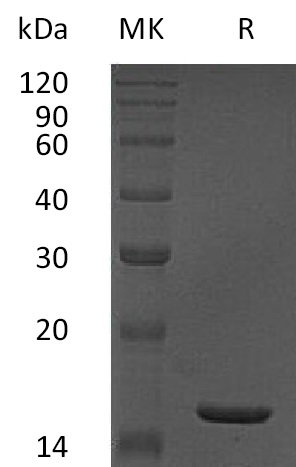 Greater than 95% as determined by reducing SDS-PAGE. (QC verified) Purity-SEC-HPLC
 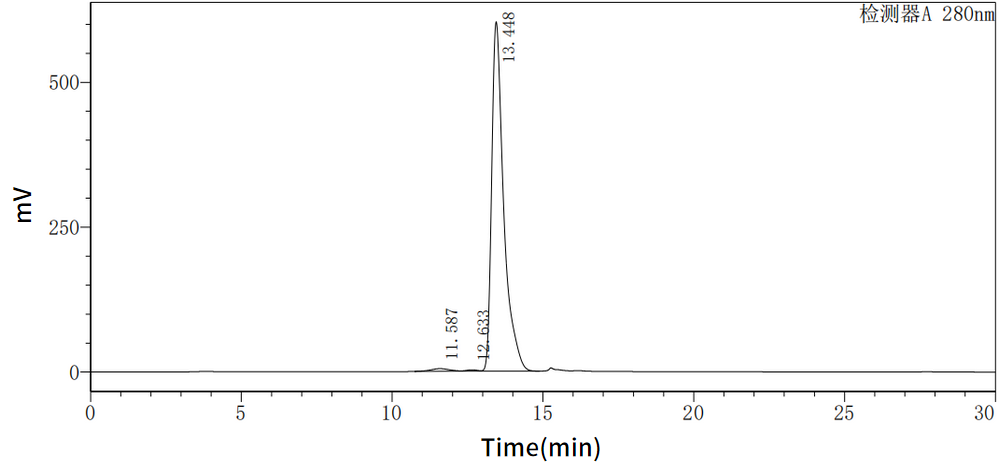 Greater than 95% as determined by SEC-HPLC. (QC verified) Bioactivity-Cell Based Assay
 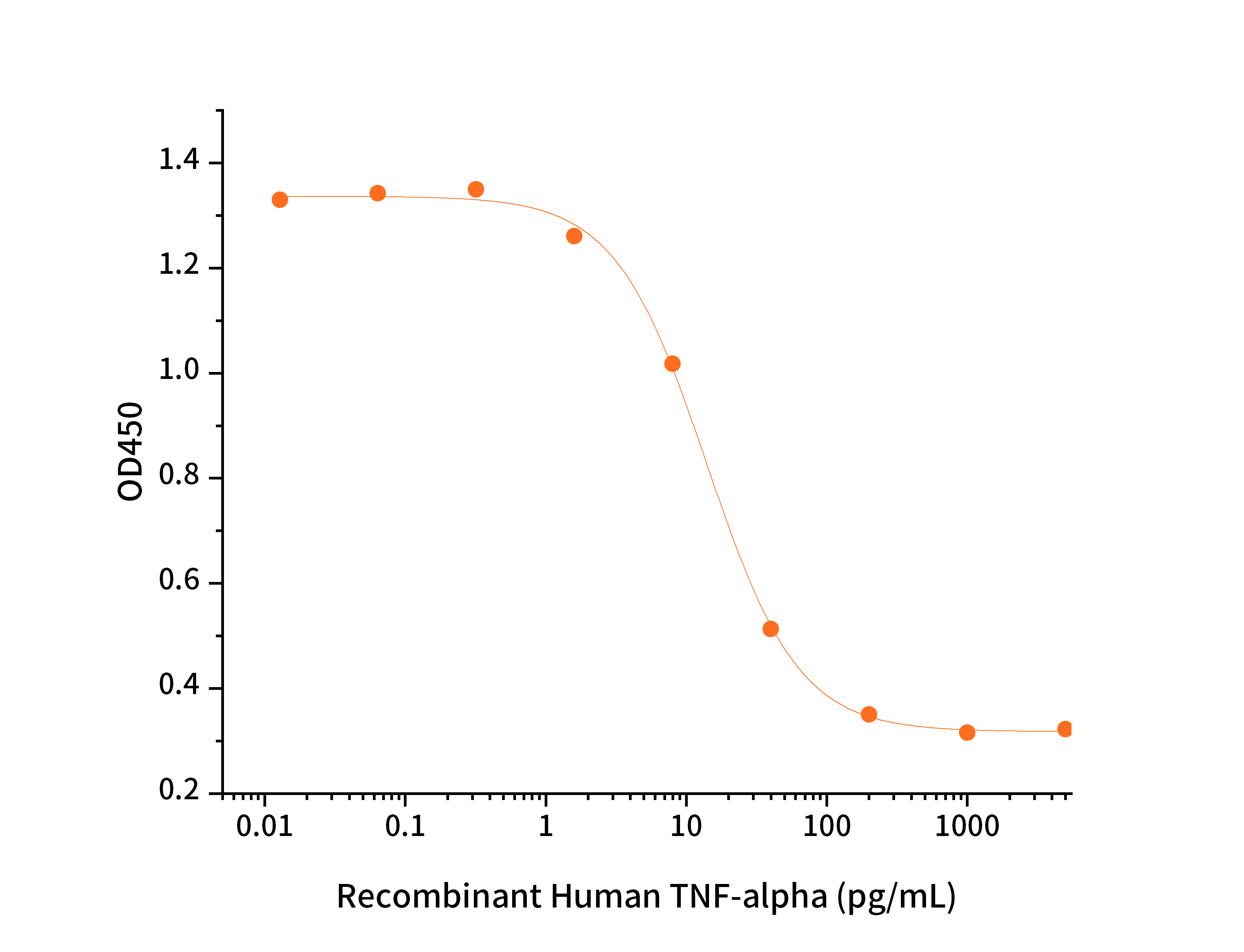 Measured in a cytotoxicity assay using L‑929 mouse fibroblast cells in the presence of the metabolic inhibitor actinomycin D. The ED50 for this effect is 10-50 pg/mL.(QC verified) Product stability
 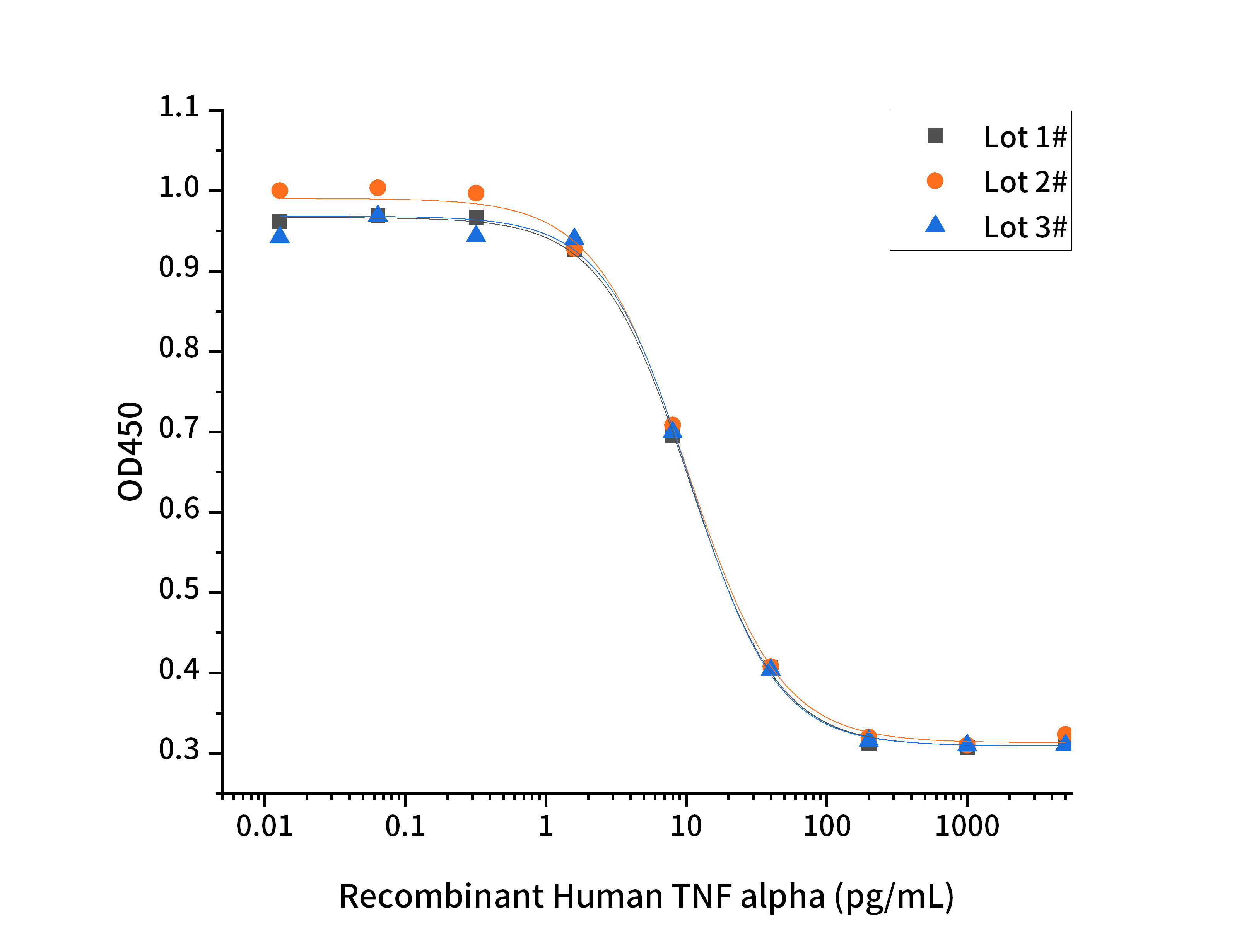 Measured in a cytotoxicity assay using L‑929 mouse fibroblast cells in the presence of the metabolic inhibitor actinomycin D. The ED50 for this effect is 10-50 pg/mL.Three independent lots were tested for activity and plotted on the same graph to show lot-to-lot consistency of TNF alpha. Reconstitution
 - Always centrifuge tubes before opening.Do not mix by vortex or pipetting.
- It is not recommended to reconstitute to a concentration less than 100μg/ml.
- Dissolve the lyophilized protein in distilled water.
- Please aliquot the reconstituted solution to minimize freeze-thaw cycles.
Storage - Lyophilized protein should be stored at ≤ -20°C, stable for one year after receipt.
- Reconstituted protein solution can be stored at 2-8°C for 2-7 days.
- Aliquots of reconstituted samples are stable at ≤ -20°C for 3 months.
Shipping - The product is shipped at ambient temperature.
- Upon receipt, store it immediately at the temperature listed below.
Background TNFα is a homotrimer with a subunit molecular mass of 17 kD cytokine that binds to TNFRSF1A/TNFR1 and TNFRSF1B/TNFBR. It is mainly secreted by macrophages and can induce cell death of certain tumor cell lines. It plays a major role in growth regulation, differentiation, inflammation, viral replication, tumorigenesis, autoimmune diseases and in viral, bacterial, fungal, and parasitic infections. Besides inducing hemorrhagic necrosis of tumors, TNF was found to be involved in tumorigenesis, tumor metastasis, viral replication, septic shock, fever, inflammation, and autoimmune diseases including Crohn’s disease, and rheumatoid arthritis as well as graft-versus-host disease.