


RayBio® Human/Mouse/Rat Glucagon-like peptide-1 EIA Kit for optimized for serum and cell culture medium. Competition-based ELISA on a 96-well strip plate.
Best Seller

GLP-1 ELISA Kit
GLP-1 ELISA Kit
Contact Us for Bulk Request
Product Description
Specifications
| Size | 1 Plate Kit, 2 Plate Kit, 5 Plate Kit |
| Species | Human, Mouse, Rat |
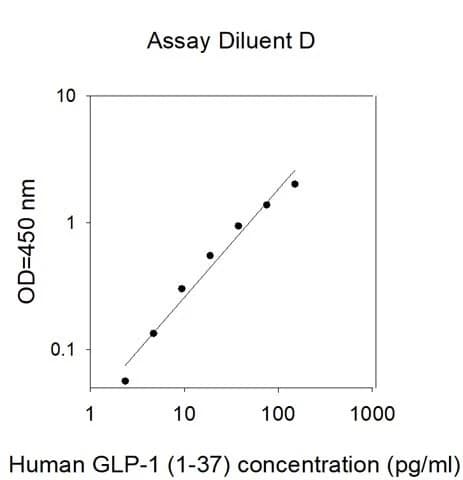
| Sensitivity | 1.17 pg/ml |
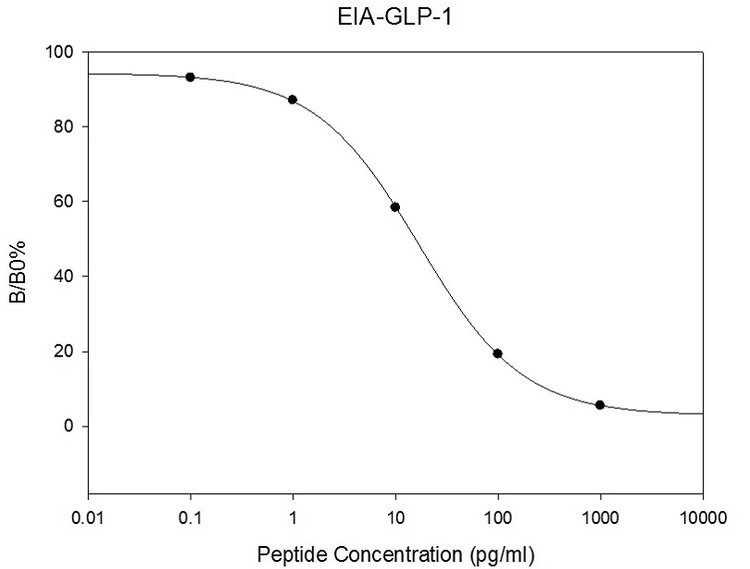
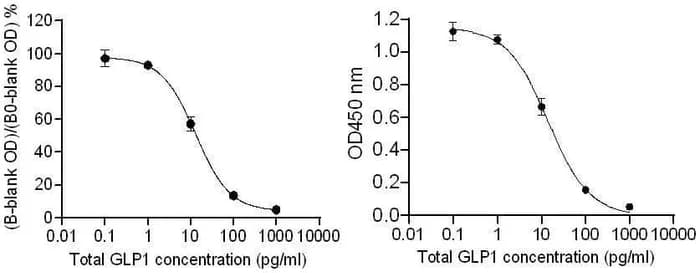
| Detection Range | 0.1-1,000 pg/ml |
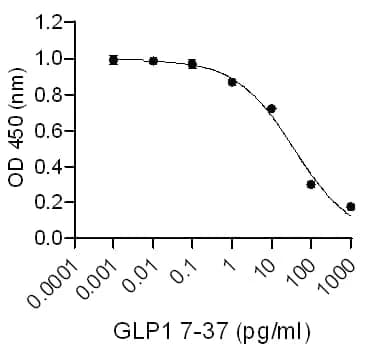
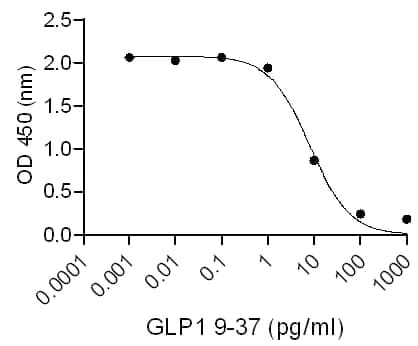
| Specificity | Detects both active and inactive GLP-1, with the antibody showing high affinity for the active form of GLP-1 and lower reactivity toward the inactive form. Cross Reactivity: This EIA kit shows no cross-reactivity with any of the cytokines tested: Ghrelin, Nesfatin, Angiotensin II, NPY and APC. |
| Compatible Sample Types | Plasma, Serum |
| Recommended Dilution (Serum/Plasma) | Human: 2X / Mouse: 2X / Rat: 2X |
| Accession Number | P01275 |
| Gene Id | 2641 |
| Gene Symbols | GCG |
| Protein Name / Synonyms | Glucagon [Cleaved into: Glicentin Glicentin-related polypeptide (GRPP) Oxyntomodulin (OXM) (OXY) Glucagon Glucagon-like peptide 1 (GLP-1) (Incretin hormone) Glucagon-like peptide 1(7-37) (GLP-1(7-37)) Glucagon-like peptide 1(7-36) (GLP-1(7-36)) Glucagon-like peptide 2 (GLP-2)] |
| Quantitative/Semi-Quantitative | Quantitative |
| Solid Support | 96-well Microplate |
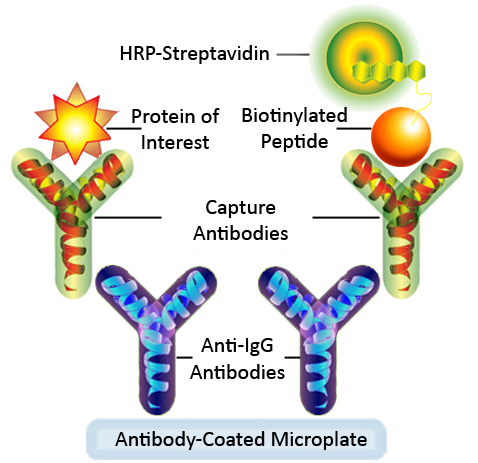
| Design Principle | Competition-based |
| Method Of Detection | Colorimetric |
| Research Area | Apoptosis, Obesity & Metabolic Disease |
| Shipping Type | Blue ice |
| Storage | -20°C |
Related Products
Total GLP-1 ELISA Kit
As low as $400.00
Active GLP-1 ELISA Kit
As low as $400.00
Inactive GLP-1 ELISA Kit
As low as $400.00

Introduction
Glucagon-like peptide-1 (GLP-1) is a 31 amino acid peptide hormone derived from selective cleavage of the proglucagon gene. It is mainly produced from enteroendocrine L-cells in GI tract. The other cleavage products derived from proglucagon genes are glucagon, GLP-2 and other small fragment peptides including Glicentin, Oxyntomodulin and two intervening peptides (IP-1 and IP-2). Except for glucagon cleaved in alpha cells of the pancreas, all other cleaved peptides occurred in enteroendocrine L cells of intestine.
GLP-1 has shown important roles in regulating glucose metabolic functions in humans. There are studies showing that GLP-1 is a potent anti-hyperglycemic hormone inducing glucose-dependent stimulation of insulin secretion while suppressing glucagon secretion. This dual control of insulin and glucagon has the benefit that the plasma glucose concentration is kept in the normal fasting range to avoid hypoglycemia caused by overstimulation of insulin. In addition, GLP-1 was reported to restore the glucose sensitivity of pancreatic beta cells, probably via the upregualtion of GLUT2 and glucokinase. GLP-1 was reported to inhibit pancreatic beta-cell apoptosis and stimulate the proliferation and differentiation of insulin-secreting beta-cells.
GLP-1 has shown potential clinical application as a biomarker and treatment option for Diabetes Mellitus, which is based on the following physiological functions mediated by GLP-1.
GLP-1 has shown important roles in regulating glucose metabolic functions in humans. There are studies showing that GLP-1 is a potent anti-hyperglycemic hormone inducing glucose-dependent stimulation of insulin secretion while suppressing glucagon secretion. This dual control of insulin and glucagon has the benefit that the plasma glucose concentration is kept in the normal fasting range to avoid hypoglycemia caused by overstimulation of insulin. In addition, GLP-1 was reported to restore the glucose sensitivity of pancreatic beta cells, probably via the upregualtion of GLUT2 and glucokinase. GLP-1 was reported to inhibit pancreatic beta-cell apoptosis and stimulate the proliferation and differentiation of insulin-secreting beta-cells.
GLP-1 has shown potential clinical application as a biomarker and treatment option for Diabetes Mellitus, which is based on the following physiological functions mediated by GLP-1.
- Regulating insulin secretion by increasing insulin secretion from the pancreas in a glucose-dependent manner and increasing insulin-sensitivity in both alpha and beta cells
- Regulating glucagon secretion by decreasing glucagon secretion from the pancreas by engagement of a specific G protein-coupled receptor.
- Regulating food intake by inhibiting acid secretion and gastric emptying in the stomach and decreasing food intake by increasing satiety in brain.
Product Features
- Strip plates and additional reagents allow for use in multiple experiments
- Quantitative protein detection
- Establishes normal range
- The best products for confirmation of antibody array data
Application Notes
Kit Components
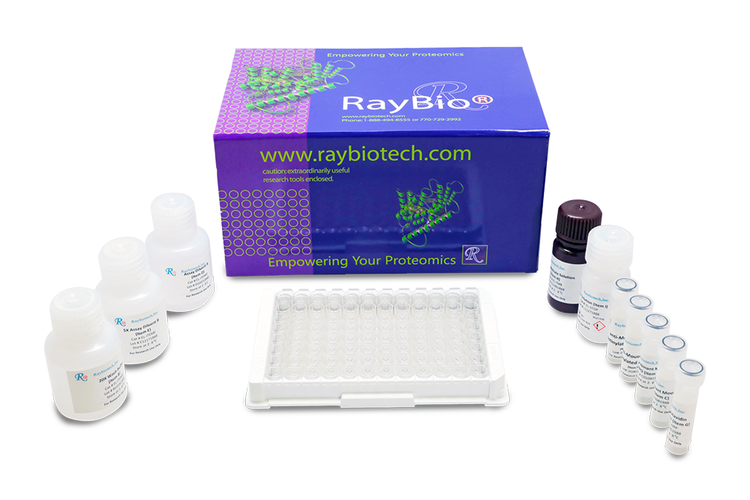
- Pre-Coated 96-well Strip Microplate
- Wash Buffer
- Standard Peptide
- Assay Diluent(s)
- Biotinylated Peptide
- HRP-Streptavidin
- TMB One-Step Substrate
- Stop Solution
- Assay Diagram
- Positive Control Sample
- Capture Antibody
- User Manual
Other Materials Required
- Distilled or deionized water
- Precision pipettes to deliver 2 µl to 1 ml volumes
- Adjustable 1-25 ml pipettes for reagent preparation
- 100 ml and 1 liter graduated cylinders
- Tubes to prepare standard and sample dilutions
- Orbital shaker
- Aluminum foil
- Saran Wrap
- Absorbent paper
- Microplate reader capable of measuring absorbance at 450nm
- SigmaPlot software (or other software that can perform four-parameter logistic regression models)
Protocol Outline
Storage/Stability
Standard, Biotinylated GLP-1 peptide, and Positive Control should be stored at -20°C after arrival. Avoid multiple freeze-thaws. The remaining kit components may be stored at 4°C. Opened Microplate Wells and antibody (Item N) may be stored for up to 1 month at 2° to 8°C. Return unused wells to the pouch containing desiccant pack and reseal along entire edge.
citations
Chen et al., Interleukin-33 Promotes Serotonin Release from Enterochromaffin Cells for Intestinal Homeostasis, Immunity (2020), https://doi.org/10.1016/j.immuni.2020.10.016
- Species:
- Mouse
- Sample Type:
- Conditioned media (Cell culture media)
- Year:
- 2020
- Journal Name:
- Immunity
Glucagon-like peptide 1 receptor agonist, exendin-4, reduces alcohol-associated fatty liver disease
- Species:
- Rat
- Sample Type:
- Serum
- Year:
- 2023
- Journal Name:
- Biochemical Pharmacology
Short chain fatty acids and GIT hormones mitigate gut barrier disruption in high fat diet fed rats supplemented by synbiotics
- Species:
- Rat
- Sample Type:
- Serum
- Year:
- 2023
- Journal Name:
- Mediterranean Journal of Nutrition and Metabolism
In vitro and in silico analysis proving DPP4 inhibition and diabetes-associated gene network modulation by a polyherbal formulation: Nisakathakadi Kashaya
- Species:
- Mouse
- Sample Type:
- GLUTag cell
- Year:
- 2023
- Journal Name:
- Journal of Biomolecular Structure & Dynamics
Microbiota-induced lipid peroxidation impairs obeticholic acid-mediated antifibrotic effect towards nonalcoholic steatohepatitis in mice
- Species:
- Mouse
- Sample Type:
- Serum
- Year:
- 2022
- Journal Name:
- Redox biology
The influence of parental high-fat high-sugar diet on the gut-brain axis in male offspring
- Species:
- Rat
- Sample Type:
- Serum
- Year:
- 2022
- Journal Name:
- Food Research International
Oligosaccharide and short-chain fatty acid: A double-edged sword in obese mice by regulating food intake and fat synthesis
- Species:
- Mouse
- Sample Type:
- Serum, ileum
- Year:
- 2022
- Journal Name:
- Food Research International
Obeticholic acid and ferrostatin-1 differentially ameliorate non-alcoholic steatohepatitis in AMLN diet-fed ob/ob mice
- Species:
- Mouse
- Sample Type:
- liver
- Year:
- 2022
- Journal Name:
- Frontiers in pharmacology
Amelioration of Metabolic Syndrome-Associated Cognitive Impairments in Mice via a Reduction in Dietary Fat Content or Infusion of Non-Diabetic Plasma
- Species:
- Mouse
- Sample Type:
- Plasma (Non diabetic mouse model)
- Year:
- 2015
- Journal Name:
- EBioMedicine
- PubMed ID:
- 26870815
