

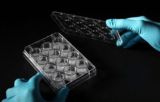
The 12-well plate is a widely used multiwell format in cell and tissue culture, offering an intermediate scale between the larger 6-well plate and the smaller 24-well plate. It provides a convenient platform for experiments requiring moderate cell numbers, sufficient medium volume, and the ability to perform parallel assays under controlled conditions. Typical working volumes range from 1 to 2 mL per well, with a growth surface area of approximately 3.8 to 4 cm², making this format suitable for a broad spectrum of applications in basic research, drug discovery, and bioprocessing.
Materials and Manufacturing
Twelve-well plates are generally manufactured from optical-grade polystyrene, chosen for its clarity, chemical inertness, and compatibility with biological systems. The polymer conforms to established biocompatibility standards suitable for direct contact with cells and culture media. Its optical properties allow reliable microscopic observation, while mechanical stability supports routine handling, incubation, and centrifugation. Manufacturing is controlled to ensure consistent well geometry, surface uniformity, and low levels of extractable substances.
Surface Treatments
Surface chemistry strongly influences cell behavior in 12-well plates. Non-treated plates retain a hydrophobic surface that minimizes protein adsorption and cell attachment, making them suitable for suspension cultures. Tissue-culture-treated plates undergo physical or chemical modification that introduces hydrophilic functional groups, promoting serum-protein adsorption and integrin-mediated adhesion of common adherent cell lines. Advanced superhydrophilic treatments further improve attachment and growth of fastidious cells, primary cells, and transfection cell lines, particularly under low-serum or serum-free conditions.
