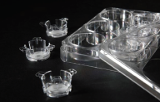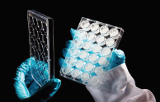

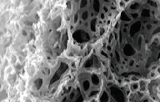
Three-dimensional polystyrene scaffolds such as Alvetex® Scaffold inserts and plates provide a highly porous, inert substrate that supports physiologically relevant 3D cell culture, enabling cells to proliferate, migrate, and assemble into tissue-like architectures. Unlike conventional 2D monolayers, porous polystyrene scaffolds promote biologically relevant cell–cell interactions, extracellular matrix (ECM) deposition, and diffusion of oxygen and nutrients, improving the predictive value of cancer research, stem cell biology, tissue engineering, drug discovery, and toxicology studies. Their reproducible architecture facilitates standardized long-term culture and compatibility with routine microscopy and molecular analyses.
Key Features
-
Highly Porous Polystyrene Scaffold: Supports uniform 3D cell growth.
-
Physiologically Relevant Cell Interactions: Promotes biologically relevant cell–cell and cell–ECM interactions.
-
Broad Laboratory Compatibility: Compatible with standard multiwell plates, inserts, and conventional laboratory workflows.
-
Long-Term Tissue Culture: Supports long-term culture, tissue-like organization, and endogenous ECM production.
-
Versatile Downstream Analysis: Suitable for imaging, histology, immunocytochemistry, gene expression, and biochemical assays.
-
Standardized Experimental Performance: Reproducible scaffold architecture for standardized, high-quality experimental outcomes.