

L-Ascorbic acid 2-phosphate trisodium [66170-10-3]

Referencia M19976-1g
embalaje : 1g
Marca : AbMole Bioscience
All AbMole products are for research use only, cannot be used for human consumption.
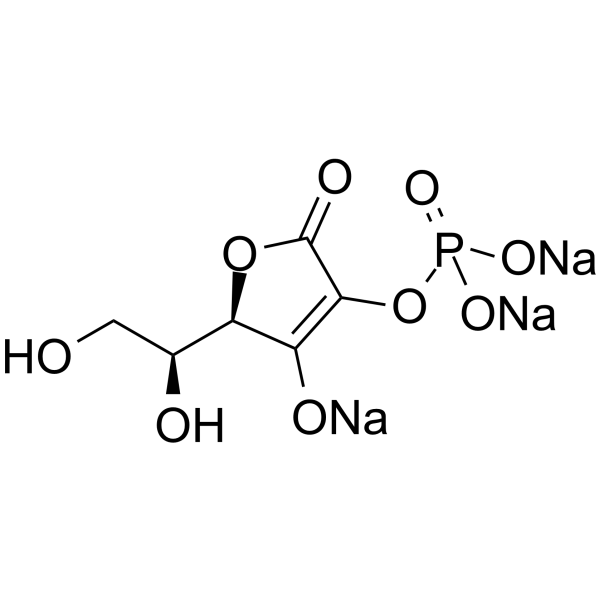
Sodium ascorbyl monophosphate;Sodium ascorbyl phosphate
Quality Control & Documentation
Biological Activity
L-ascorbic acid 2-phosphate Trisodium (2-phospho-L-ascorbic acid Trisodium) can be used as a medium to supplement the osteogenic differentiation of human adipose stem cells (hASCs). L-ascorbic acid 2-phosphate Trisodium (2-phospho-L-ascorbic acid trisodium) increases alkaline phosphatase (ALP) activity and runx2A in hASC during osteoblast differentiation Expression. 2-Phospho-L-ascorbic acid (Asc 2-P) acts as an antioxidant and stimulator of hepatocyte growth factor (HGF) production. 2-phospho-L-ascorbic acid is a stable derivative of L-ascorbic acid (AA), which has similar biological characteristics to AA. Multiple biological processes regulated by AA and ASC-2P. When 2-phospho-L-ascorbate was added together with DHT, DKK-1 mRNA expression in DPCs induced by DHT was significantly decreased. Dkk-1 promoter activity was increased by DHT treatment. Dht-induced activation of luciferase activity was significantly inhibited when 2-phospho-L-ascorbate was added with DHT.
Chemical Information
| Molecular Weight | 322.05 |
| Formula | C6H6Na3O9P |
| CAS Number | 66170-10-3 |
| Solubility (25°C) | Water ≥ 100 mg/mL DMSO 6 mg/mL |
| Storage | 4°C, dry, sealed |
References
[1] Min Wang, et al. Anal Bioanal Chem. Homogeneous photoelectrochemical biosensor for sensitive detection of omethoate via ALP-mediated pesticide assay and Bi2S3@Bi2Sn2O7 heterojunction as photoactive material
[2] Xin Jie Wu, et al. Mikrochim Acta. A catalyst-free co-reaction system of long-lasting and intensive chemiluminescence applied to the detection of alkaline phosphatase
[3] Yongchao Fan, et al. Anal Chem. In Situ Fluorogenic Reaction Generated via Ascorbic Acid for the Construction of Universal Sensing Platform
[4] Yuko Ishikawa, et al. Arch Dermatol Res. Whitening effect of L-ascorbate-2-phosphate trisodium salt on solar lentigos
[5] Ana Lorena Alvarado-Gmez, et al. Sensors (Basel). A chronoamperometric screen printed carbon biosensor based on alkaline phosphatase inhibition for W(IV) determination in water, using 2-phospho-L-ascorbic acid trisodium salt as a substrate