PCSK9 ELISA Kit (Human)

Referencia OKEH00374
embalaje : 96Wells
Marca : Aviva Systems Biology
PCSK9 ELISA Kit (Human) : 96 Wells (OKEH00374)
| Datasheets/Manuals | Printable datasheet for PCSK9 ELISA Kit (Human) : 96 Wells (OKEH00374) |
|---|
| Predicted Species Reactivity | Homo sapiens|Human | ||||||||||||||||||||||
|---|---|---|---|---|---|---|---|---|---|---|---|---|---|---|---|---|---|---|---|---|---|---|---|
| Application | ELISA-Sandwich | ||||||||||||||||||||||
| ELISA Kit Detection Method | Colorimetric, OD450 nm | ||||||||||||||||||||||
| ELISA Kit Duration | ~ 3 Hours | ||||||||||||||||||||||
| ELISA Kit Principle | Aviva Systems Biology PCSK9 ELISA Kit (Human) (OKEH00374) is based on standard sandwich enzyme-linked immuno-sorbent assay technology. An antibody specific for PCSK9 has been pre-coated onto a 96-wellplate (12 x 8 Well Strips) and blocked. Standards or test samples are added to the wells, incubated and removed. After washing,a biotinylated detector antibody specific for PCSK9 is added, incubated and followed by washing. Avidin-Peroxidase Conjugate is then added, incubated and unbound conjugate is washed away.An enzymatic reaction is produced through the addition of TMB substrate which is catalyzed by HRP generating a blue color product that changes yellow after adding acidic stop solution. The density of yellow coloration read by absorbance at 450 nm is quantitatively proportional to the amount of sample PCSK9 captured in well. | ||||||||||||||||||||||
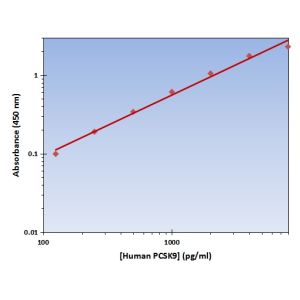
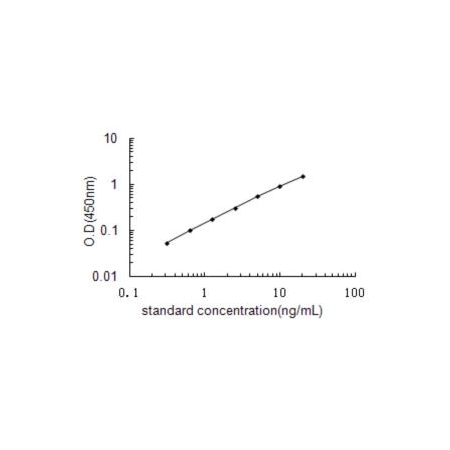
| ELISA Kit Range | 0.312-20ng/mL | ||||||||||||||||||||||
| ELISA Kit Recovery | Mean recovery when spiking into sample matrices at concentrations within the dynamic range: 105% | ||||||||||||||||||||||
| ELISA Kit Reproducibility | Mean Intra-assay CV%: < 3.8% (n = 20) Mean Inter-assay CV%: < 6.5% (n = 20) | ||||||||||||||||||||||
| ELISA Kit Component |
| ||||||||||||||||||||||
| Reconstitution and Storage | Store as indicated in product manual. | ||||||||||||||||||||||
| Sample Type | Serum, Plasma, Tissue Homogenates, Cell Culture Supernates, Other Biological Fluids | ||||||||||||||||||||||
| Sensitivity | 0.12 ng/mL | ||||||||||||||||||||||
| Specificity | Natural and recombinant Human Proprotein convertase subtilisin/kexin type 9 | ||||||||||||||||||||||
| Assay Info | Assay Methodology: Quantitative Sandwich ELISA |
| Gene Symbol | PCSK9 |
|---|---|
| Gene Full Name | proprotein convertase subtilisin/kexin type 9 |
| Alias Symbols | convertase subtilisin/kexin type 9 preproprotein, FH3, FHCL3, HCHOLA3, LDLCQ1, NARC-1, NARC1, neural apoptosis regulated convertase 1, Neural apoptosis-regulated convertase 1, PC9, Proprotein convertase 9, proprotein convertase subtilisin/kexin type 9, subtilisin/kexin-like protease PC9. |
| NCBI Gene Id | 255738 |
| Protein Name | Proprotein convertase subtilisin/kexin type 9 |
| Description of Target | Crucial player in the regulation of plasma cholesterol homeostasis. Binds to low-density lipid receptor family members: low density lipoprotein receptor (LDLR), very low density lipoprotein receptor (VLDLR), apolipoprotein E receptor (LRP1/APOER) and apolipoprotein receptor 2 (LRP8/APOER2), and promotes their degradation in intracellular acidic compartments (PubMed:18039658). Acts via a non-proteolytic mechanism to enhance the degradation of the hepatic LDLR through a clathrin LDLRAP1/ARH-mediated pathway. May prevent the recycling of LDLR from endosomes to the cell surface or direct it to lysosomes for degradation. Can induce ubiquitination of LDLR leading to its subsequent degradation (PubMed:18799458, PubMed:17461796, PubMed:18197702, PubMed:22074827). Inhibits intracellular degradation of APOB via the autophagosome/lysosome pathway in a LDLR-independent manner. Involved in the disposal of non-acetylated intermediates of BACE1 in the early secretory pathway (PubMed:18660751). Inhibits epithelial Na(+) channel (ENaC)-mediated Na(+) absorption by reducing ENaC surface expression primarily by increasing its proteasomal degradation. Regulates neuronal apoptosis via modulation of LRP8/APOER2 levels and related anti-apoptotic signaling pathways. |
| Uniprot ID | Q8NBP7 |
| Protein Accession # | NP_777596.2 |
| Nucleotide Accession # | NM_174936.3 |
| Protein Size (# AA) | 692 |
| Molecular Weight | 74 kDa |