

Recombinant Human SH3 and multiple ankyrin repeat domains protein 3 (SHANK3), partial - E.coli

Referencia CSB-EP880134HU-1mg
embalaje : 1mg
Marca : Cusabio
| Abbreviation | Recombinant Human SHANK3 protein, partial |
| MSDS | |
| Image | |
Product Details
Purity
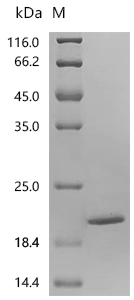
≥ 90% as determined by SDS-PAGE.
Activity
Not Test
Target Names
Uniprot No.
Research Area
Neuroscience
Alternative Names
Proline-rich synapse-associated protein 2
Species
Homo sapiens (Human)
Source
E.coli
Expression Region
1-99aa
Target Protein Sequence
MDGPGASAVVVRVGIPDLQQTKCLRLDPAAPVWAAKQRVLCALNHSLQDALNYGLFQPPSRGRAGKFLDEERLLQEYPPNLDTPLPYLEFRYKRRVYAQ
Note: The complete sequence may include tag sequence, target protein sequence, linker sequence and extra sequence that is translated with the protein sequence for the purpose(s) of secretion, stability, solubility, etc.
If the exact amino acid sequence of this recombinant protein is critical to your application, please explicitly request the full and complete sequence of this protein before ordering.
Note: The complete sequence may include tag sequence, target protein sequence, linker sequence and extra sequence that is translated with the protein sequence for the purpose(s) of secretion, stability, solubility, etc.
If the exact amino acid sequence of this recombinant protein is critical to your application, please explicitly request the full and complete sequence of this protein before ordering.
Mol. Weight
18.1 kDa
Protein Length
Partial
Tag Info
C-terminal 6xHis-tagged
Form
Liquid or Lyophilized powder
Note: We will preferentially ship the format that we have in stock, however, if you have any special requirement for the format, please remark your requirement when placing the order, we will prepare according to your demand.
Note: We will preferentially ship the format that we have in stock, however, if you have any special requirement for the format, please remark your requirement when placing the order, we will prepare according to your demand.
Buffer
If the delivery form is liquid, the default storage buffer is Tris/PBS-based buffer, 5%-50% glycerol. If the delivery form is lyophilized powder, the buffer before lyophilization is Tris/PBS-based buffer, 6% Trehalose, pH 8.0.
Reconstitution
We recommend that this vial be briefly centrifuged prior to opening to bring the contents to the bottom. Please reconstitute protein in deionized sterile water to a concentration of 0.1-1.0 mg/mL.We recommend to add 5-50% of glycerol (final concentration) and aliquot for long-term storage at -20°C/-80°C. Our default final concentration of glycerol is 50%. Customers could use it as reference.
Troubleshooting and FAQs
Storage Condition
Store at -20°C/-80°C upon receipt, aliquoting is necessary for mutiple use. Avoid repeated freeze-thaw cycles.
Shelf Life
The shelf life is related to many factors, storage state, buffer ingredients, storage temperature and the stability of the protein itself.
Generally, the shelf life of liquid form is 6 months at -20°C/-80°C. The shelf life of lyophilized form is 12 months at -20°C/-80°C.
Generally, the shelf life of liquid form is 6 months at -20°C/-80°C. The shelf life of lyophilized form is 12 months at -20°C/-80°C.
Notes
Repeated freezing and thawing is not recommended. Store working aliquots at 4°C for up to one week.
Datasheet & COA
Please contact us to get it.
Customer Reviews and Q&A
■ Customer Reviews
There are currently no reviews for this product.
Target Background
Function
Major scaffold postsynaptic density protein which interacts with multiple proteins and complexes to orchestrate the dendritic spine and synapse formation, maturation and maintenance. Interconnects receptors of the postsynaptic membrane including NMDA-type and metabotropic glutamate receptors via complexes with GKAP/PSD-95 and HOMER, respectively, and the actin-based cytoskeleton. Plays a role in the structural and functional organization of the dendritic spine and synaptic junction through the interaction with Arp2/3 and WAVE1 complex as well as the promotion of the F-actin clusters. By way of...
Gene References into Functions
- SHANK3 haploinsufficiency due to point mutations alone is sufficient to cause a broad range of phenotypic features associated with Phelan-McDermid syndrome.
- Our report details a 10-year-old boy with a de novo heterozygous c.1231del, p.Arg411Val frameshift variant in SHANK3, a high-risk candidate autism gene. We report significant speech delay and seizures as an association with this phenotype.
- SHANK3 expression correlated with ZO-1 and PKCepsilon in colonic tissue of patients with Crohn's disease. The expression level of SHANK3 affects ZO-1 expression and the barrier function in intestinal epithelial cells.
- We report a family with four affected individuals including the 37 year-old mother, her 12 year-old male monozygotic twins and 8 year-old daughter harboring a novel SHANK3 interstitial microdeletion
- the present study did not provide evidences to support the fact that SHANK3 variants could influence the susceptibility to Autism spectrum disorder in the Northeastern Han Chinese population
- SHANK3 expression was increased in the neocortex of temporal lobe epilepsy patients and rats.
- Missense mutation in SHANK3 gene is associated with schizophrenia.
- This study does not provide evidence for a major role of SHANK3 in the pathogenesis of bipolar disorder.
- Partial knockdown of SHANK3 expression in human dorsal root ganglion neurons abrogates TRPV1 function.
- GWA study identified maternal genetic effects not previously identified in ASD at a locus in SHANK3.
- SHANK1 and SHANK3 act as integrin activation inhibitors by sequestering active Rap1 and R-Ras via the SPN domain and thus limiting their bioavailability at the plasma membrane.
- No specific EEG abnormality is present in epilepsy due to to SHANK3 loss-of-function mutations.
- Haploinsufficiency of SHANK3 is a predisposing factor in adults with catatonia.
- post-transcriptional regulation of SHANK3 expression by three microRNAs (miRNAs), miR-7, miR-34a, and miR-504, is reported.
- these data suggest that SHANK3 mutations predispose to autism, at least partially, by inducing an Ih channelopathy that may be amenable to pharmacological intervention.
- De novo SHANK3 mutation causes Rett syndrome-like phenotype in a female patient.
- miR-7 binds to 3-prime untranslated regions of SHANK3 mRNA and causes the alteration of neuronal morphology and function, potentially playing a crucial role in the pathophysiological process of schizophrenia
- a mutation in SHANK3 that underscores its relevan