

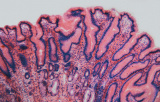
Tissues are integral biological structures composed of groups of cells working together to perform specific functions. The study of tissues, known as histology, is essential for understanding the organization and function of organs and systems within living organisms. Tissue sections—thin slices of tissue prepared for microscopic examination—are fundamental tools in histological sciences. These sections allow detailed visualization of cellular architecture and molecular components, providing critical insights into both normal physiology and pathological conditions. Preparing high-quality tissue sections involves a series of precise steps including fixation, dehydration, embedding, sectioning, staining, and mounting, which preserve tissue morphology and biochemical integrity for accurate analysis.
Features of Tissue Sections
- Thinness and Uniformity
- Preservation of Morphology: Through fixation and embedding (commonly in paraffin wax or freezing in OCT compound), tissue architecture and cellular details are preserved, preventing decay and distortion during processing.
- Compatibility with Staining and Labeling: Tissue sections are designed to be compatible with a variety of histological and molecular techniques such as hematoxylin-eosin staining, immunohistochemistry, and in situ hybridization, enabling visualization of specific cellular components and molecular markers.
- Mounting on Specialized Slides: Sections are mounted on coated glass slides that promote adhesion and preserve tissue integrity during staining and microscopic examination.
- Versatility: Both paraffin-embedded and frozen tissue sections are available, each suited to different downstream applications depending on the preservation needs of proteins, nucleic acids, or enzymatic activity.
Applications of Tissue Sections
- Histopathology and Diagnostics: Tissue sections are the cornerstone of pathological examination, enabling the identification of disease states, tumor characterization, and detection of infectious agents through microscopic analysis.
- Molecular Biology and Research: They facilitate the study of gene and protein expression within the native tissue context, allowing researchers to localize molecular markers and understand tissue-specific functions and disease mechanisms.
- Cellular and Developmental Biology: Sections provide insight into cellular organization, differentiation, and interactions within tissues, supporting studies on development, regeneration, and tissue engineering.
- Pharmacology and Toxicology: By examining tissue responses to drugs or toxins, tissue sections help evaluate therapeutic efficacy and safety.
- Educational Tools: Tissue sections are widely used in teaching laboratories to illustrate normal and pathological tissue structures, enhancing understanding of anatomy and physiology.
Tissue sections are indispensable in advancing biomedical science and clinical practice. Their precise preparation and versatile applications enable comprehensive analysis of tissue structure and function, driving progress in diagnostics, research, and therapeutic development. We offer a wide range of tissues from different species. If you do not find the tissue you need, we can nevertheless supply it to you. We offer a custom service that allows you to obtain the tissue(s) you need, just give us your criteria. Contact our technical support for more information.