

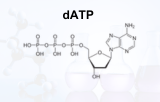
dATP (2'-deoxyadenosine 5'-triphosphate) is a purine deoxyribonucleotide and one of the four fundamental building blocks required for DNA synthesis. It consists of the nucleobase adenine linked to a deoxyribose sugar and a chain of three phosphate groups at the 5' position. During DNA replication, dATP is incorporated into growing DNA strands by DNA polymerases, where it specifically pairs with thymidine (dTTP) through complementary base pairing. As an essential cellular metabolite, dATP is conserved across a wide range of organisms, from bacteria to mammals.
Biological Functions and Regulation
dATP serves as the primary adenine nucleotide donor during DNA replication and repair. It is synthesized intracellularly from adenosine diphosphate (ADP) through tightly regulated enzymatic pathways that maintain balanced deoxynucleotide pools. In molecular biology, dATP is an indispensable component of PCR, DNA sequencing, molecular cloning, and numerous enzymatic DNA amplification techniques. High reagent purity is essential, as contaminants such as modified nucleotides or pyrophosphate can inhibit DNA polymerases and compromise amplification efficiency, particularly in real-time PCR and long-range PCR applications. Standard PCR reactions typically use a final concentration of approximately 0.2 mM for each deoxynucleotide.
Research Applications and Advantages
- DNA synthesis: Provides the adenine nucleotide required for DNA replication, repair, and enzymatic amplification reactions.
- Molecular biology workflows: Widely used in PCR, quantitative PCR, DNA sequencing, cloning, and other nucleic acid amplification techniques requiring high-purity nucleotides.
- Modified nucleotide labeling: Functionalized derivatives such as Biotin-11-dATP enable non-radioactive labeling of DNA probes for applications including fluorescence in situ hybridization (FISH), Southern blotting, and streptavidin-based detection systems.
- High-quality formulations: Available in highly purified (≥99%) 10 mM and 100 mM solutions to ensure reproducible performance and long-term stability when stored at −20 °C.