

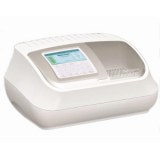
Microplate readers are versatile spectrophotometric instruments widely used for the quantitative analysis of biomolecules in high-throughput formats. Designed to measure signals in microplates such as 96-, 384-, or 1536-well plates, these systems are essential in biochemistry, immunology, molecular biology, and drug discovery workflows. By enabling rapid and reproducible measurements across multiple samples simultaneously, microplate readers support large-scale analytical assays and screening applications.
Detection Principles
Absorbance detection in microplate readers is based on the Beer–Lambert law (A = εlc), where the measured absorbance is proportional to the concentration of the analyte, the optical pathlength, and the molar extinction coefficient. Light sources such as xenon flash lamps or halogen lamps combined with monochromators allow wavelength selection with high spectral resolution for quantitative measurements, including nucleic acid or protein concentration analysis.
Fluorescence detection relies on the measurement of emitted photons generated after excitation of fluorescent molecules. This approach offers significantly higher sensitivity compared with absorbance measurements and is commonly detected using photomultiplier tubes (PMTs) or sensitive photodiodes. Luminescence detection, in contrast, measures light generated directly by chemical or enzymatic reactions without external excitation, providing extremely low background signals and high assay sensitivity.
Biochemical Applications
Microplate readers are widely used in biochemical and molecular biology assays. Enzyme-linked immunosorbent assays (ELISA) enable the quantification of proteins such as cytokines with high sensitivity using absorbance detection. Cell viability and cytotoxicity assays, including MTT or MTS assays, measure metabolic activity through colorimetric reactions linked to cellular redox processes.
In molecular biology, fluorescence-based assays such as dsDNA quantification using PicoGreen dyes or protein determination using bicinchoninic acid (BCA) assays are routinely performed with microplate readers. These instruments are also essential in drug discovery programs, where they are used to monitor enzyme kinetics, evaluate inhibitor activity, and generate dose–response curves. Beyond biomedical research, microplate readers are also employed in environmental and analytical laboratories for the detection of contaminants and other analytes through colorimetric or fluorescent assays.
