

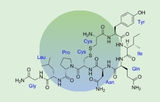
Oxytocin is a nonapeptide hormone and neuromodulator that plays fundamental roles in reproduction, lactation, and social behavior. First described in 1909 by Sir Henry H. Dale following the observation that posterior pituitary extracts induced uterine contractions, oxytocin was later structurally characterized by Vincent du Vigneaud in 1953. He determined its nine-amino-acid sequence, identified the biologically essential disulfide bond linking two cysteine residues, and achieved the first complete chemical synthesis of a peptide hormone, work that earned the Nobel Prize in Chemistry in 1955.
Biosynthesis and Regulation
Oxytocin is synthesized primarily by magnocellular neurosecretory cells located in the paraventricular and supraoptic nuclei of the hypothalamus. Following synthesis, it is transported along axons to the posterior pituitary (pars nervosa), where it is stored in association with the carrier protein neurophysin before being released into the bloodstream. Oxytocin secretion is tightly regulated by neuroendocrine signals and sex steroid hormones. During late pregnancy and labor, decreasing progesterone and increasing estrogen concentrations enhance oxytocin production and receptor expression. Unlike most endocrine hormones, oxytocin operates through a positive feedback mechanism in which hormone release stimulates physiological responses that further promote its secretion.
Mechanism of Action and Physiological Functions
Oxytocin exerts its biological effects by binding to specific G protein-coupled receptors (GPCRs) expressed on target tissues. In the uterine myometrium, receptor activation increases intracellular calcium concentrations, resulting in smooth muscle contraction. During pregnancy, oxytocin receptor expression increases dramatically—up to 300-fold at term—greatly enhancing uterine sensitivity. This positive feedback mechanism, whereby uterine contractions stimulate additional oxytocin release, is essential for normal labor progression and vaginal delivery.
In addition to its role in parturition, oxytocin stimulates contraction of myoepithelial cells surrounding the mammary alveoli, promoting milk ejection during breastfeeding through the neuroendocrine let-down reflex initiated by nipple stimulation. Beyond its peripheral endocrine functions, oxytocin acts within the central nervous system as a neuromodulator involved in social bonding, maternal behavior, trust, emotional regulation, and stress reduction. It is also released during orgasm in both males and females and contributes to reproductive and social behaviors.
